What should you look for in a camera for filming pastel videos?
First, position the camera and drawing surface so the whole picture and your hand movements fit in frame. Then check colour and flicker with your own light.
| What matters |
What to check before buying |
Who is it important to? |
| Pastel colours |
Set the white balance and film a neutral reference alongside real pastel shades under the lighting you plan to use. |
I want to minimise colour changes between stages of my work and am happy to set the white balance. Around 31% of consumers prioritise colour consistency. |
| Flicker and banding |
Check the video flicker options and manual exposure, then test the camera with your own light. Nikon notes that the Z 30’s flicker reduction may not always produce the desired results. |
If banding would spoil my footage, I want to test the light and video settings together beforehand. Around 25% of consumers prioritise flicker-free video. |
| Field of view and detail |
Check the camera-to-subject distance, as well as the overall and close-up views, with the specific lens. For close-ups, check the focus too. |
I want to show the whole drawing surface and individual stages of my work from where I can position the camera. Around 25% of consumers prioritise getting the right framing. |
| Longer recordings |
Check the model’s recording conditions, power supply, storage, microphone input if needed, and what’s included in the box. |
If I’m filming longer drawing sessions, I want to avoid interruptions caused by running out of power or storage. Around 19% of consumers prioritise long recording times. |
Cameras for pastel videos at Joybuy
This selection includes a mirrorless camera with a zoom lens and a compact gimbal camera. For both, check whether you can get the framing you need from your planned position above the drawing surface.
 No image available
Sony Alpha 6100 APS-C with 16–50 mm Power Zoom lens
The zoom lens named in the product title gives you the option to test both a full view and a close-up. Try out the field of view from your planned mounting point.
The product title mentions 4K video recording and a tilting screen. According to the product description, the battery in this version can only be charged externally using the charger included; USB charging isn’t supported.
Joybuy
 No image available
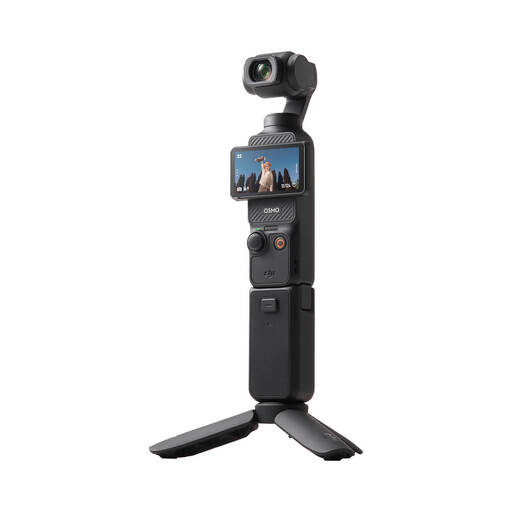
DJI Osmo Pocket 3 Creator Kit, 4K/120fps, 1-Inch Sensor
If you’re considering a compact gimbal camera and colour correction in post-production, check that its form factor suits your planned fixed position above the drawing table.
The product title mentions 4K/120fps and a 1-Inch Sensor. The product description also lists 3-axis mechanical stabilisation, 10-bit D-Log M, a mini tripod and a rotating 2-inch touchscreen.
Joybuy
Frequently asked questions about filming pastel drawings
How do I set up the colours before recording?
Set the white balance using a neutral reference under the same light you’ll use to illuminate your drawing. Then film a few real pastel shades in a short test recording. Canon describes a grey card as a way to help prevent colour casts, not as a guarantee that colours will look identical on every screen.
What can I do if my light causes banding in the video?
Test the settings with that exact light. The Nikon Z 30 manual explains how to check flicker reduction using Auto, 50 Hz or 60 Hz, and lists suitable shutter speeds for certain conditions with a 50 Hz power supply. Nikon notes that the feature may not always be enough; these menu options apply to the Z 30 and won’t necessarily be available on other cameras.
Does a camera body come with a lens?
Not necessarily. Nikon explicitly describes the Z 30 set with the NIKKOR Z DX 16–50 mm lens as a kit. For each offer, check the model name, what’s included and the lens mount before comparing framing and the components you’ll need.
Who should I contact if the camera I bought is faulty?
If you buy as a consumer from a trader in the EU, you have statutory consumer rights against the seller for at least two years from the date you receive the goods. The Your Europe information page distinguishes these rights from an additional manufacturer’s guarantee; the rules described there don’t apply in the same way to purchases from private individuals.
What should I bear in mind if I publish the video in Germany?
If the drawing shows another person’s protected work, check the rights before publishing. The Copyright Act covers works of visual art and the right to communicate a work to the public. If other people can be recognised in the video, you must also consider their rights to their image; section 22 of the KunstUrhG generally requires consent for distribution or public display. This depends on the video’s content and how it’s published, not on the camera model.


