Which camera suits which needs

For artists working with subtle colour transitions

If you want to show white paper and pastel shades consistently in your existing lighting, check the white balance and exposure before recording. Canon UK explains how these settings can help in challenging lighting conditions.

For artists who switch between different framings

To capture both a full overhead view and clearly visible details, your lens, distance and mounting setup need to work together. Plan your framing with the lens you actually intend to use.

For art teachers giving live demos

If you want to show each step directly on a computer or screen, you’ll need a well-positioned view of your desk and a recording setup that suits your workflow. Logitech describes a Show Mode on the MX Brio for displaying notes and sketches on a desk; ELMO lists HDMI and USB output for the MX-P3.

What to look for when buying

Mirrorless camera with interchangeable lens

A good fit if: you want to switch between showing the whole drawing area and close-up details, or adjust the mounting height.

Keep in mind: the lens and mount need to suit your camera, distance and preferred framing.

Compact camera with fixed lens

A good fit if: you film from a repeatable position without a computer running, and the fixed framing works for you.

Keep in mind: Sony lists the ZV-1F as having a fixed lens with no optical zoom, so check the framing in advance.

USB webcam

A good fit if: you want to show your drawing during a computer-based call or stream.

Keep in mind: your webcam, computer and chosen recording software need to suit your workflow. A webcam isn’t the same as a camera that records independently.

Document camera

A good fit if: you mainly need a fixed view of your desk and output to a computer or screen.

Keep in mind: check that it can cover your drawing area, allow enough room to work and reproduce colours well under your lighting. A claimed 4K output doesn’t prove it’s suitable for your needs.

Buying priority What to check Who it matters most to
Colours on a white background Check that you can adjust the white balance and exposure. Film a test with paper and pastel colours under your light. If I want to avoid colour casts and assess light areas of paper, I test the camera with my lighting. Consistent reproduction of white and pastel shades is a top priority for around 33% of consumers.
Keeping the paper and details in frame Measure the paper and mounting height. Test the framing with the lens you plan to use, whether it’s interchangeable or fixed. If I want to capture the paper, my working hand and fine strokes together, I check the framing with my setup. Around 27% of consumers prioritise getting the drawing area and details properly in frame.
Longer recordings Check recording time in your chosen video mode, power supply and storage. Make a test recording for the duration you need. If I want to record longer drawing sessions without an unexpected interruption, I plan for recording time and power. A continuous recording of the drawing process is a priority for around 20% of consumers.
Live demo on a computer Check the connection and software you need. Make sure the paper and your hand are visible in the live view. If I want to show my process live on a computer or screen, I need a practical view of my desk. Around 20% of consumers prioritise presenting their drawings live.

Common buying mistakes

  • Assuming 4K means true-to-life pastel colours

    The resolution alone doesn’t show how white paper and pastel shades will look in your lighting.

    Film a quick test under the lighting you plan to use, then check the white balance and exposure in the footage.

  • Checking only the camera body or close-focus capability

    The camera body or minimum focusing distance alone won’t tell you whether the whole sheet will fit in frame from your available mounting height.

    Check the specific lens mount and lens, then test the framing with your planned setup.

  • Planning to use a webcam like a standalone recording camera

    A webcam is designed for a computer-based setup; document cameras may offer different outputs and recording options.

    Before you buy, decide whether you want to present live, record on a computer or film without one.

    Depending on your setup, you may also need a computer, recording software or presentation equipment.

Brands to consider

Canon

The EOS R50 V is a video-focused mirrorless camera for use with a suitably chosen RF or RF-S lens.

  • Canon lists an APS-C sensor, 4K 60p and interchangeable lenses.
  • Canon says EF-M lenses aren’t compatible. The camera specifications don’t confirm how accurately it will reproduce pastel colours or whether a particular lens will give you the framing you need.

Nikon

The Z 30 is a mirrorless camera worth considering for recording drawing videos independently.

  • Nikon lists 4K UHD at 30p and up to 125 minutes of uninterrupted recording.
  • The 125 minutes is a manufacturer’s maximum. You’ll also need to account for the lens, power supply and actual recording time with your planned setup.

Sony

The ZV-1F is a compact camera with a fixed lens, so check that the framing works for you in advance.

  • Sony lists white balance settings and manual movie recording.
  • The fixed lens has no optical zoom. Its stated focusing distance doesn’t confirm whether it can capture a large sheet in full from a short distance.

Logitech

The MX Brio is a webcam for computer-based live demonstrations and recording.

  • Logitech describes a Show Mode, along with settings for white balance and shutter speed.
  • Manufacturer claims about colour accuracy aren’t the same as independent testing on pastel drawings. Check the mounting and recording setup with your equipment.

ELMO

The MX-P3 is a document camera for presenting paper and demonstrating each step of your work.

  • ELMO lists HDMI and USB output, as well as an SD card slot for recording.
  • Its advertised 4K output doesn’t prove it can handle every paper size or reproduce colours accurately in your lighting.

Joybuy products for computer-based recording

The products below are webcams for computer-based recording or live demos, so be sure to plan for a computer connection, suitable framing and your recording setup.
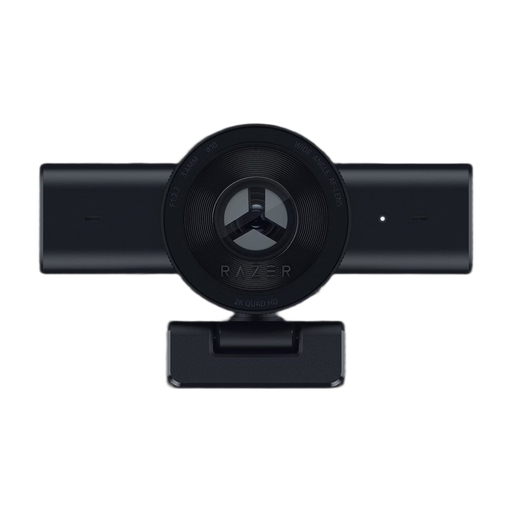
Razer Kiyo V2 X webcam, 1080p, 60 FPS

Razer Kiyo V2 X webcam, 1080p, 60 FPS

For computer-based recording or a live demo; allow for a USB connection to your computer.

1080p; 60 FPS.

View at Joybuy
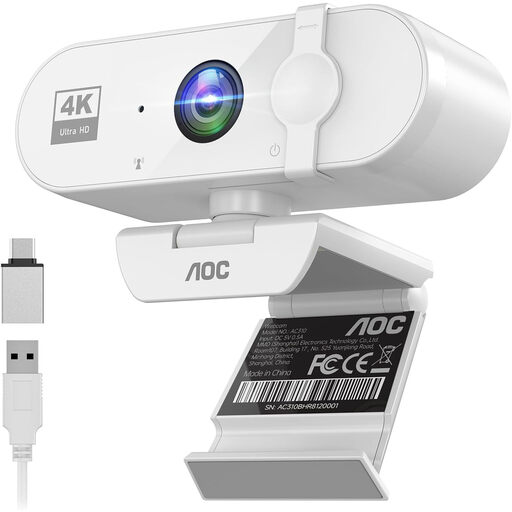
AOC webcam for PC with microphone, 4K, 99° field of view, white

AOC webcam for PC with microphone, 4K, 99° field of view, white

For a computer-based view of your desk; check whether the wide field of view suits your mounting position.

4K; 99° field of view.

View at Joybuy

AOC 4K PRO webcam with Sony IMX363 sensor, PDAF autofocus and 75° field of view

AOC 4K PRO webcam with Sony IMX363 sensor, PDAF autofocus, 75° field of view

For computer-based presentations; check that the stated viewing angle covers your drawing area.

4K; Sony IMX363 sensor; PDAF autofocus; 75° field of view.

View at Joybuy

Logitech C922 Pro Stream webcam with USB

Logitech C922 Pro Stream webcam, USB

For computer-based recording or demonstrations; plan for a connection to a compatible device and the framing you need.

View at Joybuy

Philips 4K UHD Webcam 4000 Series, 8 MP, EU version, SPL6408BT/00

Philips 4K UHD Webcam 4000 Series, 8 MP, EU version, SPL6408BT/00

For computer-based recording or live demos; check the USB-A connection and framing for your setup.

4K UHD; 8 MP; EU version.

View at Joybuy

Frequently asked questions

How should I set up my camera for white paper and pastel shades?

First, set up the lighting you plan to use while drawing, then film a test with paper and your pastel colours. Check the white balance and exposure in the footage. If you see flickering bands under a lamp, Sony UK suggests trying 1/50 or 1/100 second in regions with a 50-Hz power supply. The result will still depend on your camera and lighting.

What do I need to mount for an overhead view?

Plan a stable position above the drawing area you actually use, then check that both the paper and your working hand remain visible with the lens or webcam you intend to use. An adjustable screen or Show Mode won’t replace testing the framing and mount.

What else should I allow for in my camera setup?

Depending on the system you choose, your setup may need a lens, mount, storage or power supply. With a webcam, you’ll also need a computer and possibly recording software. Before buying, check what your planned workflow actually requires.

What are my rights if my camera is faulty in Germany?

If your camera is faulty, statutory consumer rights against the seller are separate from a voluntary guarantee. The consumer advice centre explains that remedies can include a repair or replacement; which option applies will depend on the circumstances.

Can I publish a video of my pastel drawing?

Your own drawing may be protected by copyright if it meets the requirements for a protected work; the German Patent and Trade Mark Office notes that this is assessed on a case-by-case basis. If the video shows other people or third-party copyrighted work, check the relevant rights and privacy considerations before publishing it. The information from the Federal Commissioner for Data Protection and Freedom of Information on video surveillance doesn’t provide a blanket answer for every private recording.