If you want buds to fill the frame
If you want small buds to appear as large as possible in your pictures, key things to consider include magnification, focusing conditions and a macro lens that’s compatible with your camera body.


For buds you can reach, a camera with a built-in close-up mode is a straightforward option. For especially fine detail, the right macro lens is what matters most on a mirrorless camera. If the branches are only accessible from a distance, make sure the zoom range and close-focusing capability work together at the focal length you’ll actually use. In windy conditions, image stabilisation can counter camera movement, but it won’t stop a branch from moving.
If you want small buds to appear as large as possible in your pictures, key things to consider include magnification, focusing conditions and a macro lens that’s compatible with your camera body.
For buds you can reach, a camera with a built-in close-up mode can be handy, as there’s no need to change lenses. Check how close you’ll need to get to the branch.
If the branches are further away, consider the zoom range and minimum focusing distance together at the zoom setting you want to use.
A good fit if: you want to photograph buds you can reach while out walking, without changing lenses.
The trade-off: the short focusing distance means you’ll need to get close enough to the branch.
A good fit if: you want to photograph branches and their surroundings to start with, then add a macro lens later.
The trade-off: a standard zoom and a separate macro lens are different pieces of kit. Check the exact kit and lens mount carefully.
A good fit if: the buds are further away from the path and you need more reach to frame them.
The trade-off: the focusing distance can change significantly as you zoom.
| What you’re looking for | What to check | Who it matters to |
|---|---|---|
| Making buds appear larger in the frame | Check the maximum magnification, focusing conditions and lens mount. Canon Germany lists a maximum magnification of 0.16× with autofocus and 0.26× with manual focus for the RF-S 18–45 mm at 45 mm; the separate RF 35 mm F1.8 Macro offers 0.5×. Nikon Germany lists a 1:1 magnification ratio for the separate Z MC 50 mm f/2.8. | If I want to show a single small bud in much greater detail, the specific lens matters to me. Around 33% of consumers put magnification for detail first. |
| Taking spontaneous photos without changing lenses | Check the close-up mode, the required distance from your subject and what’s included in the box. OM SYSTEM Germany states that the TG-7’s microscope mode can focus from 1 cm; this figure is not directly comparable with a magnification ratio. | If I want to photograph a bud I can reach while out walking, without changing lenses, easy-to-use kit is important. Around 27% of consumers prioritise being able to take their camera along spontaneously. |
| Photographing buds from a distance | Check the zoom range and minimum focusing distance together at your chosen focal length. Sony Germany lists a 35 mm equivalent focal length range of 24–600 mm for the RX10 IV; according to Sony, the focusing distance is around 3 cm at the wide-angle end and around 72 cm at the telephoto end. | If I want to stay on the path and photograph a branch further away, the focus needs to work at the zoom setting I’ve chosen. Around 20% of consumers say distance from the subject is their main consideration. |
| Weighing up system expansion and equipment | Check the full kit name, lens mount and included accessories. Nikon Germany notes that the Z50II kit with 16–50 mm does not include a charger; the separate Z MC 50 mm f/2.8 is a Z-mount macro lens with 1:1 magnification. | If I might add a macro lens later, I want to know in advance what’s in the kit and what I’ll need to buy separately. Around 20% of consumers prioritise system expansion and equipment. |
A short focusing distance on its own doesn’t tell you how large a bud will look in the picture. With a zoom camera, the distance can also vary depending on the focal length.
For interchangeable lenses, check the magnification ratio. For zoom cameras, check the focusing distance at the zoom setting you actually want to use.
A standard zoom kit isn’t the same as a kit with a macro lens. Specifications for separately sold macro lenses don’t automatically apply to the included zoom lens.
Compare the full kit name and what’s included with the lens you need to achieve the level of detail you want.
A macro lens may be an additional purchase.
Image stabilisation can compensate for camera movement, but it can’t hold a moving branch still. At high magnification, the depth of field is also shallow.
If you can, wait for a lull in the wind and consider your shutter speed. A tripod or image stabiliser only helps prevent camera shake.
The TG-7 is a fixed-lens camera with a microscope mode for close-up subjects you can reach, with no need to change lenses.
The EOS R50 with a standard zoom can capture buds and their park surroundings. For greater magnification, a compatible macro lens is available separately.
The Z50II standard zoom kit is one mirrorless camera option; for macro photography, you’ll need to consider a compatible lens separately.
The RX10 IV is a fixed-lens camera with a zoom range that covers subjects at varying distances.
This Joybuy selection includes digital cameras with zoom for changing your framing and taking on walks. However, a zoom specification alone doesn’t tell you how close a camera can focus or whether it’s suitable for macro photography.
 No image available
The stated optical zoom may be useful when you want to change your framing. Before buying, check whether the camera can focus closely enough from the distance you want to shoot at.
Specifications in the product name: 12× optical zoom, 4K, 64 MP and Wi-Fi.
According to the safety information, keep away from liquids and damp conditions.
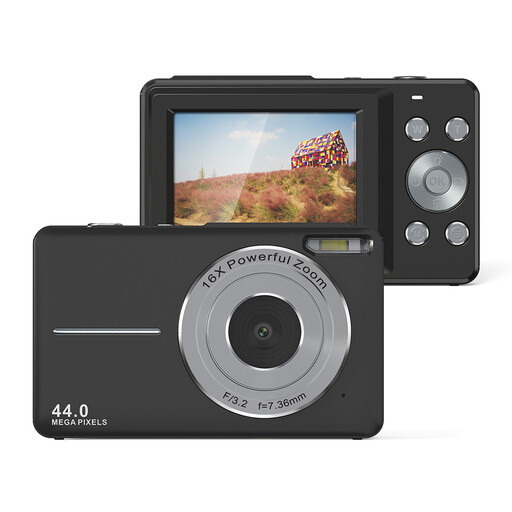 No image available
The pocket camera design may make it a useful choice for walks. For close-up photography, check the focusing distance, as digital zoom alone doesn’t tell you whether it’s suitable for macro shots.
Specifications in the product name: 16× digital zoom, 4K and 64 MP. The product description also mentions autofocus.
According to the safety information, keep away from water and moisture, and don’t point directly at the sun or other strong light sources.
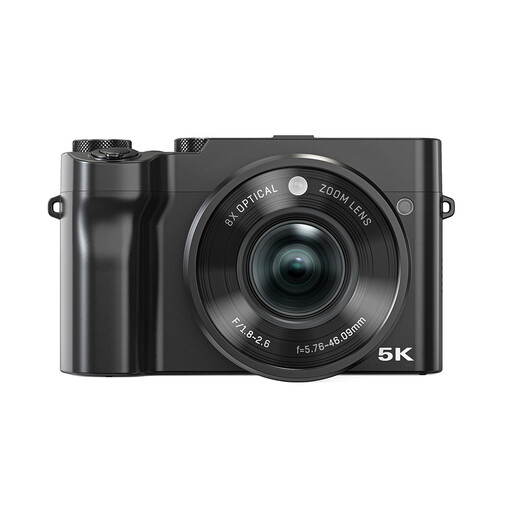 No image available
Optical zoom can be useful when you want to change your framing. If you want to photograph small buds close up, check the focusing distance.
Specifications in the product name: 8× optical zoom, 5K, 64 MP and two lenses. The product description also mentions autofocus.
According to the safety information, keep away from liquids and damp environments, and don’t point directly at strong light sources for extended periods.
A standard zoom may be enough if you want to photograph buds as part of a branch. If you want the bud to appear much larger in the frame, compare the magnification ratio of the specific lens: Canon Germany lists 0.16× with autofocus for the RF-S 18–45 mm at 45 mm; according to Canon, the separately sold RF 35 mm F1.8 Macro achieves 0.5×.
If you can, wait for a lull in the wind or choose a suitably fast shutter speed. A tripod or image stabiliser can reduce camera shake, but it won’t stop a moving branch. At high magnification, the depth of field is also shallow.
Dust can get onto the sensor when you change lenses. Check whether you can take the lens you need already attached to the camera, and follow the camera manufacturer’s instructions when cleaning it.
Taking a photo doesn’t justify breaking off a wild plant: under the conditions set out in § 39 of the Federal Nature Conservation Act (BNatSchG), wild plants are protected from being removed without good reason. Additional rules may apply in the specific park. The Rhineland-Palatinate data protection authority notes that photos of identifiable people contain personal data; whether taking or publishing them is permissible must be assessed in each specific context.