For photographers on narrow castle paths
If you photograph stretches of wall or gateways from close up, check the angle of view of the lens actually included. Nikon recommends wide-angle and ultra-wide-angle lenses for architectural photography.


Choose a camera based first on how close you usually are to the castle walls. On narrow paths, you’ll need a sufficiently wide angle of view; for distant details, check the actual telephoto reach available. If you often shoot handheld in low light, look at the stabilisation offered by the specific camera and lens combination. And if you’ll be walking for long stretches, consider the weight of the complete kit.
If you photograph stretches of wall or gateways from close up, check the angle of view of the lens actually included. Nikon recommends wide-angle and ultra-wide-angle lenses for architectural photography.
If you also shoot handheld in the shade or in the evening, compare the stabilisation offered by the specific camera and lens combination rather than looking at body specifications alone. Canon explains image stabilisation in its lenses, while Sony lists sensor-shift stabilisation for the α6700.
If you can’t get closer to towers or walls, the telephoto reach available matters. Panasonic lists a fixed optical zoom for the LUMIX TZ99; with interchangeable-lens cameras, check whether the kit lens will be enough.
A good fit if: you mostly photograph stretches of wall and gateways within walking distance, and may want to add lenses later.
The trade-off: Check the angle of view at the narrowest location; you may need an additional lens to capture more distant details.
A good fit if: you often shoot handheld in low light or want to keep your lens options open.
The trade-off: Stabilisation won’t replace the right angle of view or guarantee a particular shutter speed. Also check the weight of the complete kit.
A good fit if: you want to switch between nearby views and distant details without changing lenses.
The trade-off: The lens can’t be changed, and a wide zoom range doesn’t guarantee sharp, blur-free shots at the telephoto end.
| What you need | What to check before buying | Who will find this most important |
|---|---|---|
| Fitting the whole wall into a tight space | The focal length range of the included lens and the framing from your intended shooting position. | If I want to capture the whole wall from a narrow path, the angle of view is crucial; around 33% of consumers put it first. |
| Reducing camera shake | Check whether stabilisation is provided by the lens, the camera body or both. Don’t treat test results as a guarantee of real-world performance. | If I shoot handheld in changeable light, I look at the stabilisation offered by the specific combination; around 27% of consumers prioritise this. |
| Capturing distant details | Compare the actual telephoto focal length of the offer and, for a fixed zoom, check its wide-angle end too. | If I can’t get closer to a castle, I need enough reach to capture towers and details in the walls; around 20% of consumers put telephoto reach first. |
| Carrying your kit on long walks | Check the weight of the complete camera and lens combination and exactly what’s included in the kit, not just the body weight. | If I’m planning a longer walk with a camera and lens, the total weight of my kit matters; around 20% of consumers place the greatest importance on portability. |
Angle of view, stabilisation and what you’ll have to carry all depend on the combination you actually use.
Before buying, check everything included in the kit and the focal lengths you’ll need from your usual shooting positions.
An extra wide-angle or telephoto lens means more weight and more kit to carry.
Manufacturers’ claims about stabilisation may be based on a specific test lens and set conditions.
Compare the type of stabilisation offered by the specific combination, and treat any stop ratings as test results.
A weather-protection rating for a camera body doesn’t automatically mean the complete camera and lens combination has the same protection.
If you want to shoot in the rain, check the information for the specific lens and kit.
You may need a suitable lens or extra protection for the conditions you have in mind.
The kits reviewed differ in whether a charger is included.
Check the contents listed for the specific offer before planning to buy additional charging accessories.
The Nikon Z50II kit reviewed may need a separate charging solution; Nikon notes that a charger isn’t included.
The EOS R50 kit with RF-S 18–45 mm IS STM is an interchangeable-lens option for close-up views.
The Z50II kit with NIKKOR Z DX 16–50 mm VR pairs an interchangeable-lens camera with a stabilised standard zoom.
The LUMIX TZ99 is a compact camera with a fixed zoom for close-up views and distant details, without the need to change lenses.
The OM-5 Mark II is an interchangeable-lens option for longer walks outdoors; one listed kit includes the 12–45 mm F4.0 PRO.
The α6700 is an APS-C interchangeable-lens camera for photographers who want to combine in-body stabilisation with a choice of lenses.
The offers below include action cameras, gimbal cameras and 360° cameras. Before buying, check that the camera’s recording style and angle of view suit the castle views you want to capture.
 No image available
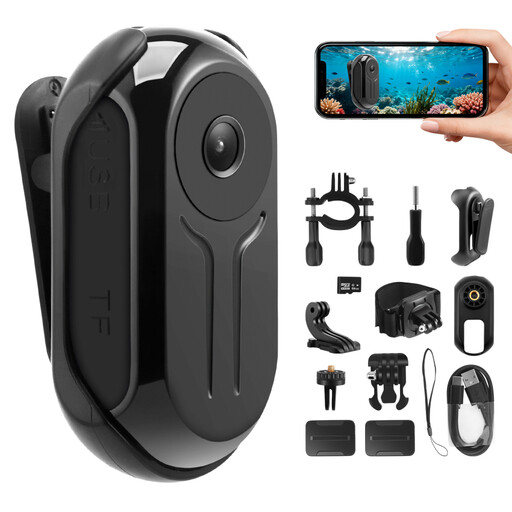
The stated angle of view may be useful for handheld shooting; check that the perspective suits the architectural view you want to capture.
Features listed in the title: 120° wide-angle lens, 0.85-inch screen and mounts for a bike, helmet and backpack.
 No image available
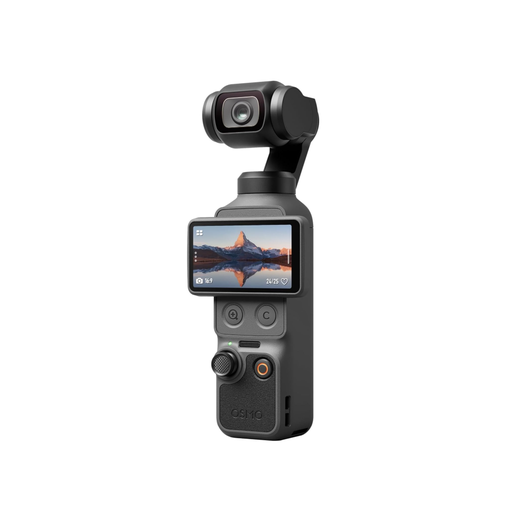
If you’re considering a compact gimbal camera for handheld shooting, compare the framing you need with the zoom specifications.
Features listed in the title: 1-inch CMOS sensor, 3-axis stabilisation, 2× lossless zoom, 107 GB of built-in storage and a rotating 2-inch screen. The zoom specification alone doesn’t tell you how much of a castle wall you’ll be able to fit in the frame.
 No image available
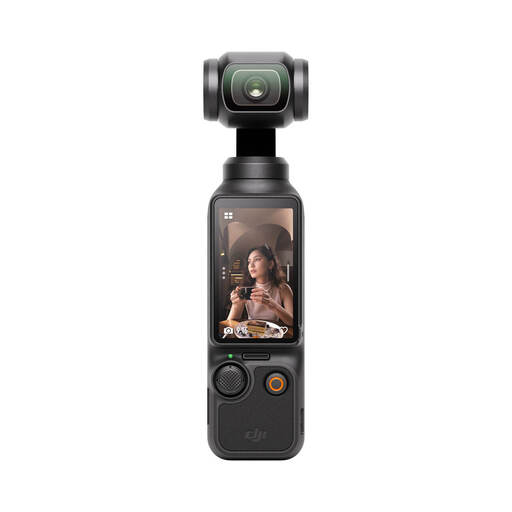
The product description mentions photo and video capture, along with mechanical 3-axis stabilisation. Check that the camera’s form and angle of view suit your subject.
Features listed in the title: 1-inch CMOS sensor, 4K/120fps video and a rotating 2-inch touchscreen.
 No image available
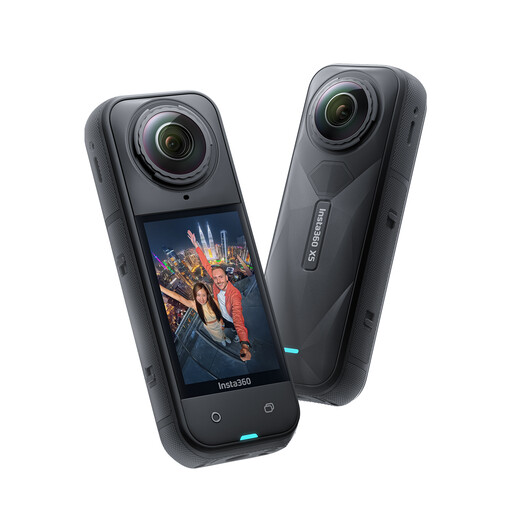
If you’re considering a 360° camera, check that this type of capture suits the castle wall photos you have in mind.
Features listed in the title: waterproof design and 8K 360° video. The stabilisation and horizon lock mentioned in the description apply to video recording.
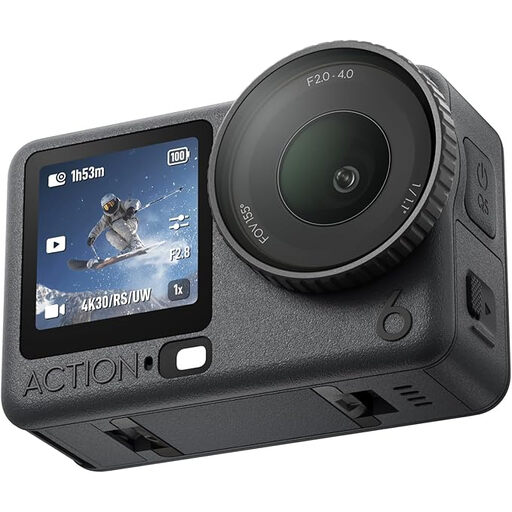 No image available
For handheld shots outdoors, check whether this action camera can capture the framing you need for stretches of wall and distant details.
Features listed in the title: 1/1.1-inch sensor and up to four hours of battery life; the description mentions a variable aperture and 4K recording.
Stabilisation can reduce camera movement during exposure, but it can’t guarantee a sharp shot in every situation. Check whether the specific camera and lens combination is stabilised; manufacturers’ figures under test conditions aren’t a guarantee for every shot.
Check what’s included, the lens mount and how the specific kit can be charged. Nikon notes that the Z50II kit reviewed doesn’t include a charger; Canon lists a charger as included with the EOS R50 kit reviewed.
When you buy in Germany, your statutory consumer rights against the seller are separate from any additional manufacturer’s guarantee. Verbraucherzentrale explains that goods are generally covered by a two-year statutory warranty; the type of purchase and your contract documents will determine what applies in your case.
Under certain conditions, § 59 UrhG allows you to reproduce the exterior view of buildings that are permanently situated beside public paths, roads or squares. This isn’t blanket permission to take photos from any location or inside every castle: follow the visitor rules in force and any local notices at the site. If people are recognisable, other rights may also apply.