For heathland panoramas and distant details from the path, a built-in zoom is an obvious choice if you want to switch between wide-angle and telephoto without changing lenses. A mirrorless camera kit may suit you better if choosing different lenses later matters more, and you’re happy to carry both. Compare full-frame equivalent focal lengths, the maximum aperture at the telephoto end and the weight of the complete kit. A digital zoom figure isn’t a substitute for optical reach, and the largest focal-length number alone says nothing about image quality.
Which camera suits you?
For photographing distant heathland details
If you want to capture individual subjects from an accessible spot, match the camera’s optical telephoto reach to the framing you need. In the Lüneburg Heath Nature Reserve, you must stay on the paths, as the Lüneburg Heath Nature Park points out.
For photographing wide heathland landscapes
To capture the breadth of the heath, consider how much of the landscape fits into the frame at the wide-angle end. If you also want to take the occasional shot of a distant subject, check both ends of the focal-length range.
For taking on longer walks
If you plan to carry your camera regularly, weigh up compact kit against long telephoto reach or extra lenses. Lüneburger Heide GmbH says the nature reserve can be explored on foot, by bike or by horse-drawn carriage.
What to consider when buying
Bridge camera with a long fixed zoom
Best if: You want to switch between heathland panoramas and distant details from the same spot, without changing lenses. For 4:3 photos, Panasonic gives the DC-FZ82D an optical range of 20–1200 mm in 35 mm equivalent terms.
The trade-off: The lens is fixed. Panasonic specifies a 1/2.3-inch type sensor and an F5.9 aperture at the telephoto end. Reach alone doesn’t tell you how well the camera performs in low light.
Bridge camera with especially long optical telephoto reach
Best if: Very distant details are your main subject. Nikon gives the COOLPIX P1100 an optical range of 24–3000 mm in 35 mm equivalent terms.
The trade-off: The additionally advertised 6000 mm figure uses Dynamic Fine Zoom, which is a digital extension, not the optical range.
Bridge camera with a shorter zoom and larger sensor
Best if: When choosing a camera with a fixed zoom, you also want to consider sensor size and the maximum aperture at the telephoto end. Sony specifies a 1.0-type sensor, a 24–600 mm full-frame equivalent range and an F4 aperture at the telephoto end for the RX10 IV.
The trade-off: Its optical telephoto limit is shorter than that of the DC-FZ82D and COOLPIX P1100 considered here. Specifications alone don’t provide an independent comparison of image quality.
Compact travel zoom
Best if: You want a pocket-sized camera for walks that can capture both nearby and distant views. Panasonic gives the DC-TZ99 an optical range of 24–720 mm in 35 mm equivalent terms.
The trade-off: Its telephoto reach isn’t as long as that of the superzoom bridge cameras mentioned above. Also check that the controls suit the way you plan to shoot.
Mirrorless camera with wide-angle and telephoto lenses
Best if: You want to choose lenses to suit your subjects. The documented Canon EOS R50 kit includes the RF-S 18–45 mm and RF-S 55–210 mm lenses.
The trade-off: You’ll need to account for both lenses and may have to change between them. The camera body’s weight doesn’t tell you how much the complete kit weighs.
| Buying priority |
What to check |
Who it matters most to |
| Distant details |
Optical telephoto reach in full-frame equivalent terms; maximum aperture at the telephoto end. |
If I want to photograph an individual distant flower from an accessible spot, optical reach matters more to me than digital zoom; around 36% of consumers put distant details first. |
| Wide landscapes |
Wide-angle end; format used for the focal-length figure. |
For a wide heathland scene, I want to capture enough of the landscape and use the telephoto range only as an extra; around 29% of consumers prioritise a broad view of the landscape. |
| Taking it on longer walks |
Size and weight of the complete kit, including lenses. |
On longer walks, I want to take my camera with me without carrying more lenses than necessary; around 21% of consumers prioritise being able to take their camera along regularly. |
| Light and lens choice |
Specifications for the specific camera-and-lens combination; maximum aperture at the telephoto end. |
If light and the freedom to change subjects later influence my decision, I want to consider the sensor, telephoto aperture and lens options together; around 14% of consumers prioritise this creative flexibility. |
Common assumptions to avoid
Compare zoom figures and kit contents carefully, so you can distinguish between optical reach, framing and the equipment you’ll actually be carrying.
-
Confusing digital zoom with optical zoom
For the COOLPIX P1100, Nikon distinguishes between an optical range of 3000 mm and a digital extension to 6000 mm. These figures describe different types of zoom.
When comparing cameras for distant details, start with the optical range on the same full-frame equivalent basis.
-
Looking only at the longest telephoto focal length
A tight telephoto view can’t replace a suitable wide-angle lens for a sweeping heathland landscape. Panasonic’s 20–1200 mm figures for the DC-FZ82D specifically apply to 4:3 photos.
Check both ends of the optical range, and the image format the manufacturer’s figures refer to.
-
Confusing the camera body or standard zoom with a complete telephoto kit
The documented Canon EOS R50 offer includes two lenses. The stated weight of the camera body doesn’t include the complete kit.
Check the exact model and lens list, as well as the equipment you plan to take with you.
-
Planning to leave the path to get the right shot
According to the Lüneburg Heath Nature Park, leaving the paths is prohibited in the Lüneburg Heath Nature Reserve.
Plan your shot from a permitted spot, and factor in the distance when choosing a lens.
Key camera brands at a glance
The models and product ranges below differ in zoom, sensor size and lens design; these details aren’t a general assessment of the brands.
Panasonic LUMIX
The DC-FZ82D and DC-TZ99 offer two different approaches to a fixed zoom.
- For 4:3 photos, Panasonic Germany gives the DC-FZ82D an optical range of 20–1200 mm and the DC-TZ99 a range of 24–720 mm, both in full-frame equivalent terms.
- When comparing models, consider the image format and the telephoto reach you need; focal-length figures aren’t a comparison of image quality.
Nikon
The COOLPIX P1100 is an option if exceptionally long optical telephoto reach is your priority.
- Nikon Germany gives the lens an optical range of 24–3000 mm in full-frame equivalent terms.
- The advertised 6000 mm figure uses digital zoom; it doesn’t prove that every focal length will produce sharp images.
Sony
The RX10 IV combines a fixed zoom with a 1.0-type sensor.
- Sony Germany specifies a 24–600 mm full-frame equivalent range and an F2.4–4 aperture for the lens.
- Its telephoto reach is shorter than that of the superzoom models considered here; specifications alone don’t provide an independent comparison of finished images.
Canon
The documented two-lens EOS R50 kit is a mirrorless camera option with separate lenses for wider and tighter views.
- The specific kit documented by Canon Germany includes the RF-S 18–45 mm and RF-S 55–210 mm lenses.
- Allow for both lenses and the possibility of changing between them. The body weight given by Canon doesn’t describe the complete kit.
Camera options at Joybuy
The Joybuy offers below are compact cameras for taking on the go. Before buying, check whether the specific model offers the optical focal length you need for distant details on the heath.
 No image available
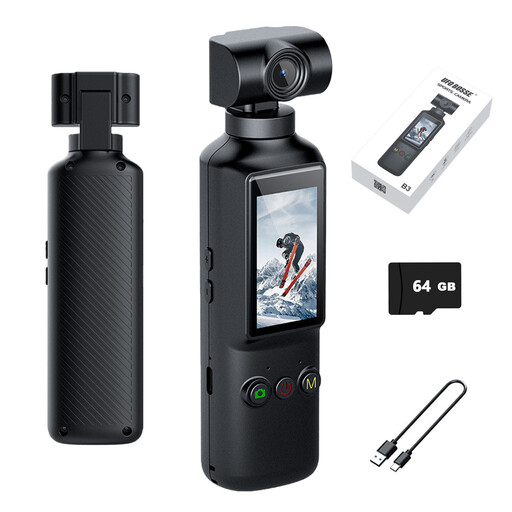
KINSI Mini Pocket Camera
This compact camera is described as suitable for travel and outdoor photography. Before buying, check that its optical focal length is right for capturing distant details.
16 MP; 270° rotating lens; 4K video at 30 frames per second; 5.1 cm HD display; Wi-Fi; 1000 mAh battery; USB-C.
View at Joybuy
 No image available
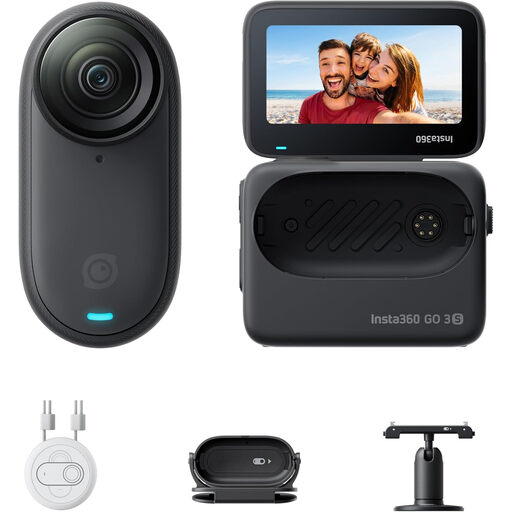
Insta360 GO 3S 128GB
This mini camera is designed for POV footage. Before buying, check that its field of view suits the distant subjects you want to capture.
4K video; stabilisation; 128 GB; stated waterproofing up to 10 m; stated battery life of up to 140 minutes.
If you have a pacemaker, don’t wear or use the magnetic pendant on your chest.
View at Joybuy
Frequently asked questions
Is digital zoom the same as optical zoom?
No. Nikon gives the Nikon COOLPIX P1100 an optical telephoto limit of 3000 mm; its advertised 6000 mm range comes from a digital extension. For distant subjects, compare the optical focal length in full-frame equivalent terms first.
Can I leave the paths to get a better spot for taking photos?
In the Lüneburg Heath Nature Reserve, you should stay on the paths. The Lüneburg Heath Nature Park points out that leaving the paths is prohibited; this isn’t a general rule for other areas.
Will I need to change lenses with any of these cameras?
The bridge and travel zoom cameras mentioned here have built-in zoom lenses. The documented two-lens Canon EOS R50 kit includes two lenses; when buying, check which ones come with the specific offer and which you’ll need for the shot you want.
When should I plan a visit to photograph the heath in flower?
Lüneburger Heide GmbH gives 8 August to 9 September as a general guide, but notes that flowering times can vary depending on the weather and location. Before you travel, check the latest flowering conditions rather than treating those dates as a definite forecast.


