For handheld shots of lake reflections, first make sure the lens suits the composition you want. Then consider the weight and weather protection of the complete kit. In low light, in-body image stabilisation is a relevant factor, but it won’t freeze moving water or guarantee sharp images at every shutter speed. The camera specifications mentioned here are based on manufacturers’ information, not a comparative test in this shooting situation.
Which camera matters for different photographers
Handheld photographers at dusk
If you’re taking photos without a tripod as the light fades, in-body image stabilisation can compensate for camera shake. It won’t stop moving water, though. Canon UK explains the different types of image stabilisation.
Photographers on longer walks by the lake
If you’re carrying your camera and lens for longer, consider the weight of the complete kit, not just the camera body. A camera body’s weather protection rating doesn’t automatically mean the lens is protected too.
Composing water reflections
For carefully composed shots of the shore, sky and reflections, you’ll need the right lens and a considered approach to using a polarising filter. Nikon UK notes that a polarising filter can reduce reflections on water.
What to look for when buying
| What you need |
What to check before buying |
Who it matters most to |
| Sharp handheld shots in low light |
Check whether stabilisation is in the camera body or lens, and review the conditions specified by the manufacturer. |
If I’m taking photos at dusk without a tripod, I want to minimise camera shake. Around 33% of consumers say handheld sharpness matters most to them. |
| Kit portability and weather protection |
Check the weight with the battery, card and intended lens, as well as the weather protection of every part of the kit. |
On longer walks, I want to be able to carry my camera and lens without relying on the camera body’s weight alone. Around 27% of consumers say keeping carry weight low matters most to them. |
| Field of view and editable contrast |
Check the field of view and mount of the specific lens, along with the available RAW format. |
If I want to frame the shore, sky and reflection to suit where I’m standing, I need the right composition. Around 20% of consumers say composition matters most to them. |
| Preserving the reflection |
Check the lens’s filter thread and assess the effect by comparing shots taken with and without a filter. |
If I want the reflection to remain visible on the water, I don’t want to use a polarising filter automatically. Around 20% of consumers say preserving reflections matters most to them. |
Common buying misconceptions
-
Assuming a polarising filter automatically improves every lake shot
A polarising filter can reduce the very reflection on the water that you want to keep visible in your image. Nikon UK explains how the filter reduces reflections on water.
Use the filter only when you want that effect, and compare shots with and without it while you’re there.
A filter that fits your lens is an additional accessory.
-
Taking stabilisation ratings as a guaranteed handheld shutter speed
Manufacturers’ figures depend on the test conditions used. Image stabilisation compensates for camera movement, not movement on the water’s surface.
Check the conditions under which the rating was measured, and test it with the lens you plan to use.
-
Assuming the camera body’s weight and protection apply to the whole kit
The weight and weather protection of a camera body don’t automatically tell you how heavy or well protected it will be with your chosen lens.
Check the specifications for every part of your planned setup, and consider the total weight when carrying it.
You may also need a suitable lens or weather protection accessories.
Brands and models to consider
OM SYSTEM
The OM-5 Mark II is an option for longer walks and changeable weather by the lake.
- OM SYSTEM lists a weight of 418 g with battery and SD card, and an IP53-certified camera body.
- This doesn’t cover the weight or weather protection of the specific lens, so check the complete kit.
Sony
The Alpha 6700 is an APS-C camera with an E-mount, giving you the flexibility to build a handheld kit to suit your needs.
- Sony lists a 26.0 MP sensor and built-in 5-axis stabilisation.
- Whether the kit you choose suits your composition and preferred carry weight also depends on the lens.
Fujifilm
The X-S20 is an APS-C option. A kit with the XC15–45-mm zoom lens is also listed for Germany.
- Fujifilm lists 26.1 MP and 5-axis stabilisation. According to the manufacturer, the rating of up to seven stops applies under CIPA test conditions with the XF35mmF1.4 R.
- This stabilisation rating can’t be applied across the board to every lens or kit.
Nikon
The Z5II is a full-frame option if handheld photography in fading light is your priority.
- Nikon lists 24.5 MP and in-body image stabilisation.
- The manufacturer’s specifications don’t replace checking your chosen lens and the weight of the complete setup.
Canon
The EOS R8 is a lightweight full-frame option with an RF mount.
- Canon lists 24.2 MP, a weight of 461 g with battery and memory card, and a weather-resistant design.
- For a complete handheld kit, check the lens, its stabilisation and the total weight separately.
Camera options at Joybuy
This selection includes cameras for handheld photography and flexible compositions by the lake. Pay particular attention to stabilisation, the lens and protection from moisture.
 No image available
Sony Alpha 6100 APS-C mirrorless camera with 16–50-mm power zoom lens
The zoom lens gives you a flexible field of view, and the product description also lists optical image stabilisation.
24.2-MP CMOS sensor and RAW format.
The listed weight is 396 g; check the weight of your specific kit configuration. According to the product description, the camera is not water-resistant.
View at Joybuy
 No image available
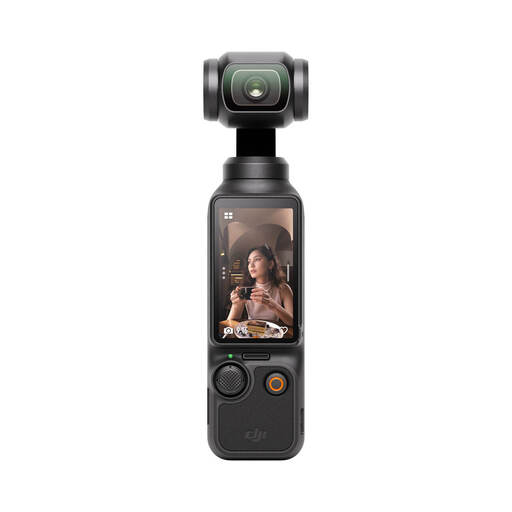
DJI Osmo Pocket 3
A compact camera option for handheld shots on the go; the product description lists mechanical 3-axis stabilisation.
1-inch CMOS sensor and rotating 2-inch touchscreen.
The product description lists 4K/120fps video and 10-bit D-Log M colour recording.
View at Joybuy
Frequently asked questions
Will a polarising filter help if I want to show the mountains reflected in the lake?
Not necessarily. According to Nikon UK, a polarising filter reduces reflections on water and can therefore weaken the reflection you want to capture. Assess the effect from your shooting position, and take comparison shots without the filter.
Is image stabilisation enough to keep still water smooth in a long exposure?
No. Image stabilisation compensates for camera movement, not movement on the water’s surface. Choose your shutter speed according to how you want the water to look.
What should I check in a camera kit, rather than just the body?
Check the lens mount, field of view, total weight and what’s included in the specific kit. For example, the German Fujifilm offer for the X-S20 explicitly lists the XC15–45-mm lens as included; body weights alone don’t give you a complete kit comparison.
Can I leave any path to take a photo of the shore in a protected area in Bavaria?
There’s no blanket answer. Enforcement guidance from the Bavarian State Ministry of the Environment and Consumer Protection, available through Bürgerservice Bayern, explains that the regulations for a particular protected area may restrict access, for example by requiring visitors to stick to paths. Check the regulations and signs at the specific lake; this doesn’t mean that leaving the path is prohibited at every lake.


