Close-up filming at the sewing table
If you want to show needle entry points and thread paths in close-up, the frame, camera distance, mounting and, if needed, lens all need to work with your table.


The key is whether the camera and lens can show the stitching sharply and in the frame you want from your planned mounting position – a high video resolution alone won’t tell you that. For changing close-up views, consider a mirrorless camera with a suitable lens; for a fixed live view on your computer, a USB webcam may be a better fit. You’ll also need to plan for lighting and mounting, as well as sound if you’re recording spoken instructions.
If you want to show needle entry points and thread paths in close-up, the frame, camera distance, mounting and, if needed, lens all need to work with your table.
For explanations recorded in a longer take, plan recording time, power and clear audio together.
If you mainly show your sewing on a computer, you’ll need a suitable view of the sewing table and controls that fit into your planned PC workflow.
A good fit if: You want to switch between the whole table and individual stitches, and can match the lens to your mounting position.
The trade-off: A camera body or kit zoom won’t necessarily give you the right framing for the stitching. Close-up macro settings can also leave less room for your hands and lighting.
A good fit if: You mainly give live demonstrations at a fixed table and control the image on your computer.
The trade-off: The mount, cable routing and focus all need to work from your actual position at the table.
A good fit if: You also want to capture moving views around your workshop and don’t want to change lenses.
The trade-off: You can’t swap the fixed lens for a macro lens. For a fixed overhead view, a gimbal isn’t a substitute for a suitable mount.
The percentages indicate the main concern each consumer has when filming leather stitching in a guest room.
| Buying priority | What to check | Who it matters most to |
|---|---|---|
| Stitches and hands in shot | Check the framing from your planned mounting point. With a macro lens, also consider the working distance and magnification ratio. | If you want to show needle entry points and thread paths in close-up, the frame should include your hands and tools too. This level of detail is likely to be the main concern for around 36% of consumers. |
| Longer takes with commentary | Check recording time at your intended settings, along with power options and microphone input. | For a longer sewing step with spoken instructions, uninterrupted recording and clear audio matter. Around 29% of consumers are likely to put this first. |
| Consistent footage in indoor lighting | Record a test using your planned lighting. Assess exposure, white balance and focus together. | If you want the leather texture and stitching to remain visible as room lighting changes, controllable exposure and focus are important. Around 21% of consumers are likely to pay particular attention to this. |
| Live view on a PC | Check that the USB connection and software work with your computer. Test the focus and mounting position at the table. | If you demonstrate your sewing directly on a PC, the view of the table should work without an unnecessarily complicated setup. A fixed live view on a PC is likely to be the deciding factor for around 14% of consumers. |
The resolution figure won’t tell you whether the stitching and your hands will look large enough and sharp from your planned camera position. Very close-up settings can also leave less room for your hands and lighting.
Plan your framing around the table height, your hands and the lens you intend to use before choosing a camera based on its 4K mode.
An interchangeable lens mount doesn’t tell you which lens is included in a particular package, or whether its angle of view is right for the stitching.
Check what’s included in the specific offer, and make sure the lens and mount are compatible with your setup.
Logitech’s claims about the MX Brio relate to how it shows faces. They don’t prove how clearly small stitches will appear under your lighting.
Assess focus, framing and lighting at your planned table position. Face image quality isn’t a test of stitching detail.
The EOS R50 V is a video-focused RF interchangeable-lens camera for changing table and close-up views.
The ZV-E10 II uses interchangeable E-mount lenses, giving you options for different views of the sewing table.
The Z 30 is an interchangeable-lens camera for pre-recorded tutorials.
The MX Brio is a webcam connected to a PC, designed for a fixed demonstration space.
The Osmo Pocket 3 is a compact camera with a fixed lens, suited to setups that also involve moving shots.
This selection of Joybuy products includes USB webcams for a fixed view of the table and PC-based demonstrations.
 No image available
For a fixed view of the table on your PC, if a USB webcam suits your recording setup.
Full HD 1080P; plug-and-play USB; built-in microphone.
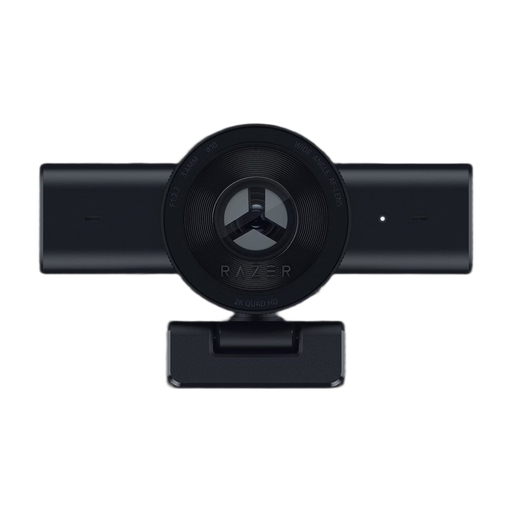 No image available
For a live view via your PC, if you can set up the framing at your table.
Full HD 1080p; 60 FPS; USB webcam.
 No image available
For recording on a PC from a fixed position, provided the webcam can capture the sewing table from where it’s mounted.
USB webcam.
 No image available
For a table demonstration using your PC, if a USB webcam works with your setup.
4K UHD; 8MP; EU version.
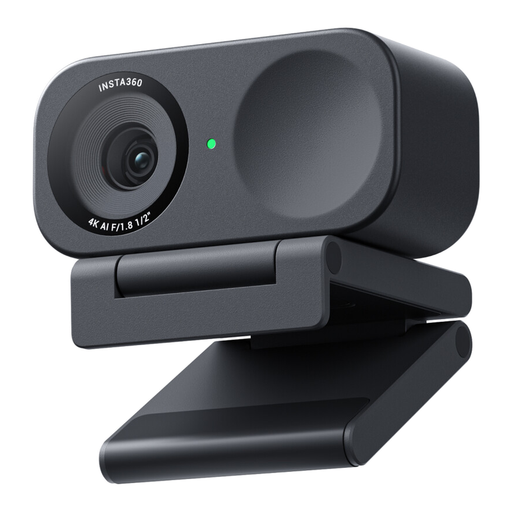 No image available
For a view of the table on a PC or Mac, if DeskView mode suits your live demonstration.
4K webcam; 1/2" sensor; HDR; PC/Mac.
No. The resolution figure alone won’t tell you how large or sharp the stitches will look from your camera position. Check the framing, focus and lighting with the lens or webcam you plan to use.
First, decide where to position the camera. Then record a test to check that your hands, tools and stitching all stay in shot. According to Canon Academy’s macro photography guide, macro shots have a shallower depth of field. Adjust the aperture and lighting together rather than simply moving the camera closer to your work.
Check whether the specific offer includes a lens for your preferred framing, a mount, a power supply, a storage medium and, if needed, a microphone. If a product is faulty, remember that your statutory rights against the seller are separate from any voluntary manufacturer’s guarantee.
It depends on the camera and recording conditions. Nikon lists up to 125 minutes of uninterrupted footage for the Z 30, but the maximum isn’t guaranteed for every setting or environment.
Section 22 of the German Art Copyright Act generally requires the consent of anyone whose image is distributed or shown publicly. If other people are recognisable in your video, make sure you have the necessary consent before publishing it.