A kit with a standard zoom lens may be enough for full figures; what matters is whether the supplied lens gives you the framing you want. For tiny painted details, separately available macro lenses, such as the 1:1 lenses specified by OM SYSTEM or Nikon, offer a different magnification ratio from the Canon RF-S 18-45mm. Focus stacking can help with deep, stationary figures. A tripod, controlled lighting and a suitable white balance are still important for consistent shots.
Which camera suits you
Detail photographers
If you want to show tiny painted details up close, compare the magnification ratio of the specific lens and the working distance available for lighting. Canon Deutschland, OM SYSTEM Deutschland, Nikon Deutschland and Sony Deutschland list different specifications for their respective lenses.
Figure photographers
For full figures or small groups against a white background, you need suitable framing, a stable camera position and consistent lighting. Canon Deutschland describes a tripod as a way to keep the composition and background consistent when taking product photos.
Depth-of-field planners
For stationary figures with details at different distances, it’s worth checking focus bracketing and whether your camera and lens are compatible. OM SYSTEM Deutschland lists focus stacking for the OM-5 Mark II and the M.Zuiko Digital ED 60mm F2.8 Macro.
What to look for when buying
| What to consider |
What to check before buying |
Who it matters most to |
| Magnification of fine details |
Check the magnification ratio of the lens actually supplied and its working distance. |
If I want to show fine brushwork up close, the magnification ratio matters more to me than the word ‘macro’. Around 33% of consumers put magnification of fine details first. |
| Sharpness from front to back |
Check focus bracketing or in-camera stacking on the exact camera model, as well as lens compatibility. |
With a deep, stationary figure, I want the front and back to be sharp, so I can plan to take a focus stack. Around 27% of consumers prioritise depth of field. |
| Consistent shots |
Consider white balance, a fixed camera position and enough space for even lighting. |
When I photograph several figures against white, I want to keep colours and framing as consistent as possible. Around 20% of consumers put consistency first. |
| Easy to get started |
Compare what’s included and the lens type; with a compact camera, check that it can frame your subject as closely as you want. |
If you want to get started without choosing an additional lens, check exactly what’s included in the kit and what kind of framing it allows. Around 20% of consumers prioritise a straightforward setup. |
Common buying mistakes
-
Assuming ‘macro’ means 1:1
A shooting mode labelled ‘macro’ doesn’t automatically tell you the magnification ratio a lens can achieve. Canon lists a maximum of 0.16x for the RF-S 18-45mm with autofocus, or 0.26x with manual focus, depending on the setting; OM SYSTEM and Nikon each specify 1:1 for the macro lenses mentioned.
Compare the specifications of the specific lens on offer, or check how your figures fit in the frame of a compact camera.
If the framing with the kit lens isn’t close enough for details, you may need an additional macro lens.
-
Not allowing enough space for lighting
A short distance between the lens and subject can limit the space directly in front of the figure. Sony gives a distance of 2.4 cm between the front of the lens and the subject when using the E 30mm F3.5 Macro at its closest focusing distance.
Check the working distance and possible light positions together, rather than comparing focal lengths alone.
-
Assuming a camera body or kit is a complete macro setup
A camera body or a kit with a standard zoom isn’t the same as a setup with a suitable macro lens. The OM-5 Mark II is also available as a body only; the M.Zuiko Digital ED 60mm F2.8 Macro is a separate lens.
Check what’s included in the specific version, and only plan for accessories you actually need for your setup.
If you choose a body-only version, you’ll need to budget for a suitable lens as well.
Key brands and product ranges
Canon
The EOS R50 with an RF-S standard zoom is suited to full figures; a separate RF macro lens is another option for close-up details.
- Canon Deutschland lists an RF mount and in-camera focus bracketing for the EOS R50.
- The RF-S 18-45mm is not a 1:1 macro lens. Depending on the setting, Canon lists magnification of up to 0.16x with autofocus and 0.26x with manual focus.
OM SYSTEM
The Tough TG-7 offers close-up modes, while the OM-5 Mark II can be paired with a separately available macro lens.
- OM SYSTEM Deutschland specifies a 1:1 ratio for the M.Zuiko Digital ED 60mm F2.8 Macro and lists it as compatible with focus stacking on the OM-5 Mark II.
- The Tough TG-7’s macro modes don’t offer the same 1:1 magnification ratio as a separate macro lens.
Sony
The APS-C E-mount system offers the E 30mm F3.5 Macro as an interchangeable lens option for small details.
- Sony Deutschland specifies a 1:1 magnification ratio for the SEL30M35.
- At the closest focusing distance, Sony states that there is 2.4 cm between the front of the lens and the subject. Check that there’s enough room for lighting in your setup.
Nikon
The Z system can be expanded for close-up photography with the separately available NIKKOR Z MC 50 mm 1:2,8.
- Nikon Deutschland specifies a 1:1 ratio for the lens and lists it as suitable for full-frame and DX Z-series cameras.
- Nikon gives a distance of around 5 cm between the lens and subject at very close range. Check that this leaves enough room to position your lighting.
Camera offers at Joybuy
The following cameras are available at Joybuy. However, their product descriptions don’t confirm that they’re suitable for macro photography of miniature figures. Before buying, check in particular how closely they can frame a subject.
 No image available
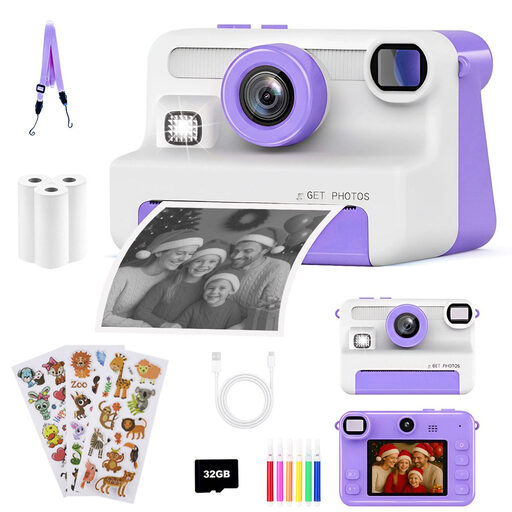
Fosmet instant camera for children, 1080P, 30MP, 8x zoom
The product description identifies this as an instant camera for children; it doesn’t confirm that it’s suitable for macro photography of miniature figures.
Features listed include a 2.4-inch screen, 3 rolls of instant film and a 32GB card. Check the close-up framing you need before buying.
View at Joybuy
 No image available
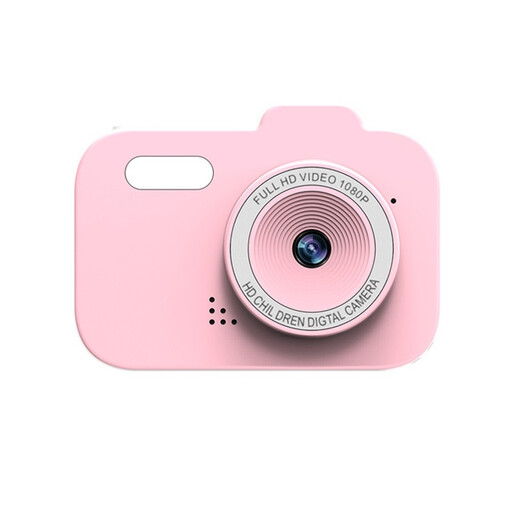
Digital camera for children, 2.0-inch screen, 1080p video
The product description identifies this as a digital camera for children, but doesn’t say whether it’s suitable for close-ups of small figures.
Features listed include a 2.0-inch screen and 1080p video. Before buying, check whether it can capture the framing you want at close range.
View at Joybuy
 No image available
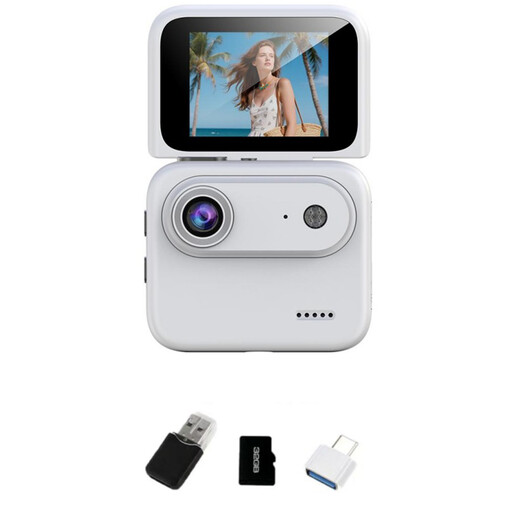
NAXSIR 4K mini action camera, 32 GB, 2.0 inch, 143°
The product description identifies this as a mini action camera with a wide-angle lens; it doesn’t confirm that it’s suitable for macro photography of miniature figures.
Features listed include a 32-GB TF card, a 2.0-inch flip screen and a 143° wide-angle lens. Check the close-up framing for your setup.
View at Joybuy
 No image available
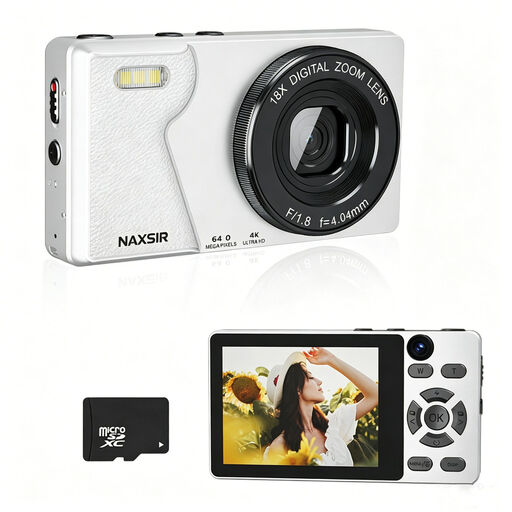
NAXSIR 4K Ultra HD digital camera, 64 MP, 18x digital zoom
The product description identifies this as a digital camera with autofocus; it doesn’t confirm that it’s suitable for macro photography of miniature figures.
Features listed include 64 MP photo resolution, 18x digital zoom and a 32-GB memory card. Check the close-up framing you want.
View at Joybuy
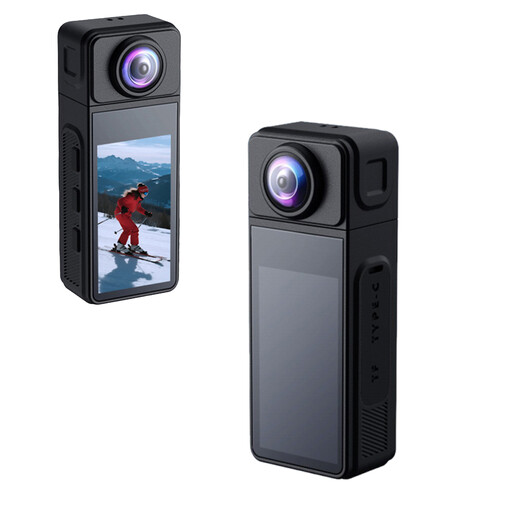 No image available
NAXSIR 2K mini action camera, 270° rotating wide-angle lens
The product description identifies this as a mini action camera; it doesn’t confirm that it’s suitable for macro photography of miniature figures.
Features listed include a magnetic body and electronic image stabilisation. Check whether the lens can achieve the close-up framing you need.
View at Joybuy
Frequently asked questions
Do I need a 1:1 macro lens for every miniature figure?
No. For full figures, the framing from a lens you already own may be enough. For very small painted details, a macro lens specified at 1:1 offers a different maximum magnification from, for example, the Canon RF-S 18-45mm. Whether you need it depends on the framing you want.
How can I set up repeatable photos against a white background?
Fix the camera in position with a tripod and keep the lighting as consistent as possible. Canon Deutschland recommends using a fixed composition for product photography. Also adjust the white balance to suit your lighting. RAW files let you correct colours later.
What should I compare when checking the camera, lens and what’s included?
Check what’s included with the specific version, rather than looking at the camera body alone. A kit with the RF-S 18-45mm includes a standard zoom, while a separate macro lens will need to be budgeted for separately. OM SYSTEM also notes that the OM-5 Mark II body-only pack described requires a separate SD card and doesn’t include a battery charger.
What rights apply to business-to-consumer online purchases in Germany?
For a distance contract covered by the relevant rules, you generally have a 14-day right to cancel from the date of delivery; statutory exceptions apply. Under the EU consumer rules described, faulty goods are covered by a statutory guarantee of at least two years from receipt. These rules apply to purchases from traders, not private individuals.


