Instructors filming on their own
You’re painting and filming at the same time, so you need to check focus and framing from your work table.


If you’re filming while you paint, an HDMI monitor that you can position as needed and that offers focus and exposure tools is a sensible starting point. Choose the screen size to suit your viewing distance and desk space, and check your camera’s HDMI signal, power supply and what’s included before you buy. Manufacturer claims about brightness or colour reproduction are no substitute for checking the preview under your own studio lighting.
You’re painting and filming at the same time, so you need to check focus and framing from your work table.
You want to keep an eye on changing lighting and colourful work as you record, without mistaking the monitor preview for proof of colour-accurate footage.
You’re looking for a monitor you can connect and mount to suit your camera, and keep powered during longer recording sessions.
First decide what you need to see reliably while you paint. Then check that the screen size, camera output and power supply will work with your setup.
| What matters when buying | What to look for | Who will find this most important? |
|---|---|---|
| Focus and framing | Check for focus tools such as peaking, and choose the screen size to suit your viewing distance and desk space. | When I’m filming while I paint, I need to see the brush tip and the piece in the frame. Around 36% of consumers prioritise focus and framing. |
| Lighting and colour preview | Check how easy the screen is to read under your studio lighting. Brightness and waveform tools alone don’t prove that footage is colour-accurate. | When the lighting changes, I want to assess the preview and exposure without treating them as a guarantee of how the glaze colours will look later. Around 29% of consumers prioritise lighting and colour preview. |
| Camera connection | Check your camera model, HDMI connection, output signal and frame rate against the monitor, and test the recording mode you want to use. | Before buying, I want to know whether my camera will send a suitable image to the monitor in the recording mode I actually use. Around 21% of consumers consider camera connectivity their top priority. |
| Setup and power | Check the mounting options, a suitable power source and what’s included with the version you’ve chosen. | For longer recording sessions, I want to mount the monitor securely outside the painting area and make sure it has a reliable power supply. Around 14% of consumers prioritise setup and power. |
A monitor can accept a 4K signal and still have a lower-resolution panel. Portkeys lists the PT5 II as having a 1920 × 1080 panel and supporting a maximum UHD 4K input at 30p.
Compare the supported input signal resolution with the panel resolution, and check your camera’s frame rate too.
Manufacturer brightness claims and preview tools don’t show whether the glaze colours on the monitor will match your finished work.
Assess the preview under your own studio lighting. Use LUTs to help with monitoring, not as a guarantee of the colours in your footage.
The NEEWER F700 is available in versions without a battery, with one battery or with two. With the Atomos Shinobi II, touch-to-focus and camera control depend on having a supported camera.
Check what’s included with the exact version you’re buying, and make sure your camera model supports the control features you want.
The PT5 II is a compact HDMI option for checking your shot close to the table. The HD7H has a larger 7-inch display with a different panel resolution.
The F6 PLUSX is a compact option if you want a bright screen and exposure tools.
The F700 is a 7-inch option for setups where a larger screen could come in handy.
The Shinobi II combines image monitoring with extra control features that depend on your camera model.
The DC-A1 is a 7-inch option for anyone considering a display with a particularly high brightness rating.
For a permanent home studio setup, a large HDMI screen could work well as a preview monitor. Before buying, check that your camera outputs a suitable HDMI signal in the recording mode you want to use.
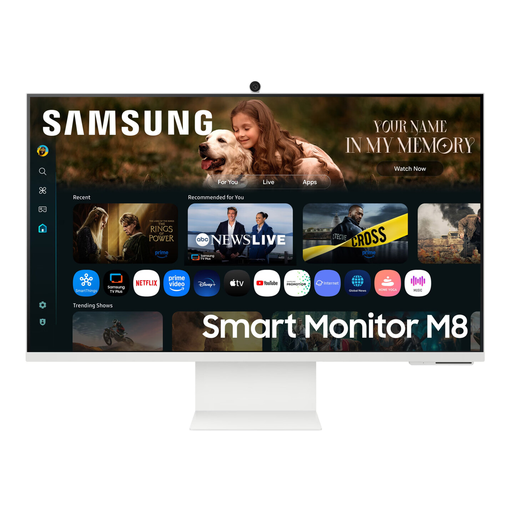 Image unavailable
For a permanent setup, the 32-inch screen could be useful for checking your preview from further away. First, check your camera’s HDMI signal in the recording mode you want to use.
According to the product specifications: 32-inch VA screen, 4K UHD, 60 Hz, webcam and HDMI connection. The product description says the stand is height-adjustable and tiltable.
No. As well as the resolution, check the camera signal’s frame rate and the monitor’s supported inputs. For example, Portkeys lists the PT5 II as supporting UHD 4K up to 30p; how your camera performs while recording depends on the model and settings.
Test the image in the recording mode you’ll actually use, not just in standby mode. Depending on the camera and settings, the camera display, HDMI output and internal recording may work differently together.
Check the supported power source and what’s included with the specific version before planning to use a battery, mains adaptor or mount. For online orders, consumers generally have 14 days from receiving the goods to withdraw from the contract, according to the Consumer Advice Centre. The right of withdrawal is separate from statutory warranty rights for faulty goods and any voluntary guarantee.
Under § 22 KunstUrhG, consent from the person shown is generally required to distribute or publicly display images of them. Whether a particular use of personal data is lawful depends on the circumstances of recording and publication. Buying a monitor does not give you permission to film or publish footage.