Teachers focusing on fine details
When you’re filming small edges or surface details, a larger image can make it easier to check focus. Fotonomaden describes this benefit for macro and video work; the advice isn’t specific to clay modelling.


For a clay modelling lesson by a window, an HDMI monitor that’s easy to reach and offers magnification or focus peaking is a useful starting point for checking fine details. Waveform, histogram or false-colour displays can also help you assess the camera signal. Choose a size and brightness to suit your viewing distance and setup, and check the camera signal, mounting and power supply before you buy. A monitor-recorder is mainly worthwhile if you also want to record externally.
When you’re filming small edges or surface details, a larger image can make it easier to check focus. Fotonomaden describes this benefit for macro and video work; the advice isn’t specific to clay modelling.
If you need both hands free to work on your piece, the monitor should be easy to see from your working position. The screen size and how you position it can help you keep both the piece and your movements in shot.
If the light changes between the window and your workpiece, waveform, histogram or false-colour displays can help you assess the camera signal. These displays don’t replace choosing the right camera settings.
For a clay modelling lesson by a window, the main priorities are checking fine details, keeping an eye on the framing and choosing a setup that works with your camera and working position.
| Buying priority | What to check | Who is it most relevant to? |
|---|---|---|
| Focus on fine details | Check for focus peaking and, if available, image magnification; record a test clip with your camera. | If I need to check small edges or hand movements while working with clay, I want to be able to assess focus on the monitor. Around 31% of consumers put focus first in this scenario. |
| Exposure in window light | Check which exposure aids are available and test the monitor in the position where you plan to use it. | If the light by the window changes, I want to be able to assess the exposure of the camera signal; a high display brightness alone doesn’t tell me this. Around 25% of consumers prioritise monitoring the light. |
| Framing while you work | Check from your actual seated or standing position that the workpiece and your hand movements stay in shot; consider the mounting and viewing angle too. | If I’m modelling with both hands, I want to see the workpiece and my hand movements from where I’m working. Around 25% of consumers prioritise keeping an eye on the framing. |
| Camera signal and power supply | Check that the HDMI output, connector and video format match the monitor; check the power supply and mounting for the specific version you’re considering. | If I want to film a whole lesson, I need a compatible camera signal and a reliable power supply for my setup. Around 19% of consumers prioritise signal, mounting and power requirements. |
According to Portkeys, the Portkeys HD7H can accept UHD signals up to 30p, but its panel has a resolution of 1280 × 720 pixels. The input format and panel resolution are two different specifications.
Compare each separately with your camera signal and the level of detail you want to assess on the monitor.
A high brightness figure describes the monitor display, not the exposure of your recording. Waveform and similar displays, on the other hand, help you assess the video signal.
In changing window light, test the monitor position and any available exposure aid with a test clip.
The NEEWER F700 is available in different bundles, which vary in whether a battery is included. According to Atomos, the Atomos Shinobi II’s touch focus function is limited to specifically supported camera models.
Check what’s included in the version you choose. For camera control features, check compatibility with your camera model.
Depending on the bundle, you may need to buy a battery, a suitable power supply or a mount separately.
FEELWORLD lists the LUT5 as a 5.5-inch HDMI monitor with a resolution of 1920 × 1080 pixels and a maximum brightness of 3,000 cd/m².
According to the manufacturer, the Portkeys HD7H is a 7-inch monitor with focus peaking, a histogram and false colour.
NEEWER lists the F700 as a 7-inch monitor with a resolution of 1920 × 1080 pixels and a maximum brightness of 2,000 nit.
According to the manufacturer, the Atomos Shinobi II is a 5-inch monitor with a brightness of 1,500 cd/m² and a 4K HDMI input.
According to Blackmagic Design, the Video Assist range includes monitor-recorders that support different video formats.
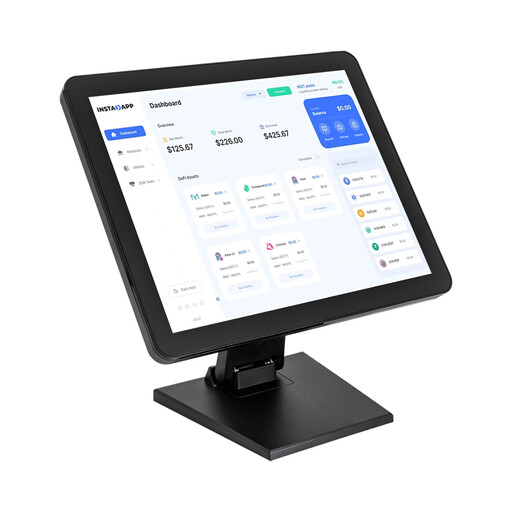
For a larger HDMI monitor image at a fixed workstation; before you buy, check that your camera outputs a compatible HDMI signal.
 No image available
Could work as a larger HDMI monitor image at a fixed workstation; its suitability depends on whether your camera outputs a compatible HDMI signal.
Capacitive touchscreen with 10-point touch and a resolution of 1280 × 1024. The angle is adjustable from 0–90°; connections listed include VGA, HDMI and USB.
No. A figure in nit or cd/m² describes the specified display brightness, not the exposure of the scene you’re recording. Check the viewing angle and monitor position. Waveform, histogram or false-colour displays can help you assess the camera signal, but they don’t guarantee that the screen will be easy to read from every position by a window.
No. Portkeys lists UHD input signals up to 30p for the HD7H, while the panel has a resolution of 1280 × 720 pixels. Check the input format and panel resolution separately.
This can depend on the camera, recording format and HDMI settings. Sony documents differences between the displays on the camera and an external monitor for certain cameras, depending on the settings; this can’t be assumed to apply to other models. With your camera in the recording mode you plan to use, check that the image and the overlays you want are displayed.
Position the monitor so you can see the edges of the frame and the details while you work, then test the HDMI signal and mount with a test recording. Also check the battery or external power supply for the version you’ve chosen; the NEEWER F700 bundles listed in Germany vary in whether a battery is included.
No. Where the relevant EU rules require a product to carry a CE mark, the manufacturer declares that it meets the applicable requirements. Your Europe points out that no central EU body issues a general CE certificate; when viewing a listing in Germany, check the model identification and the relevant conformity information.