Choose a monitor to suit your viewing position and your camera’s HDMI output. A well-positioned display helps you check the framing and fine details in your drawings while you film. If the light from your window changes, a histogram or waveform is more useful for checking exposure than a high brightness rating alone. And if you can already see your camera’s screen clearly, you may not need an extra monitor.
Who would benefit from a camera monitor?
Sketchbook filmmakers working by a window
When you’re filming bright pages, you’ll want to keep an eye on drawing details and exposure. FEELWORLD lists monitoring tools for this, while Canon Europe explains how a histogram can flag very bright areas in an image.
Artists filming on their own
As you turn the pages, you’ll want to keep an eye on the page edges and fine lines without losing track of the framing. NEEWER describes the benefits of a larger display for viewing from further away, while FotoNomaden reports that an additional monitor makes it easier to assess focus.
Filmmakers with an existing camera setup
You want to add a monitor to your existing camera, HDMI, power and tripod setup. Check the information from Portkeys, Sony and Atomos to see which connections, signal formats and control functions are compatible with your specific camera model.
What should you look for when buying?
| What you need |
What to check before buying |
Who is this important for? |
| Exposure on bright pages |
Histogram, waveform or false colour; also check how easy the display is to read from your intended position by the window. |
If I’m filming bright pages in changing window light, I want to assess the drawing details and exposure together. Around 36% of shoppers prioritise this. |
| Framing and focus |
Focus peaking or image magnification, monitor position and viewing distance from your drawing space. |
As I turn the pages, I want to keep the page edges and fine lines in frame, even when I’m not sitting right next to the camera. Around 29% of shoppers prioritise framing and focus. |
| Connection and controls |
The camera’s HDMI output in your planned recording mode and the input format supported by the monitor; check control functions separately. |
If I want to keep using my existing camera equipment, the signal and the controls I need must be compatible. Around 21% of shoppers have compatibility and controls as their main priorities. |
| Power and mounting |
Battery or external power for the specific version, as well as mounting and cable management. |
For a longer recording session at my desk, I want to mount the monitor securely and keep it powered throughout. Around 14% of shoppers check power and setup first. |
Common buying misconceptions
-
Assuming “4K HDMI” means a 4K display or recording capability
For the PT5 II, Portkeys lists a screen resolution of 1920 × 1080 separately from its support for 4K input signals. Displaying a signal doesn’t automatically mean the monitor can record it.
Compare the panel resolution, HDMI input format and any external recording function you may need separately against your requirements.
-
Buying based on the nits rating alone
Brightness figures quoted by manufacturers don’t tell you how clearly you’ll be able to see the paper and image details from your specific position by the window.
Also consider the monitor position, viewing distance and exposure tools.
-
Assuming the battery, power supply and mount are all included
FEELWORLD and NEEWER describe different accessory and battery options, so what’s included may vary depending on the version you choose.
Check the details for the specific version and plan how you’ll power it for the duration of your recording.
Key brands at a glance
Portkeys
The PT5 II is a compact HDMI option for checking your image and exposure at your workstation.
- Portkeys lists focus peaking, waveform, histogram and a 5-inch display for the PT5 II.
- Its stated maximum brightness is 500 nits. Also check which software version is required for the function you want.
FEELWORLD
The F5 PROX combines a compact display with tools for checking focus and exposure.
- FEELWORLD lists a 5.5-inch display, 1600 nits, focus peaking and waveform for the F5 PROX.
- The manufacturer’s brightness rating alone doesn’t tell you how easy the display will be to read from your position by the window. Also check whether your chosen version includes a battery.
NEEWER
The F700 is a larger HDMI option if you want to view the image from your drawing space.
- NEEWER’s EU website lists a 7-inch display, up to 2000 nits and exposure aids for the F700.
- The manufacturer says the F700 has a fan, so check the noise level with your setup if you’re recording audio. Battery options vary.
Atomos
The Shinobi II is worth considering if you want to control a compatible camera from the monitor as well.
- Atomos lists a 5.2-inch display with 1500 nits for the Shinobi II.
- Camera control requires a compatible camera, as well as the additional connection and setup described by the manufacturer.
Blackmagic Design
Video Assist is more suitable if you genuinely need external recording as well as monitoring.
- Blackmagic Design offers 3G and 12G HDR models, with different supported formats and recording options.
- According to the manufacturer, Blackmagic RAW is available only with supported cameras. Extra recording features aren’t necessarily needed for a simple sketchbook review.
Joybuy monitors for a fixed preview setup
The Joybuy products below are large monitors for a fixed preview setup at your drawing space. Whether they can connect directly to your camera depends on the inputs and outputs, and the signal format they support.
 No image available
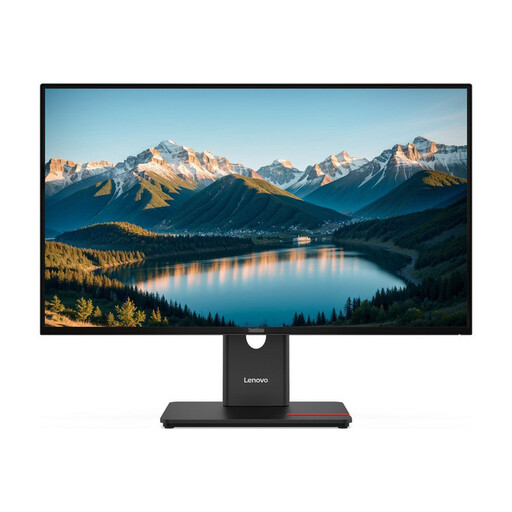
Lenovo ThinkVision T27Q-40, 27-inch QHD IPS monitor
For a larger fixed preview, if you want to position the screen at your drawing space.
27-inch, QHD, IPS; the product name lists an HDMI 2.1 input.
Joybuy
 No image available
MSI PRO MP273UPDE E6, 27-inch 4K UHD IPS monitor
For a detailed fixed preview, provided your camera output and monitor support the signal format you’ve chosen.
27-inch, 4K UHD, IPS and 60 Hz; the product name lists HDR Ready.
Joybuy
 No image available
TCL 27P2A Pro, 27-inch Mini LED QHD monitor
For a fixed preview with an adjustable viewing position at your drawing space.
QHD (2560 × 1440), 320 Hz and HFS (IPS); the product name lists VESA DisplayHDR 600.
Joybuy
 No image available
TCL 27P2A, 27-inch Mini LED QHD monitor
For a fixed preview, if you want to position the monitor flexibly at your drawing space.
QHD (2560 × 1440), 200 Hz and HFS (IPS); the product name lists VESA DisplayHDR 600.
Joybuy
 No image available
INNOCN 40C1U, 40-inch 5K IPS ultrawide monitor
For a large fixed preview, if your setup has enough room for a wide screen.
40-inch, 5120 × 2160, IPS, 100 Hz and 21:9; the product name lists two HDMI inputs.
Joybuy
Frequently asked questions
Do I really need an external monitor to film a sketchbook review?
Not necessarily. First, check whether you can assess the frame edges and focus on your camera screen from your drawing space. An extra display, positioned to suit your setup, can make it easier to keep an eye on things.
How can I check the exposure of a white page?
Use the histogram or waveform while recording in your chosen setup, and check whether details are being lost in the bright areas of the image. Simply turning up the monitor brightness isn’t a substitute for this check.
Is an HDMI cable enough to control the camera from the monitor?
No. Camera control is an additional function and isn’t guaranteed by HDMI alone. For the Shinobi II, Atomos describes using an additional USB-C connection and changing settings on a compatible camera. Check your specific camera model.
What should I check when setting it up for the first time and for longer recording sessions?
Test whether your camera outputs the HDMI image you want in your chosen recording mode and whether the monitor accepts it. Also check the mount, cable management and power supply for the version you’ve chosen. Some cameras let you configure whether recording information appears on the HDMI output.


