An external camera monitor isn’t essential for everyone. If you can judge focus and framing well on your camera’s display, that’s usually enough for filming your knitting. An extra display can help if your camera position makes it difficult to check the shot, or if fine stitches are hard to see. Before you buy, check your camera’s HDMI signal, recording mode and cable, as well as mounting and power requirements. A high brightness rating alone isn’t a good reason to buy one for a home studio.
Who can benefit from a camera monitor?
Filming close-up details
If you’re filming stitches and needle movements close up, you’ll want to see while recording whether the important details are in focus. Fotonomaden explains that an additional monitor makes it easier to check focus in close-up shots.
Knitting instructors filming on their own
If you’re sitting at the table by yourself, a well-positioned monitor can make it easier to keep an eye on your hands, needles and work surface, without having to twist round to look at the camera display.
Recording longer lessons
For longer recordings, it’s worth planning the monitor position and power supply as part of your table setup. Atomos lists NP-F battery or USB-C PD power for the Shinobi II; it doesn’t specify a built-in battery.
What should you look for when buying?
Your existing camera display
A good fit if: You can clearly see the framing and focus from your knitting space, and can position the display where you need it.
The trade-off: You won’t need an extra screen, battery or cable run. However, small displays or awkward viewing angles can make it harder to check details.
Compact HDMI monitor
A good fit if: You want to check your hands, needles and stitches beside or in front of the camera. Portkeys lists focus aids such as peaking on the PT5 II.
The trade-off: You’ll need to factor in mounting, power and an HDMI cable that’s compatible with your camera. Portkeys says the PT5 II accepts UHD signals up to 30p and has a 1920 × 1080-pixel display.
Monitor with analysis tools
A good fit if: You want to check exposure on the monitor regularly, or bright window light makes the screen difficult to read. Atomos lists waveform and histogram tools for the Shinobi II.
The trade-off: Manufacturers’ brightness figures aren’t a substitute for testing a monitor in your home studio. Atomos lists an HDMI input for the Shinobi II, but no HDMI output; camera control requires a compatible camera.
| What matters |
What to check before buying |
Who is it important to? |
| Focus on fine stitch details |
Check for peaking and consider where to position the monitor. Review a test recording with yarn, hands and needles in shot. |
When I film stitches and needle movements close up, I want to be able to check focus while recording. Around 33% of consumers would put focus on fine stitch details first. |
| Framing from your knitting space |
Plan where to position the monitor, your viewing angle, mounting and cable routing at your own table. |
When I knit and film at the same time, I want to check my hands and work in shot without twisting round to look at the camera display. Around 27% of consumers would prioritise framing from their workspace. |
| Power and setup |
Check which batteries or inputs are supported and what’s included with the specific model. Test the power setup before making a long recording. |
When I record a longer lesson, I want to plan the monitor and mounting so the recording isn’t interrupted by an unresolved power issue. Around 20% of consumers would prioritise power and setup for longer lessons. |
| Exposure and visibility |
Assess the monitor where you’ll use it, under your actual lighting conditions, and distinguish between the analysis tools you need and a high peak brightness rating. |
When the light from a window or work lamp changes, I want to judge the camera image reliably and use the right monitoring tools. Around 20% of consumers would make lighting control their main priority. |
Avoid common buying mistakes
-
Assuming “4K HDMI” means a 4K display
Support for a UHD input signal doesn’t tell you how many pixels the display itself has. Portkeys lists a 1920 × 1080-pixel display for the PT5 II, with UHD input up to 30p.
Compare camera settings, supported input signal, frame rate and native display resolution separately.
-
Leaving power and mounting until after you buy
According to Atomos, the Shinobi II has no built-in battery and needs a compatible NP-F battery or USB-C PD. An additional monitor also means extra mounting and cabling to consider.
Check what’s included with the specific offer, and choose a mount, cable and power supply to suit your table setup.
-
Making maximum outdoor brightness your top home-studio priority
The 3000-nit figure Feelworld quotes for the LUT5 doesn’t, on its own, prove it will be better for the lighting in your knitting space.
First, assess the monitor’s position and the lighting where you’ll actually be filming. Then weigh up brightness, display size and the monitoring tools you need.
-
Confusing a warranty with your statutory rights
Verbraucherzentrale distinguishes between statutory rights for faulty goods and a voluntary warranty. They have different terms and points of contact.
Make a note of who to contact if there’s a fault, and read the warranty terms separately from your statutory rights against the seller.
A guide to relevant brands
Portkeys
The PT5 II is a specific example of a compact HDMI monitor with focus aids.
- Portkeys lists a 5-inch display, peaking, waveform and HDMI input and output for this model.
- The maximum HDMI UHD resolution listed is 30p. Compatibility also depends on the signal from your particular camera; these specifications don’t automatically apply to other Portkeys models.
Atomos
The Shinobi II is aimed at buyers looking for analysis tools as well as an image display, or control functions when used with a compatible camera.
- Atomos lists a 5.2-inch display, 1500 cd/m², waveform and histogram for this model.
- The specifications list an HDMI input, but no HDMI output. Camera control functions aren’t guaranteed to work with every camera.
Feelworld
The F6 PLUSX and LUT5 are examples of models from the brand with different brightness specifications.
- Feelworld lists a 5.5-inch display, 1600 nit and HDMI input and output up to 4K/30 Hz for the F6 PLUSX; the LUT5 is listed as 5.5 inches and 3000 nit.
- These are manufacturer specifications for specific models, not an independent comparison of visibility in a home studio.
Neewer
The F500 PRO is a specific example of a 5.5-inch camera monitor with focus aids.
- Neewer lists HDMI input and output, as well as focus aids, for this model.
- Don’t assume it has a particular peak brightness; check the specification for the exact variant before choosing.
Monitors for a dedicated knitting space
This Joybuy selection includes monitors that give you a larger view at a dedicated knitting space. Before buying, check that your camera output, cable and planned monitor position are compatible with the model.
 No image available
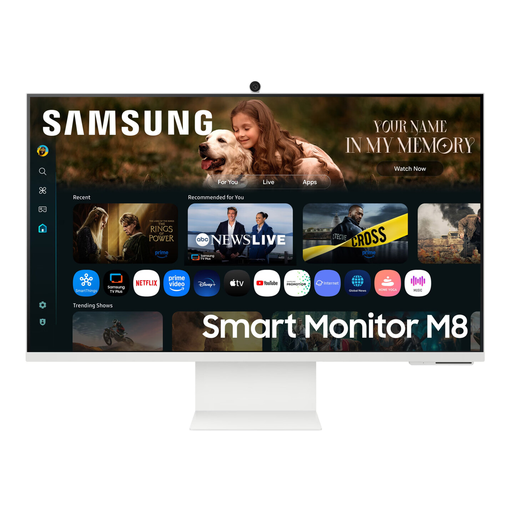
Samsung M8 M80F (2025), 32-inch, VA, 4K UHD, 60 Hz, webcam
For a dedicated knitting space where a large screen is useful for checking the image. Beforehand, check that the connection to your camera is suitable for your recording mode.
32-inch, VA, 4K UHD, 60 Hz and webcam, according to the product name.
View at Joybuy
 No image available
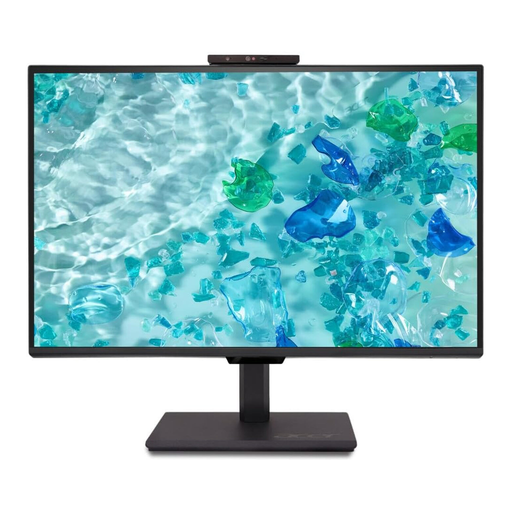
acer Vero B248YGbemiqprcuzx, 24-inch, business monitor
For a dedicated workspace where a more compact display is useful for checking the image. Before buying, check that the camera connection and intended monitor position work with your setup.
24-inch, 5MP IR webcam and microphone, according to the product name.
View at Joybuy
Frequently asked questions
Will an HDMI camera monitor automatically work with my camera?
No. Check the connection and HDMI signal for your camera model and intended recording mode, as well as the cable you’ll need. A monitor advertised as having 4K HDMI input doesn’t necessarily have a 4K-pixel display: Portkeys lists a 1920 × 1080-pixel display and UHD input up to 30p for the PT5 II.
How do I set up a monitor for filming knitting?
Position it so you can see the image from your knitting space without changing the camera’s position. Plan for an HDMI cable that’s compatible with your camera and a power supply, then check the framing and focus with a short recording before you film your lesson.
What extra items should I allow for when buying?
Depending on the model and what’s included, you may need a mount, a compatible HDMI cable and a power supply. Check the details for the specific model and offer, and test your planned setup before making a longer recording.
Is a CE mark an official safety approval?
No. Bundesnetzagentur describes CE marking as the manufacturer’s own declaration that the product meets the relevant requirements. A CE mark alone doesn’t mean that a government authority has tested the specific product offer.


