A standard zoom may be enough for full notebook shots. If you want to show small embossed details or binding features, the close-up performance of the specific lens matters too. With changing window light, a repeatable setup and controlled white balance are important considerations both when choosing and using your camera. If your current camera can already capture the shots you need, check your lighting and tripod before buying a new camera body.
Who is this guide for?
Notebook sellers who care about colour
If you want to photograph a range of notebooks with consistent paper and cover colours, a fixed composition and white balance are important. Canon Germany points out that natural light can look warmer or cooler depending on the conditions.
Designers who focus on binding details
For embossing, paper textures and bindings, what matters is how close the specific lens can focus and how large it can make the subject appear. Canon Germany, Sony Germany and OM SYSTEM Germany provide close-focusing or magnification figures for their lenses.
Creatives working with different formats
If you’re planning additional crops as well as full shots, or the occasional video, a suitable zoom and an adjustable screen can make setup easier. Canon Germany lists a vari-angle screen for the EOS R50. Whatever formats you shoot, it’s still important to control the light.
What should you look for when buying?
When photographing a range of notebooks, consider colour, detail and consistency together. Canon Germany recommends using a fixed setup with a tripod for consistent product images. Natural light can look warmer or cooler depending on the conditions.
| Buying priority |
What to check before buying |
Who is this important for? |
| Consistent colours |
White balance and file format; take test shots in your window light. |
If I want paper whites and cover colours to look similar across a series, controllable white balance is important. Around 33% of consumers put consistent colours first. |
| Paper texture and binding |
Minimum focus distance and maximum magnification of the specific lens; take a test shot of your smallest subject. |
Close-up performance matters most to consumers who want to show embossing, paper textures or small binding details. Around 27% make close-up detail their main buying priority. |
| Consistent full shots |
Check that your camera, lens and existing tripod can safely capture the overhead view you want. |
If I want to keep the same perspective across several notebooks, a repeatable setup is essential. Around 20% of consumers prioritise consistent images across a series. |
| Flexible crops and occasional video |
Check your actual photo and video needs, screen position and what’s included with the specific kit. |
If you’re planning a range of crops or short clips as well as product photos, look for a setup that suits your needs. Around 20% of consumers focus on flexible photo and video formats. |
Common buying mistakes
-
Comparing megapixels alone
The specific lens also matters for small binding details: minimum focus distance and magnification can vary by model, focal length and focus mode.
First, decide on the smallest detail you need to capture, then check the specifications for the exact kit lens. For very small subjects, you may need an additional lens if the kit zoom can’t capture the crop you want.
-
Blaming the camera too quickly for changes in paper colour
Depending on the conditions, window light can look warmer or cooler, making paper whites or cover colours appear different from one shot to the next.
Compare images taken in similar lighting conditions and check the white balance before considering a different camera body.
-
Assuming the camera body is a complete photography setup
The lens and tripod affect your setup. Nikon Germany notes that the Z50II kit doesn’t include a charger.
Check what’s included with the specific offer and compare it with the accessories you already own. Depending on your setup, you may need a tripod, charging accessories or an additional lens.
Brands to consider
Canon
The EOS R50 with RF-S 18–45 mm is a kit option for full shots and larger details.
- Canon Germany lists a 24.2 MP APS-C sensor and a vari-angle screen for the EOS R50.
- The minimum focus distance of the RF-S 18–45 mm depends on the zoom position and focus mode, so it alone doesn’t guarantee that you’ll be able to capture the smallest details.
Nikon
The Z50II with NIKKOR Z DX 16–50 mm VR is a compact standard zoom option for full shots and larger details.
- Nikon lists a minimum focus distance of 0.2 m and built-in stabilisation for the lens.
- Nikon notes that the kit doesn’t include a charger. Check what’s included with the specific offer and what you’ll need to charge the camera.
Sony
The ZV-E10 II with E PZ 16–50 mm OSS II is worth considering if you’re planning to shoot videos as well as product photos.
- Sony lists a 26.0 MP APS-C sensor for the camera body and a maximum magnification of 0.215× for the lens.
- A video-focused design offers no proven advantage if you only take still photos of notebooks.
OM SYSTEM
The OM-5 Mark II with M.Zuiko 12–45 mm F4.0 PRO is a kit option for buyers who want to focus on close-up subjects.
- OM SYSTEM lists a maximum image magnification of 0.25× for this specific lens.
- This manufacturer’s figure describes close-up performance, but doesn’t prove independently measured superiority in image quality.
Joybuy products for notebook photography
The Joybuy options listed include a compact camera setup for photos and clips, as well as a mirrorless camera with a standard zoom. Check that the camera’s design, lens and screen suit the notebooks you want to photograph.
 No image available
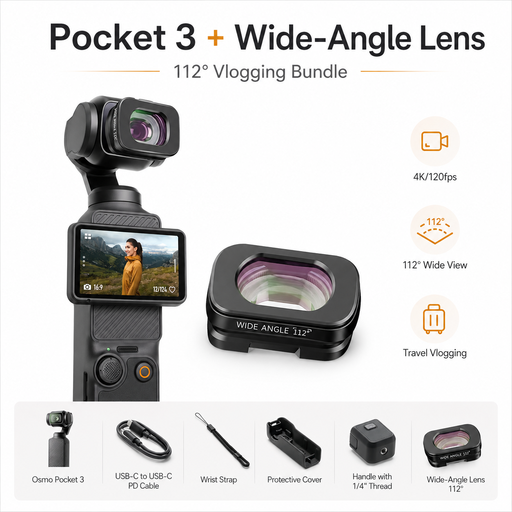
DJI Osmo Pocket 3 Standard Combo with ULANZI F35 112° wide-angle lens
This compact setup could suit you if you want to shoot clips as well as product photos. Check that the gimbal design and wide-angle lens work for the notebook shots you have in mind.
The bundle lists a 1-inch CMOS sensor, 4K/120fps and a magnetically attached 112° wide-angle lens.
View at Joybuy
 No image available
Sony Alpha 6100 APS-C with 16–50 mm power zoom lens
If you want to shoot full shots and different crops with a standard zoom, check whether the zoom range is suitable for your subjects.
The product title lists a 16–50 mm power zoom lens and a tilting screen.
View at Joybuy
Frequently asked questions
Do I need to buy a new camera straight away to photograph notebooks?
No. First, see whether your existing equipment can capture full shots and close-up details, and try using a fixed setup. Canon Germany describes a tripod as one way to keep the framing consistent across a series of products.
How can I deal with changing window light?
Check the white balance against the lit paper and keep the lighting as similar as possible throughout a series. Canon Germany points out that natural light can look warmer or cooler depending on the conditions. With RAW files, you can adjust the white balance afterwards.
Is minimum focus distance enough to compare lenses for binding details?
No. Also consider the maximum magnification, and check the focal length and focus mode. Canon Germany lists different minimum focus distances and magnification figures for the RF-S 18–45 mm, depending on the settings.
What return and fault rights apply when buying online in Germany?
For qualifying distance sales from a business seller, you generally have 14 days from delivery to withdraw from the purchase. The EU consumer information service Your Europe also explains exceptions and the rules on return costs. In addition, consumers are entitled to a legal guarantee of at least two years for faulty goods. This information concerns statutory rights for qualifying purchases, not every private sale.


