For spontaneous close-ups without changing lenses, a compact camera with a documented close-up mode is a straightforward option. If you want to magnify the scales on a pine cone, the right macro lens is key when choosing a system camera. A short minimum focusing distance is not the same as a specific magnification ratio, and with a system camera kit, the body, lens mount and included accessories all need to be compatible.
Who are the different camera options suited to?
For exploring fine details on pine cones
If you want to focus on individual scales and surface textures, the close-up function and the light on your subject matter. OM SYSTEM lists a microscope mode on the TG-7 from 1 cm; however, a short focusing distance alone tells you nothing about the magnification ratio.
For spontaneous park photography
If you want to capture both whole pine cones and close-ups while out and about, without changing lenses, consider a compact camera with a built-in close-up mode. Ricoh Imaging Europe lists a digital microscope function on the PENTAX WG-90 from 1 cm.
For macro photographers using a system camera
If you already own a camera system or want to add a macro lens, consider the body, mount and lens together when making your purchase. Nikon lists a 1:1 magnification ratio for the NIKKOR Z MC 50mm f/2.8; it requires a compatible Nikon Z camera body.
What should you look for when buying?
Compact camera with a close-up mode
A good fit if: You want to get close to the scales on a pine cone while out walking, without changing lenses. A close-up mode from 1 cm is listed for the OM SYSTEM TG-7 and PENTAX WG-90.
Bear in mind: The minimum focusing distance does not confirm a specific magnification ratio or an image-quality advantage over a macro lens.
System camera with a macro lens
A good fit if: You want to choose a lens to suit your camera system and the framing you’re after. Nikon lists a 1:1 magnification ratio for the NIKKOR Z MC 50mm f/2.8; Canon lists 0.5x for the RF 24mm F1.8 MACRO IS STM.
Bear in mind: The camera body alone does not automatically offer the macro capabilities of a dedicated lens. Make sure the mount and items included are compatible.
Bridge camera with a fixed zoom lens
A good fit if: You want to photograph both pine cones on the ground and more distant subjects without changing lenses. Sony lists a 24–600 mm full-frame equivalent zoom for the RX10 V.
Bear in mind: Sony’s minimum focusing distance of 3 cm applies at the wide-angle end; at the telephoto end, it’s around 72 cm.
| Priority |
What to check when buying |
Who is this particularly important for? |
| Fine detail |
The magnification ratio of the specific lens or the close-up mode of the specific camera; consider focusing distance and magnification separately. |
If you want to capture individual scales as large as possible, compare magnification ratios rather than just minimum focusing distances. Around 36% of consumers put detail reproduction first. |
| Spontaneous shooting |
Check that the close-up mode and framing work for both whole pine cones and details. |
If you want to switch between a whole pine cone and a close-up while out walking, without changing lenses, ease of use is key. Around 29% of consumers put spontaneity first. |
| Detail and surroundings |
Check the minimum focusing distance separately at the wide-angle and telephoto ends; with interchangeable lenses, also consider the angle of view. |
If you want to show both the pine cone and where you found it, pay attention to the framing at the focal length you’ll use. Around 21% of consumers put switching between detail and surroundings first. |
| Protection in wet weather |
Check the manufacturer’s specifications for the specific camera body and, with system cameras, for the lens separately. |
If you want to take photos in changeable weather, check the protection offered by the equipment you’ll actually be taking with you. Around 14% of consumers put weather protection first. |
Common camera-buying misconceptions
-
Assuming “1 cm minimum focusing distance” means “1:1 macro”
The minimum focusing distance describes how close the camera can get to the subject; the magnification ratio describes how large it appears on the sensor. At very short distances, there may also be too little light on the subject.
To get the framing you want, compare the close-up function and, where specified, the magnification ratio of the particular product.
-
Assuming a system camera’s lens has macro capabilities
Magnification specifications apply to specific lenses, not automatically to every kit lens or the camera body. You may need to buy a compatible macro lens separately.
Check the mount, full lens name and items included together.
-
Assuming a bridge camera’s closest focusing distance applies at every zoom setting
For the Sony RX10 V, Sony lists around 3 cm at the wide-angle end, but around 72 cm at the telephoto end. The focusing distance therefore depends on the focal length you’re using.
Check the minimum focusing distance for the focal length you want to use to photograph the pine cone.
Brands to consider
The following models and lenses offer different ways to take close-ups. Their specifications apply to the products listed, not to every camera from a particular brand.
OM SYSTEM
The TG-7 is a compact camera with a documented microscope mode. The OM-5 Mark II and M.Zuiko macro lens, on the other hand, are separate components of a system camera kit.
- OM SYSTEM lists close-up photography from 1 cm for the TG-7.
- OM SYSTEM lists 2x magnification for the M.Zuiko Digital ED 90mm F3.5 Macro IS PRO.
- The lens specification does not apply to the TG-7 or an OM-5 Mark II body on its own.
PENTAX / Ricoh Imaging
The PENTAX WG-90 combines a built-in zoom lens with a digital microscope function.
- Ricoh Imaging Europe lists a macro function from 1 cm.
- A short focusing distance alone tells you nothing about the magnification ratio.
Sony
The RX10 V is a bridge camera with a built-in zoom lens; the FE 50mm F2.8 Macro is a separate lens for compatible E-mount cameras.
- Sony lists a 1:1 magnification ratio for the FE 50mm F2.8 Macro.
- For the RX10 V, Sony lists a minimum focusing distance of 3 cm at the wide-angle end and around 72 cm at the telephoto end.
Nikon
The NIKKOR Z MC 50mm f/2.8 is a macro lens for a compatible Nikon Z system.
- Nikon lists a 1:1 magnification ratio for the lens.
- You’ll also need a compatible camera body to take photos.
Canon
Macro lenses for EOS R cameras vary according to the framing you want: the RF 24mm F1.8 MACRO IS STM includes more of the surroundings, while the RF 100mm F2.8L MACRO IS USM is better suited to capturing fine detail.
- Canon lists 0.5x magnification for the RF 24mm and 1.4x for the RF 100mm.
- These figures apply to the respective lenses, not to every EOS R camera.
Camera options at Joybuy
The cameras below are options to take with you. If you want to capture the fine scales on a pine cone, check before buying that the minimum focusing distance and framing of the model you’re considering are suitable.
 No image available
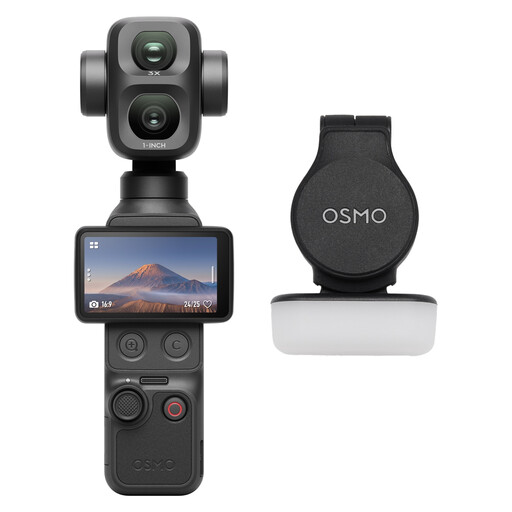
Osmo Pocket 4P – Standard Combo, Black
The description mentions zoom and close-ups; check whether the minimum focusing distance is suitable for the framing you want when photographing pine cone scales.
1-inch main sensor; up to 6× lossless zoom.
Detachable touchscreen remote for shooting from up to 20 m away.
View at Joybuy
 No image available
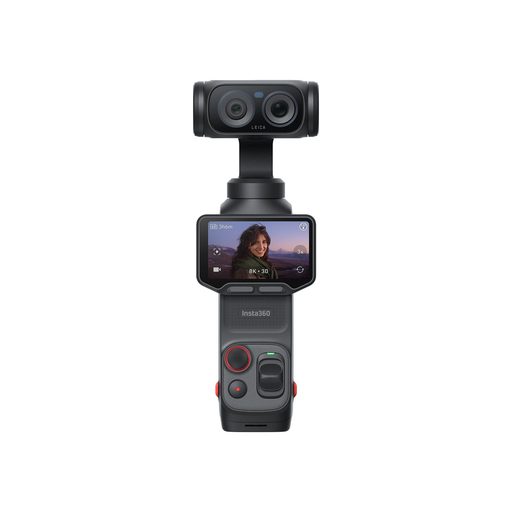
Insta360 Luna Ultra Standard Bundle, Cosmic Black
Its compact design and fast focus for moving subjects may come in handy when you’re out and about; check the minimum focusing distance for close-ups of pine cone details.
1-inch CMOS sensor; mechanical 3-axis stabilisation.
View at Joybuy
 No image available
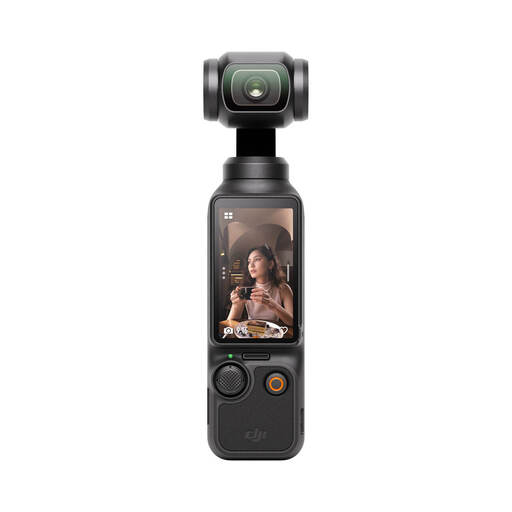
DJI Osmo Pocket 3
This compact camera is described as suitable for use on the go; check separately whether it can focus close enough to capture pine cone scales.
154° wide-angle lens; 6-axis stabilisation.
Still images up to 16 MP.
View at Joybuy
 No image available
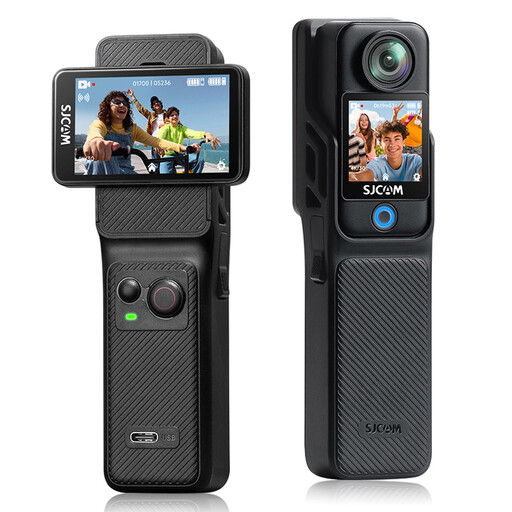
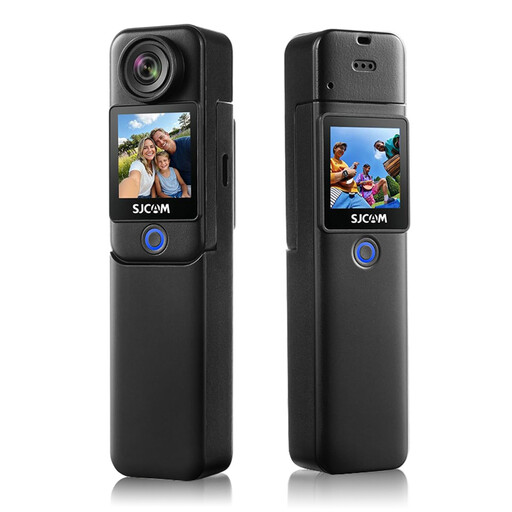
SJCAM C400 4K Action Camera
Described as a compact action camera; check before buying whether its minimum focusing distance is suitable for fine pine cone details.
20 mm wide-angle lens; 4K recording.
16 MP photos; waterproof to 30 m in its housing.
View at Joybuy
 No image available
SJCAM C300 4K Action Camera
This camera is described as suitable for outdoor use; check its minimum focusing distance if you want close-ups of pine cone scales.
154° wide-angle lens; 6-axis stabilisation.
Photos up to 20 MP; waterproof to 30 m in its housing.
View at Joybuy
Frequently asked questions
Is a minimum focusing distance of a few centimetres enough for a detailed close-up?
Not necessarily: minimum focusing distance and magnification ratio describe different things. Nikon lists a 1:1 magnification ratio for the NIKKOR Z MC 50mm f/2.8, while Canon lists 0.5x for the RF 24mm F1.8 MACRO IS STM.
How can I manage the shallow depth of field in close-up photography?
Focus on the scale you want to appear particularly sharp, then check how much of the pine cone is in focus. The Canon Academy macro guide explains that the depth of field gets narrower with a wider aperture; the TG-7 manual covers focus bracketing and focus stacking. It can be harder to align multiple shots of a moving subject.
What should I consider when it comes to additional costs and making a complaint?
With a system camera, check whether a compatible macro lens is included in the offer or needs to be bought separately. For Germany, the Verbraucherzentrale notes that, in the event of a defect, you can generally assert your statutory rights against the seller for up to two years after the goods are handed over or received. This is separate from a manufacturer’s warranty.
Can I take pine cones or parts of plants from a public park to photograph them?
You don’t need to remove anything to take a photo. Among other things, Section 39 of the Federal Nature Conservation Act prohibits removing wild plants from their location without good reason or damaging their habitats; the exception for small quantities for personal use applies only under the conditions set out in law. Whether removal is permitted in a particular place also depends on the park’s rules and its conservation status.


