Photographers with a fixed copy-stand setup
If you’re photographing your collage panel from a tripod, a compatible remote release lets you take the shot without touching the camera. Nikon describes this function for the MC-DC2 on certain cameras.


For a fixed tripod setup, a cable release that’s compatible with your camera should do the job. If you want to trigger the shutter while arranging your collage, a wireless remote that’s explicitly compatible with your camera is more practical. A timer is worth considering for planned repeat shots, while your camera’s self-timer or a supported camera app may mean you don’t need to buy anything extra. None of these options will correct poor lighting, reflections or an unsuitable camera position.
If you’re photographing your collage panel from a tripod, a compatible remote release lets you take the shot without touching the camera. Nikon describes this function for the MC-DC2 on certain cameras.
If you want to adjust details on the panel and take the shot from there, check whether your camera supports the specific wireless remote. Sony and Nikon both offer Bluetooth options that depend on the camera model.
If you want to take repeat shots or capture images at set intervals, timer functions are worth considering. Rollei notes that a compatible camera cable is required to use the Wireless Remote Release 28146.
Start with your workflow: a fixed tripod position, releasing the shutter from the panel, or timed repeat shots. Then check that the remote connects to your specific camera.
A good choice if: you’re working with a camera in a fixed position, within cable reach, and the connector is right for your camera model.
Keep in mind: The cable length and connector limit your working area. Canon, for example, uses E3 and N3 connectors.
A good choice if: you want to stay by the panel while rearranging it and take the shot from there.
Keep in mind: Your camera must support the specific remote, and you may need to activate and pair it.
A good choice if: you’re planning repeat shots at programmed intervals.
Keep in mind: Check how to set it up and whether it needs a compatible camera cable. The Rollei 28146 requires one.
A good choice if: the self-timer or a supported app already gives you the distance or delay you need.
Keep in mind: Check the functions available on your camera model. An app doesn’t necessarily replace a programmable interval timer.
| Buying priority | What to check | Who is this most important to? |
|---|---|---|
| Compatibility | Full camera model name, compatible cable connector or explicit confirmation that the remote is supported; any cables and adapters required. | When choosing between a cable, Bluetooth or a receiver, I need to know that the release is explicitly compatible with my camera. Around 36% of consumers put model and connector compatibility first. |
| Taking shots from a tripod | Whether an existing camera function will do, or if you need a compatible release within reach. | With a fixed setup, I want to take the shot without touching the camera body. Around 29% of consumers prioritise taking photos from a tripod without touching the camera. |
| Freedom to move around | Whether the specific remote is supported, and any pairing or camera settings required. | When arranging my collage, I want to take the shot from the panel rather than walk back to the camera every time. Around 21% of consumers prioritise this freedom of movement. |
| Repeat shots | Whether the camera or release offers the intervals you need, and whether a required camera cable is included. | For a series of reference shots, I want to plan photos at set intervals. Around 14% of consumers prioritise programmed repeat shots. |
Even Canon cameras use different E3 and N3 connectors. For Bluetooth, your specific camera must support the remote in question.
Before buying, check your camera’s full model name, connector and whether the specific release is supported.
The wireless connection between the handset and receiver doesn’t necessarily replace the connection between the receiver and camera.
Check which camera cable your model needs and whether it’s included with the version you’ve chosen.
A release controls when the photo is taken, not the lighting. The Canadian Conservation Institute notes that the direction of light affects how evenly a surface appears and which details are visible.
Assess the lighting, reflections and the look you want for your collage separately from your choice of release.
Cable releases for EOS cameras, with a connector to suit each model. For compatible cameras, Camera Connect is another option.
Cable and Bluetooth remote releases for specific supported camera models.
The RMT-P1BT is a Bluetooth remote for explicitly supported cameras.
The DMW-RS2E is a cable release for compatible LUMIX cameras.
The Wireless Remote Release 28146 is designed for wireless operation and timed shots.
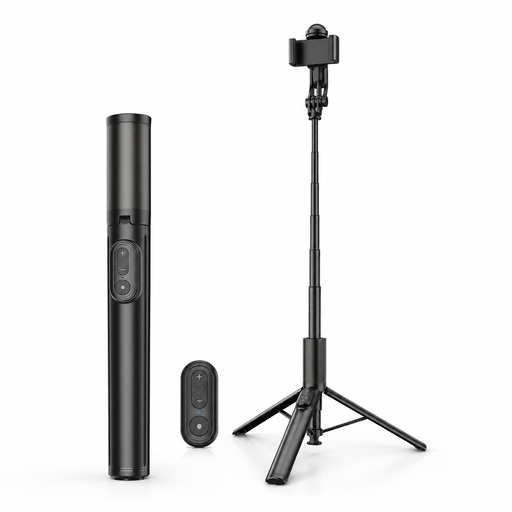
This selection is suited to photographing your collage panel with a smartphone. If you’re using a separate camera, check that the release you choose is compatible with your camera model.
 No image available
For hands-free photos of your collage panel with a smartphone: the product details list a Bluetooth remote for taking photos and videos, as well as a smartphone holder and tripod function.
Compare your camera’s full model name with the details for the specific remote. For a cable release, the connector must match; for Bluetooth, the remote must be supported by that exact camera model. Also check whether activation or pairing is required.
Set up your camera and collage securely, then check the lighting on the material you’re using. For photographing cultural objects, the Canadian Conservation Institute describes lighting from both sides at around 45 degrees as one way to illuminate the surface evenly and show its colours. Still, check how your collage responds to the light: a remote release won’t change reflections or colour appearance.
Not necessarily. If an existing function gives you the distance or delay you need, you may not need any extra accessories. Check the features of your specific camera model; a supported app doesn’t automatically offer programmed intervals.
It depends on the kit. Rollei says the Wireless Remote Release 28146 requires a compatible camera cable, which you’ll need to select separately. Check which cable fits your camera and whether it’s included with the version you’ve chosen.