Close-up videographers
If you need tiny screws or contacts to appear clearly, the right lens-to-subject distance matters, as does being able to position the lens and camera precisely.


First, measure the possible distance between the camera and the repair area, then consider how large screws and contacts need to appear on screen. A mirrorless camera with a suitable close-up lens can give you more flexibility for capturing details; a compact camera saves you changing lenses, a webcam works well for recording at your computer, and a gimbal camera is better suited to moving cutaway shots. Plan your mounting, power supply and audio so that you don’t inadvertently capture your housemates on camera or on the soundtrack.
If you need tiny screws or contacts to appear clearly, the right lens-to-subject distance matters, as does being able to position the lens and camera precisely.
When space is limited, an overhead view needs to capture your hands and the repair area without recording too much of the shared room.
If you want to record longer repair steps with commentary, test the recording setup and audio, and keep the frame confined to your workspace in a shared room.
A good fit if: You want to show very small components at a larger scale and adjust the lens and camera position to suit your table. Sony specifies a 1:1 magnification ratio for the separately sold SEL30M35, with a minimum focusing distance of 0.095 m; Canon gives a 1:2 ratio for the separate RF 35mm F1.8 MACRO IS STM.
The trade-off: The right lens is part of the decision. Check that there’s still enough room for your hands and lighting at the required distance.
A good fit if: You want to record an overview of the table and closer shots without changing lenses. The Canon PowerShot V1 has an integrated zoom lens.
The trade-off: Check the actual framing and detail size from your intended mounting position. A fixed zoom lens doesn’t automatically mean tiny contacts will appear large enough.
A good fit if: You already have a computer running at your repair bench for previewing and recording, and can mount the webcam securely. OBS can use webcams as a video source.
The trade-off: Your setup will need a computer, connection and recording software. Elgato marks the documented Facecam Pro as Legacy/EOL; this says nothing about current availability or other models.
A good fit if: You want to record moving cutaway shots as well as a fixed view of the table; the DJI Osmo Pocket 3 is a gimbal-style camera.
The trade-off: DJI specifies a focus range from 0.2 m for the Osmo Pocket 3. Check the mounting and framing at your table separately, as the gimbal design doesn’t guarantee a suitable fixed overhead view.
| Priority | What should you check before buying? | Who is it important to? |
|---|---|---|
| Small components | Check the focus distance and maximum magnification ratio of the specific lens; film a typical component from your planned mounting position. | If I need to show screws and contacts clearly, how large they appear in the actual footage matters. Around 36% of consumers rank this as their top priority. |
| Overhead view in a confined space | Measure the mounting height and space available; test the field of view with both hands above the repair area. | If you need to show your hands and work surface together at a small table, a suitable, repeatable overview is particularly important. Around 29% of consumers name this as their main priority. |
| Longer repair steps | Record a complete test clip using your intended power supply and storage or software solution, then play back the saved file. | If I want to document a repair from start to finish without gaps, a reliable recording setup is essential. Around 21% of consumers prioritise this workflow. |
| Commentary and privacy | Keep the frame and audio focused on your workspace, check the microphone input, and review the picture and sound again before publishing. | If you want to record clear commentary without inadvertently capturing your housemates, audio and privacy come first. This is the most important priority for around 14% of consumers. |
Video resolution alone doesn’t tell you how large a small component will appear on screen from the available distance. Sony specifies a 1:1 magnification ratio for the separate SEL30M35 lens, not as a blanket specification for every ZV-E10 II kit.
Check the full kit name, as well as the focus distance and magnification ratio of the exact lens included or chosen separately.
Close-up shots may require an additional compatible lens and a suitable setup.
DJI specifies a focus range from 0.2 m for the Osmo Pocket 3. That doesn’t tell you whether the camera can be mounted securely above your repair table or whether small parts will appear large enough from that position.
Test the mounting, working space and size of components in the frame separately from any moving cutaway shots.
You may need an additional suitable mount for a fixed viewpoint.
A webcam preview isn’t the same as a saved recording. OBS recommends testing before you start recording; check the video source, audio input and saved file together.
Record a short test and play back the file with sound before you begin.
Your setup may need a computer, a suitable connection and an appropriate mount.
Your housemates may be recognisable in the footage or captured on the soundtrack while speaking privately. Section 201 of the German Criminal Code (StGB) concerns the unauthorised recording of another person’s private speech.
Limit what the camera and microphone pick up, and speak to anyone affected before recording or publishing.
The ZV-E10 II is an E-mount mirrorless camera; the lens you choose is key for close-ups.
The EOS R50 V has an RF mount for interchangeable lenses, while the PowerShot V1 has an integrated zoom lens.
The Z 30 may be a good option for recording videos on your own, particularly if you need to capture longer repair steps and want a vari-angle monitor.
The Osmo Pocket 3 is a compact gimbal camera for moving cutaway shots.
The documented Facecam Pro is an example of a webcam setup for recording at a computer.
The products below include a gimbal compact camera and USB webcams for recording at a computer. With each camera, check that the mounting, framing and recording setup suit your repair bench.
 No image available
The gimbal design is intended for moving cutaway shots; check separately whether it can be mounted securely for an overview of your table.
20 mm wide-angle lens; 4K video; built-in 3-axis gimbal stabilisation.
 No image available
For recording on a PC or laptop; check in advance that the framing and audio suit your repair area.
1080p recording; autofocus; built-in microphone; flexible tripod base; physical lens cover.
 No image available
For a wide view of your table; make sure the frame doesn’t capture more of the shared room than necessary.
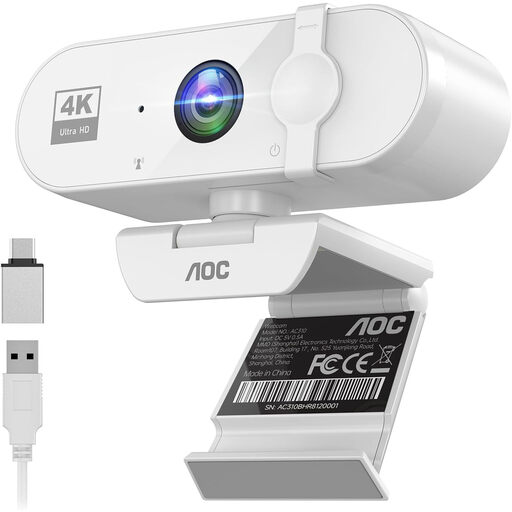
4K resolution; 99° field of view; built-in noise-cancelling microphone; physical cover.
 No image available
For recording at a computer with a tabletop tripod; point the camera and microphones towards your own work area.
4K resolution; PDAF autofocus; two microphones; 75° field of view; USB-A/USB-C connection.
 No image available
For recording at a set angle at your table; check that the tripod’s stated length is suitable for your mounting point.
1080p at 30 fps or 720p at 60 fps; autofocus; built-in stereo microphone; extendable desktop tripod up to 18.5 cm.
Check the focus distance and magnification ratio of the specific lens, then test the framing from the mounting point you can actually use. Sony specifies a 1:1 magnification ratio and a minimum focusing distance of 0.095 m for the SEL30M35. These figures apply to this lens, not to every E-mount camera or its kit zoom.
Select the webcam as a video source in OBS, check the audio input, record a short test and play back the saved file. OBS recommends testing before you start recording.
Not without authorisation: Section 201 of the German Criminal Code (StGB) covers the unauthorised recording of another person’s private speech. Limit what your microphone picks up and ask anyone affected before recording.
Talk to them before publishing rather than recording or showing recognisable people without asking. The Berlin Commissioner for Data Protection and Freedom of Information distinguishes between recordings kept solely for personal or family use and those that are published. Where possible, frame your shot to exclude other people.
If goods are faulty, you may have statutory rights under consumer law. The Verbraucherzentrale states that for newly purchased faulty goods, the period is two years from handover or receipt. This is separate from a voluntary manufacturer’s guarantee.