
Lieferung heute & morgen

Qualitätsgarantie

Willkommens-Angebote freischalten: KOSTENLOSE Lieferung | Bis zu 80 % RABATT | Kostenlose 30-Tage-JoyPlus-Testphase
App herunterladen
A camera and smartphone tripod should keep your shots steady, leave your hands free and take up as little space as possible when you are out and about. In practice, however, models differ considerably in load capacity, working height, mounting options and ease of use. A small smartphone tripod is not automatically suitable for a mirrorless camera, while a heavy DSLR tripod is often impractical for spontaneous selfies.
Before buying, it is therefore worth considering how you will actually use the tripod rather than being swayed by eye-catching marketing claims.
The stated maximum load capacity applies to more than just the camera. You also need to take the lens, microphone, LED light and any additional adapter into account. A long lens can also shift the centre of gravity forwards. As a result, a tripod that appears to have sufficient load capacity on paper may still be more likely to tip over.
As a safety margin, your planned equipment should not remain at the maximum load limit for extended periods. A smartphone tripod will often only need to support a lighter load, whereas a sturdier model is required for a DSLR or mirrorless camera with a telephoto lens.
A mini tripod fits into a rucksack or hand luggage, but usually only offers a low working height. This can be useful for tabletop shots, product videos or low-angle perspectives. For eye-level photography, an adjustable-height tripod with sufficiently long legs is more practical.
It is important to distinguish between packed size, minimum height and maximum working height. A travel tripod with a compact packed size may take longer to set up because it has multiple leg sections. In return, it is easier to carry.
A selfie stick with tripod, Bluetooth remote shutter or magnetic mount can make certain shooting situations easier. However, these do not replace a sturdy camera mount. With MagSafe models, your smartphone or case must be compatible. Action cameras often require a suitable adapter.
A gimbal stabiliser is not a conventional replacement for a tripod either: it is designed for moving video footage, whereas a tripod is primarily intended to provide a stable, fixed position.
The 1/4-inch mount is widely used on many photography and video devices. Even so, you should check the thread size of your camera, smartphone holder or action camera adapter before buying. A quick-release plate can speed up changing devices, but it must lock securely into place.
For heavy DSLR or mirrorless camera equipment, load capacity, footprint and locking mechanisms are crucial. According to the product details, the Rollei C5i, for example, is designed to support up to 8 kg. This does not mean that every combination will be stable against tipping in all conditions: uneven ground and wind can affect stability.
An aluminium tripod is often a practical choice for everyday use, studio work and travel. Aluminium constructions can be made robust, but larger models will also weigh more.
A carbon tripod can be lighter at a similar size. The SIRUI Traveler X Series AT-125+KS-5 is marketed as a carbon-fibre travel tripod and is aimed at users who pay particular attention to weight and transport dimensions. When choosing, however, focus on specific figures such as packed size, load capacity and leg diameter, rather than the material name alone.
A 360° ball head allows flexible positioning in both portrait and landscape formats. For video recording, however, a video tripod with a fluid head and damped movements is often more suitable. An integrated spirit level or multiple bubble levels can help with horizontal architectural and landscape shots.
With flexible tripods, the legs should be wrapped firmly around a suitable structure. If a fall could damage your equipment, do not rely solely on friction or magnetic force to hold the tripod in place.
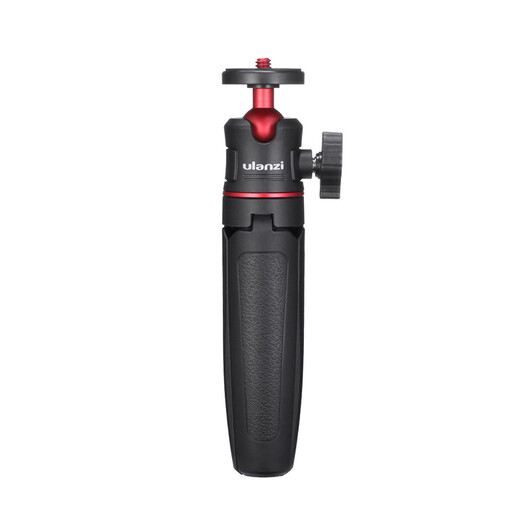
Why this product suits this profile: This compact mini tripod is designed for small cameras, action cameras and compatible devices with a 1/4-inch thread. It is suitable for tabletop shots and light travel luggage.
Its intended use with compact devices makes the choice easier to assess. Buyers should still check the load capacity and should not mount a heavy DSLR.
Compact design and 1/4-inch mount; designed for flat, stable surfaces.
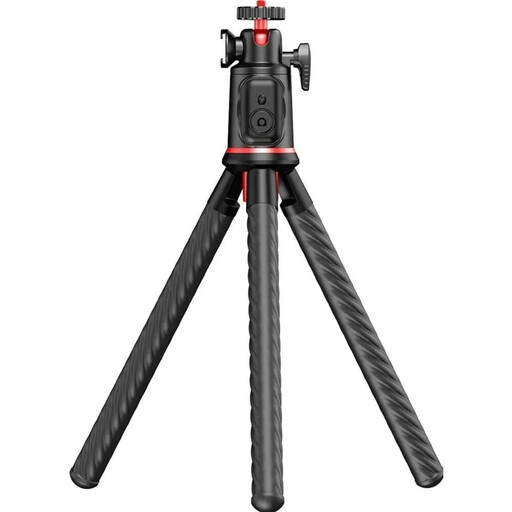
Why this product suits this profile: This flexible tripod combines a smartphone holder, selfie stick, tabletop tripod and Bluetooth remote shutter. It is suitable for vlogs, group photos and shots taken on railings or branches.
The product details state a maximum load of 2 kg, 360° positioning and a 1/4-inch thread. This makes it easier to assess its suitability instead of relying on blanket claims of versatility.
Weight of 369 g, height of 25 to 46 cm, Bluetooth 5.4 and an integrated cold shoe for a microphone or LED light.
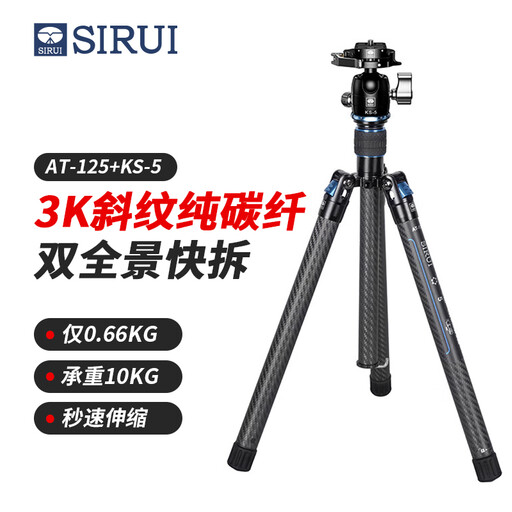
Why this product suits this profile: This carbon-fibre tripod is aimed at travel and landscape photographers with a compatible DSLR or mirrorless camera who want to compare packed size and weight carefully.
Its carbon-fibre construction and positioning as a travel tripod appeal to users who look beyond a low price and consider transport specifications and camera compatibility.
Carbon fibre as the stated material; set comprising a tripod and KS-5 ball head for photography.
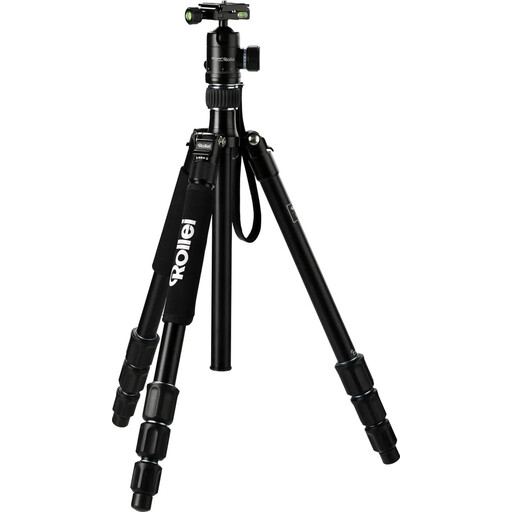
Why this product suits this profile: This height-adjustable aluminium tripod is suitable for eye-level photography, low-angle macro photography and use as a monopod.
The specific figures of 1.62 kg weight, a maximum height of 159 cm and an 8 kg load capacity help distinguish this tripod from models designed solely for smartphones.
ARCA-SWISS compatibility, working height of 21.5 to 159 cm and reversible centre column for macro photography.
Before every shot, all leg sections should be fully extended and locked in place. Only then should you mount the device. In windy conditions, on slippery ground or on uneven surfaces, an additional weighted hook can improve stability. Do not exceed the permitted load capacity.
With an action camera tripod, you should also check whether a suitable adapter is included. Magnetic smartphone or camera mounts must be fully attached before you let go. Keep small parts and button batteries out of children’s reach; dispose of batteries in accordance with local regulations.
We have put together a complete, regularly updated list of products that fully meet these strict selection criteria and the safety regulations applicable in the EU.
A lightweight smartphone tripod with an adjustable holder and 1/4-inch mount is usually sufficient. For selfies and vlogs, a Bluetooth remote shutter or selfie stick with tripod is useful. For outdoor photography, the model should remain stable despite its low weight and should not be left unattended in the wind.
Its lifespan depends on the material, load, transport and care. Leg locks, threads, quick-release plates and the ball head should be checked regularly. After outdoor use, clean the tripod with a soft, slightly damp cloth and then allow it to dry completely.
A video tripod can also be used for photography, provided the camera mount and load capacity are suitable. However, the video head is designed for controlled panning and tilting movements. For quick changes to portrait format or for macro photography, a photography tripod with a ball head is often more practical.