Set photographers
You want to capture repeatable full-set shots of paper, pens and packaging, and keep colours consistent across a series. Nikon Germany recommends adjusting the white balance to suit the lighting conditions.


For repeatable full-set shots, a mirrorless camera kit with a standard zoom is a sensible starting point. For small text or surface details, what matters most is the close-up capability of the specific lens. A compact camera with a built-in close-up mode may suit you if you want to avoid changing lenses, but a short focusing distance does not prove 1:1 magnification. Under artificial light, also check the white balance, lighting setup and shutter behaviour with your lights, rather than focusing on megapixels alone.
You want to capture repeatable full-set shots of paper, pens and packaging, and keep colours consistent across a series. Nikon Germany recommends adjusting the white balance to suit the lighting conditions.
If you want small text, embossing or paper surfaces to fill a large part of the frame, the magnification ratio and working distance of the specific lens are crucial. Canon Germany, Sony Germany and Nikon Germany list these values for their respective lenses.
You use existing artificial light sources and want to avoid banding or colour shifts. Canon Germany notes that flickering light sources such as LEDs can cause banding when using an electronic shutter.
A good fit if: You mainly photograph complete sets from a range of angles and want to start with one lens.
Trade-off: A standard zoom is not automatically a macro lens. At 45 mm, the Canon RF-S 18–45 mm achieves a maximum magnification of 0.16x with autofocus or 0.26x with manual focus, according to Canon Germany.
A good fit if: You want small text, stamps or material textures to take up a large part of the frame; Sony Germany and Nikon Germany specify a 1:1 magnification ratio for the macro lenses mentioned.
Trade-off: The mount, what’s included and working distance all need to suit your setup. At its closest focusing distance, the Sony E 30 mm F3.5 Macro has a distance of 2.4 cm between the front of the lens and the subject, according to Sony Germany.
A good fit if: You want to take close-up shots now and then without changing lenses. OM Digital Solutions lists close-ups as close as 1 cm for the Tough TG-7; Ricoh Imaging lists a digital microscope mode from 1 cm for the PENTAX WG-90.
Trade-off: A focusing distance of 1 cm does not mean 1:1 magnification. The short distance may also leave less room for the camera and lighting.
Whichever option you choose, start by deciding what matters most: consistent colours, small details, avoiding banding under artificial light or keeping the setup as simple as possible. The percentages refer to consumers’ main buying concern when choosing a camera for stationery sets under artificial light.
| Priority | What to check before buying | Who it matters most to |
|---|---|---|
| Consistent colours | Check whether the white balance can be adjusted and whether you can keep the lighting consistent throughout a series. Nikon Germany recommends setting the white balance before shooting and adjusting it when the light changes. | When I photograph several sets under the same lights, I want the paper whites and product colours to look consistent throughout the series. Around 33% of consumers put colour consistency first. |
| Small print and material details | Compare the magnification ratio of the lens actually included, as well as its mount and the distance needed between the subject and the lights. | If you want tiny text or paper surfaces to appear large, assess the specific lens rather than just the camera body’s megapixel count. Close-up details are the main buying priority for around 27% of consumers. |
| Banding under artificial light | Test the camera with your lights and check the shutter and, if available, anti-flicker features on the exact model. Canon Germany explains that flickering light sources can cause banding when using an electronic shutter. | When I want to keep using my existing LED or fluorescent lights, I want to check for possible banding and colour shifts with those exact lights. Around 20% of consumers prioritise the risk of banding under artificial light. |
| Simple set-up | Check the exact kit name, which lens is included and whether you have enough room on your table to shoot the whole set from the required distance. | For consumers who want to photograph complete arrangements while changing lenses as little as possible, a suitable standard zoom is an important consideration. Around 20% put a simple set-up first. |
The camera body’s resolution does not tell you how large a small subject will appear on the sensor with the included lens. At 45 mm, the Canon RF-S 18–45 mm achieves less than 1:1 magnification, according to Canon Germany.
First consider how large you want the smallest detail to appear in the frame, then compare the magnification ratio of the specific lens.
A short shooting distance is not the same as 1:1 magnification. It can also restrict the space available for lighting.
Compare the magnification ratio and the distance between the lens and subject, and check that you’ll still have enough room for your lights alongside the camera.
Flickering lights can cause banding or colour shifts, and a change in white balance can also affect colours across a series. Canon Germany describes the risk of banding with certain light sources and an electronic shutter.
Test your lights with the camera settings available before assuming that technical specifications mean your shots will be free from banding.
The EOS R50 kit with RF-S 18–45 mm is a documented option for a range of full-set shots; this assessment applies to this exact kit.
The ZV-E10-II kit includes an E-mount 16–50 mm power zoom; the E 30 mm F3.5 Macro is a separate lens option.
The Z50II kit with NIKKOR Z DX 18–140 mm VR offers a zoom for different compositions; the NIKKOR Z MC 50 mm 1:2.8 is a separate macro option.
The Tough TG-7 is a compact camera with a fixed zoom and a manufacturer-specified close-up distance of up to 1 cm.
Ricoh Imaging lists a digital microscope mode from 1 cm for the WG-90, as well as built-in LEDs for close-up shots.
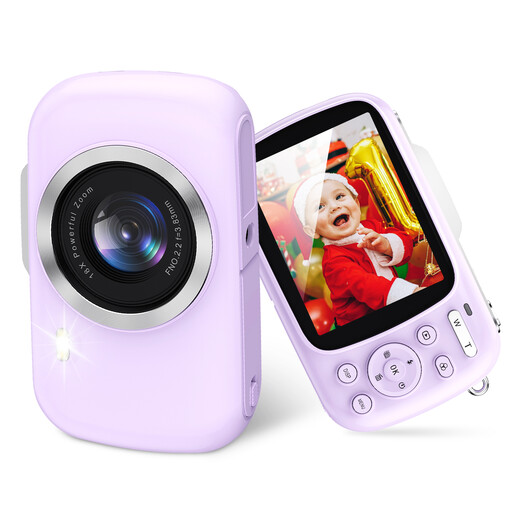
The Joybuy options below include a compact digital camera and a mirrorless camera kit with a standard zoom. For small print details, check the actual close-up capability; for shots under artificial light, it’s also worth taking test shots with your lights.
 No image available
The product name describes a camera for beginners; for small paper details, check whether you can achieve the framing you want with digital zoom.
Listed in the product name: 64 MP photo resolution, 18x digital zoom, 2.8-inch LCD, autofocus, LED flash and 32 GB memory card.
 No image available
For varying compositions when photographing full sets, the included 16–50 mm power zoom is a relevant kit feature; for the smallest details, check the magnification ratio of the specific lens.
Listed in the product name: mirrorless APS-C camera, 16–50 mm power zoom, autofocus, tilting screen and 4K recording.
Keep the lighting as consistent as possible and set the white balance to suit those conditions; adjust it if the lighting changes. Nikon Germany recommends this approach, but it does not guarantee a particular level of colour accuracy for any camera model.
Take test shots with the specific lights you use and try the available shutter and, if applicable, anti-flicker settings. Canon Germany notes that flickering artificial light can cause banding or colour shifts; the features available depend on the model.
First check what’s included in the kit: the EOS R50 offer described by Canon Germany includes the RF-S 18–45 mm, while Nikon’s Z50II kit mentioned includes the 18–140 mm VR. A separate 1:1 macro lens is not automatically included in these kits; for a repeatable tabletop setup, you should also plan for lighting and a stable camera position.
According to Your Europe, if you buy a faulty product from a trader in the EU as a consumer, you have at least two years of legal guarantee rights from the date you receive it; the seller is your point of contact. An additional manufacturer’s warranty does not replace these rights. This applies to consumer purchases and is not a guarantee for every business-to-business contract.
Not just because the photo shows the same stationery set: the German Patent and Trade Mark Office explains that photographs may be protected by copyright. Check the rights to use the specific image; without more information, it’s not possible to say in general whether a particular use is permitted.