For valley panoramas and distant rocks, a wide-angle or standard zoom paired with a suitable telephoto range is a good choice if you’re happy to change lenses and carry the extra kit. According to Sony, the bridge camera RX10 IV covers the 24–600 mm full-frame equivalent range with its built-in zoom, so there’s no need to change lenses. However, a wide zoom range alone doesn’t prove that you’ll get more detail. Compare what’s actually included, the weight of the complete kit and the protection offered for both camera and lens.
Which kit is right for you?
For capturing distant details
If you want to fill more of the frame with individual rocks, castles or features on the far side of a valley, work out how much telephoto reach you need before buying a camera. Canon gives the RF 100–400 mm on the EOS R7 a 160–640 mm full-frame equivalent angle of view; Sony lists a built-in 24–600 mm full-frame equivalent range for the RX10 IV. (Canon Germany; Sony Germany)
For valley and viewpoint photography
For wide landscape shots with the option to zoom in occasionally, the lens combination matters more than the pixel count alone. Nikon lists a 16–50 mm lens and a 50–250 mm lens in its Z50II dual-zoom kit. (Nikon Germany)
For taking a camera on a hike
If you’re carrying your kit to viewpoints, compare the weight of the ready-to-use set and check the protection for the camera body and lens separately. OM SYSTEM lists the OM-5 Mark II at 418 g with battery and card; this doesn’t include an attached lens. (OM SYSTEM)
What should you look for when choosing?
Interchangeable lenses for wide and tight shots
A good fit if: You want to capture both valley panoramas and distant rock formations on a trip, and would like the flexibility to change your lens choice later. Nikon’s Z50II dual-zoom kit includes 16–50 mm and 50–250 mm lenses.
The trade-off: Two lenses mean more to carry and may require a lens change while you’re out. Check the mount, what’s included and the protection available for the complete set.
Mirrorless camera with a versatile zoom
A good fit if: You’d prefer to change lenses less often while hiking, and the telephoto range of the included zoom is enough for your subjects. The Canon EOS R7 kit includes an RF-S 18–150 mm lens.
The trade-off: A longer telephoto lens such as the separately sold RF 100–400 mm isn’t included in this kit and adds to the amount you’ll carry.
Bridge camera with a fixed zoom
A good fit if: You want one camera to cover both wide and distant subjects without changing lenses. Sony lists the RX10 IV as having a 24–600 mm full-frame equivalent range.
The trade-off: The lens can’t be changed. Compare the sensor and the results for the shots you have in mind separately, rather than assuming that the zoom range guarantees more detail.
| What matters when buying |
What to check before buying |
Who is it especially important for? |
| Distant details |
The telephoto range of the included or compatible lens; distinguish full-frame equivalent figures from the actual focal length. |
If I want to photograph rocks or a castle on the other side of the valley, I want the lens to let me frame a tight shot when I take the picture. Around 36% of consumers say distant details are their top purchase priority. |
| Wide valley views |
The shortest focal length of the specific kit version and the lenses actually included. |
For a whole valley or a viewpoint, I need a sufficiently wide angle of view, while still having the option to frame a tighter shot. Around 29% of consumers prioritise wide valley views. |
| Carrying weight |
The weight of the camera body and lenses, and how many lenses you plan to take with you. |
When I’m hiking, the weight of my complete kit matters, not just the camera body. Around 21% of consumers prioritise low carrying weight. |
| Light and weather |
The camera’s exposure options; check the protection ratings for the body and attached lens separately. |
In changeable light or weather, I want to take my shooting conditions into account and know whether the whole set is protected. Around 14% of consumers prioritise using their camera in different light and weather conditions. |
Avoiding common buying mistakes
-
Overlooking the kit lens’s angle of view
The Canon EOS R7 kit with an RF-S 18–150 mm lens doesn’t also include the separately sold RF 100–400 mm.
Before comparing kits, check that the lenses included in the exact version you’re considering can capture the shots you have in mind.
-
Confusing full-frame equivalent figures with the actual focal length
Canon gives the RF 100–400 mm on the APS-C EOS R7 a 160–640 mm full-frame equivalent angle of view. The lens’s actual focal length remains 100–400 mm.
Compare angles of view using the same reference and check the sensor format and lens name too.
-
Judging weight and weather protection by the camera body alone
The 418 g quoted by OM SYSTEM for the OM-5 Mark II includes the battery and memory card, but not a lens. The manufacturer recommends using suitable weather-sealed M.Zuiko lenses for a protected combination.
Check the protection ratings for the camera and attached lens separately, and take the weight of the complete set into account.
Key camera brands to consider
Nikon
The Z50II dual-zoom kit is an option for wide and tighter shots, with two DX lenses.
- Nikon lists 16–50 mm VR and 50–250 mm VR lenses for this specific kit.
- The kit page says that a charger isn’t included; other Z50II kit versions may differ.
Canon
The EOS R7 with an RF-S 18–150 mm lens covers a range of shots; the RF 100–400 mm is a separate telephoto option.
- Canon lists the EOS R7 at 32.5 MP and confirms that it’s compatible with the RF 100–400 mm.
- The longer telephoto lens isn’t included in the 18–150 mm kit mentioned here. Weight and stabilisation depend on the combination you choose.
Sony
The RX10 IV has a built-in zoom for wide and distant subjects; the α6700 is part of an APS-C interchangeable-lens system.
- Sony lists the RX10 IV’s zoom range as 24–600 mm full-frame equivalent.
- For the α6700, you need to choose an E-mount lens and check what’s included separately; details for one model won’t necessarily apply to the whole brand.
FUJIFILM
The X-T5 is an APS-C system camera for photographers who prioritise resolution and want to choose their own lenses.
- The German manufacturer’s shop lists 40.2 MP and in-body five-axis image stabilisation.
- The listed body-only version doesn’t include a lens; choose the right optics for wide and tight angles of view.
OM SYSTEM
According to the manufacturer, the OM-5 Mark II is an option for outdoor photography where body weight and documented weather protection matter.
- OM SYSTEM lists the camera at 418 g with battery and card, and gives it an IP53 rating.
- The lens adds to the body’s weight. Check the specific lens separately to make sure the complete combination is protected.
Joybuy products for wide outdoor shots
The following action cameras are described as suitable for wide outdoor shots. Their wide-angle view isn’t a telephoto solution for distant rocks or castles.
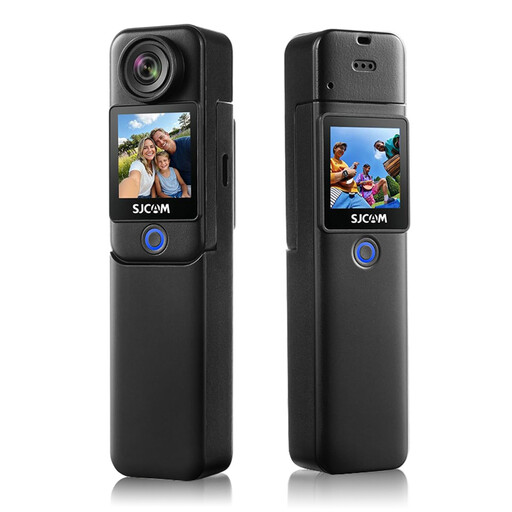 No image available
SJCAM C300 4K Action Camera
An option for wide outdoor shots; you’ll need a telephoto solution for distant details.
20 MP photos and 4K video; 6-axis EIS; 1.3-inch touchscreen; up to 460 minutes of battery life according to the product name; waterproof to 30 m with housing.
View at Joybuy
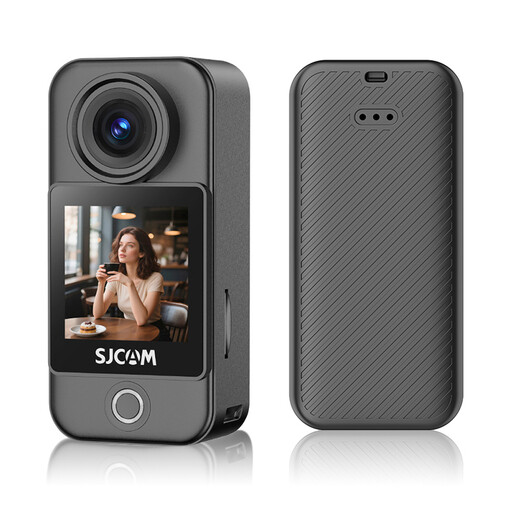 No image available
SJCAM C400 Pocket Action Camera 4K
This compact action camera is described as suitable for wide outdoor shots, not for telephoto shots of distant subjects.
16 MP photos and 4K video; 6-axis gyroscopic stabilisation; 1.3-inch touchscreen; dimensions according to the product name: 6.8 × 3.2 × 2.6 cm; up to 172 minutes of battery life according to the product name.
View at Joybuy
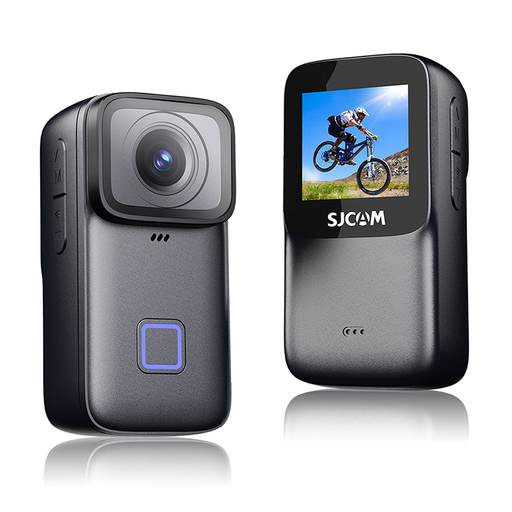 No image available
SJCAM C200 Pro 4K Action Camera
Described as suitable for wide outdoor shots; its wide-angle view isn’t a substitute for a telephoto lens when photographing distant rocks.
20 MP photos and 4K video; 6-axis EIS; 1.3-inch touchscreen; waterproof to 5 m without a housing and to 40 m with a housing; dimensions according to the product name: 6.8 × 3.4 × 2.7 cm.
View at Joybuy
Frequently asked questions
Is a high megapixel count enough to make distant rocks appear larger?
No. First, choose the right optical angle of view; higher resolution can then give you more room to crop. Assess the camera and the lens you’ll actually use together.
How can I tell whether I can take both wide-angle and telephoto shots straight away?
Check the exact kit version and what’s included. Nikon’s Z50II dual-zoom kit includes both 16–50 mm and 50–250 mm lenses; a kit with only a 16–50 mm lens is a different combination.
If I buy a faulty item from a business seller, who is responsible for the statutory guarantee?
The seller is responsible. According to the official EU consumer information, goods are generally covered by a statutory guarantee of at least two years from receipt; an additional manufacturer’s guarantee doesn’t replace it.


