Hikers travelling light
If you carry a camera and lens along woodland trails for long stretches, the weight of the complete kit matters, not just the camera body. The trails in Thuringian Forest Nature Park can help you plan your route.


For handheld shots of the ridges of the Thuringian Forest, start by thinking about the angle of view you need. A shorter zoom may suit wide views and lighter packing, while a lens with a greater zoom range lets you capture distant details without changing lenses. Then compare the weight of the complete kit, and check the stabilisation and protection ratings for the camera body and lens separately. Manufacturers’ stabilisation figures do not guarantee a sharp shot at every shutter speed.
If you carry a camera and lens along woodland trails for long stretches, the weight of the complete kit matters, not just the camera body. The trails in Thuringian Forest Nature Park can help you plan your route.
If you photograph ridges handheld in low light, consider stabilisation, lens speed and exposure together. The specifications published by OM SYSTEM, Canon and Fujifilm apply to specific systems and conditions.
If you want to capture both an entire chain of hills and distant details, choose an angle of view that suits the subjects you want to photograph without changing lenses. The manufacturers’ focal-length specifications for the lenses covered here make comparison easier.
For handheld shots of woodland ridges, it’s worth first deciding on the weight of the complete kit and the angle of view you need. Then check the stabilisation and weather protection of the specific camera-body-and-lens combination.
| What to consider | What to look for | Who is this important to? |
|---|---|---|
| Weight of the complete kit | Compare the camera body with battery and card, plus the attached lens; consider any extra accessories separately. | If I’m carrying a camera and lens over long distances, the total weight matters to me; around 31% of consumers put the portability of the complete kit first when making this choice. |
| Handheld shots in low light | Check whether stabilisation is in the camera body, the lens or both, and pay attention to the maximum aperture across the zoom range. | Anyone photographing ridges handheld in low light will want to assess camera shake and exposure with the specific kit; around 25% of consumers prioritise sharpness in handheld shots. |
| Angle of view for ridges and details | Compare the lens’s full-frame-equivalent wide-angle and telephoto ranges, especially if you want to capture distant subjects without changing lenses. | If I want to switch between a wide view of a chain of hills and distant details on a slope, the available range of compositions matters to me; around 25% of consumers prioritise flexibility when framing ridges. |
| Protection in changeable weather | Read the protection ratings for the camera body and the exact lens attached separately, and check the conditions that apply to each. | Anyone out and about in changeable weather will want to know which protection ratings apply to the complete kit they’re carrying; around 19% of consumers prioritise an outdoor kit with suitable protection. |
Camera body and lens weights refer to different components. A lightweight body on its own therefore tells you little about how heavy the kit will actually be on a hike.
Compare the body, battery, card and attached lens on a like-for-like basis, and consider any additional accessories separately.
Manufacturers’ stabilisation ratings are based on specific test conditions; the subject and exposure also affect the result.
Check stabilisation and lens speed for the specific kit, and review your shots in challenging light.
OM SYSTEM gives the OM-5 Mark II body an IP53 rating, but the M.Zuiko ED 12–45 mm F4.0 PRO is rated IPX1. These are separate ratings, not a blanket guarantee for the complete kit.
Read the ratings for the camera body and lens separately, and check the conditions that apply to each.
Nikon notes that the Z50II kit with 16–50 mm VR lens covered here does not include a charger.
Check what’s included before buying, and make sure you have a compatible way to charge the camera.
If you don’t have a suitable charging option, you may need to buy a separate charger.
The OM-5 Mark II with M.Zuiko ED 12–45 mm F4.0 PRO is a compact combination designed with hiking in mind.
The α6700 with E 18–135 mm OSS offers a wide zoom range in an APS-C setup.
The Z50II with NIKKOR Z DX 16–50 mm f/3.5–6.3 VR is a kit with a stabilised standard zoom lens.
The EOS R8 Mark II with RF 24–105 mm F4–7.1 IS STM is a full-frame kit with in-body stabilisation.
The X-S20 with XF16–50 mm F2.8–4.8 R LM WR pairs APS-C with a standard zoom for wide to mid-range compositions.
The Joybuy products below are action cameras for outdoor photography. The camera comparisons in this article cover interchangeable-lens cameras; these action cameras are therefore not models from the same interchangeable-lens camera selection.
 No image available
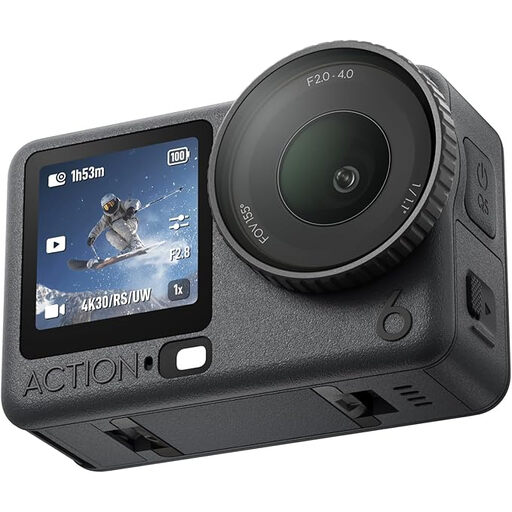
Described as an action camera for outdoor photography; it is not one of the interchangeable-lens camera combinations compared here.
The product name specifies a 1/1.1-inch sensor and a variable aperture of f/2.0–f/4.0.
 No image available
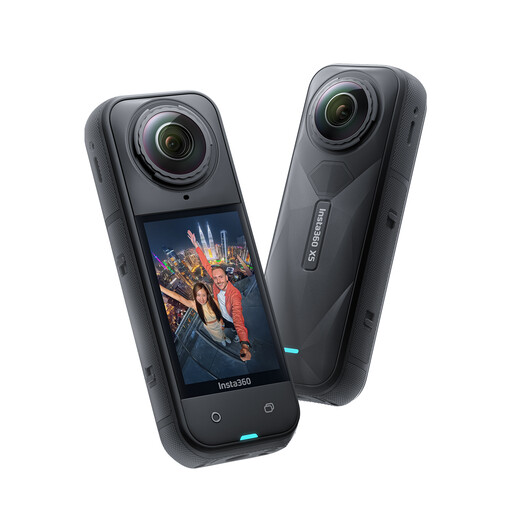
Described as a 360-degree action camera for outdoor adventures; it is not one of the interchangeable-lens camera kits compared here.
The product description specifies 8K video at 30 frames per second and replaceable lenses. It states that the camera is waterproof to 15 m without a housing; according to the description, the invisible selfie stick is sold separately.
 No image available
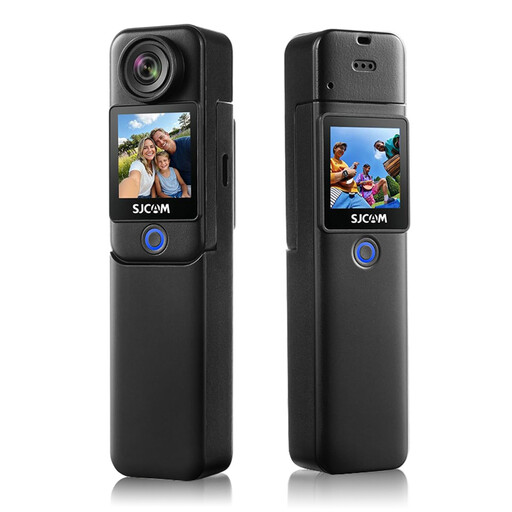
Described as an action camera for travel, hiking and outdoor activities; it is a different type of product from the interchangeable-lens cameras compared here.
The product description specifies 4K recording, a 154° wide-angle lens, photos up to 20 MP and 6-axis stabilisation. According to the description, the waterproof housing is required for underwater use.
 No image available
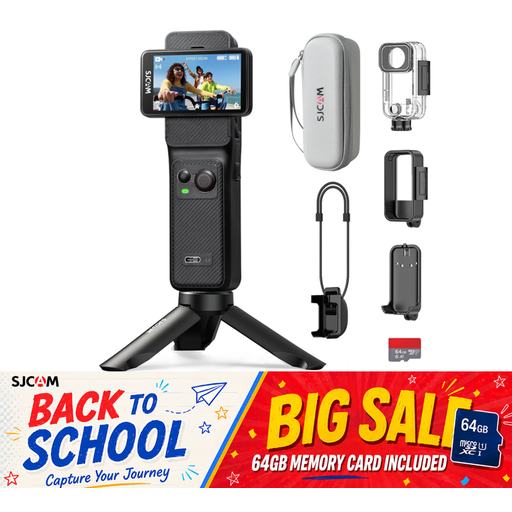
Described as an action camera for hiking and outdoor activities; it is not one of the interchangeable-lens camera combinations compared here.
The product description specifies 4K recording, a 154° wide-angle lens, photos up to 16 MP and 6-axis stabilisation. The stated battery life of up to 437 minutes requires the grip and additional battery; underwater recording to 30 m requires the waterproof housing.
There’s no blanket answer. For nature reserves, § 23 BNatSchG sets out prohibitions subject to more detailed provisions; the local protection rules determine which areas you can access at a particular photography spot. The trail collection from Thuringian Forest Nature Park can help you plan, but it does not grant general permission to leave the paths.
As a general rule, consent is required to distribute or publicly display images under § 22 KunstUrhG. § 23 KunstUrhG sets out exceptions, including people who appear only as incidental figures in a landscape; whether this applies to a particular image depends on its content.
Check what’s actually included and how you can charge the camera. In the Nikon Z50II kit covered here, VR is built into the lens; Nikon also notes that no charger is included. Check the specific offer to make sure you have a memory card and a way to power the camera.
No. Verbraucherzentrale distinguishes the statutory warranty against the seller from a voluntary guarantee with its own terms and conditions. Check the specific offer to see who the seller is and which guarantee terms apply.