Capturing embroidery and stitching details
You want to show individual stitches, beads or fabric textures up close. So, focus on choosing the right close-up lens and checking its magnification ratio.


For full traditional outfits and fine embroidery, first choose a lens that can capture the smallest detail you need. Then check that its angle of view works for the full outfit. A standard zoom may suit wider shots, while tiny stitching details may call for a compatible macro lens or a camera with a built-in close-up function. Controlled lighting and a repeatable shooting process are also important for capturing colours and fabric textures consistently.
You want to show individual stitches, beads or fabric textures up close. So, focus on choosing the right close-up lens and checking its magnification ratio.
You need consistent views of colours and material surfaces under comparable conditions. The Canadian Conservation Institute explains how different light sources can affect colours and textures.
You switch between photographing the whole outfit and close-up details. That means both the angle of view and the lens actually included in the kit matter.
Suitable if: you want individual stitches or small decorations to fill a large part of the frame.
Consider: the macro lens must be compatible with the camera body and either included in the specific offer or budgeted for separately.
Suitable if: your priority is to start with the whole outfit, its silhouette and larger decorations.
Consider: for tiny details, check the minimum focusing distance and magnification ratio of the zoom lens actually included.
Suitable if: you want to capture small details without changing lenses and prefer to travel light.
Consider: a short focusing distance is not the same as a particular magnification ratio. Check the framing you need using a similar fabric subject.
| Priority | What to check before buying | Especially important if |
|---|---|---|
| Fine close-up details | Check the lens mount and the maximum magnification ratio of the specific lens; allow room for lighting. | If you want individual stitches, beads or seams to appear large in the frame, I’d compare lens mounts and close-up capabilities first. Around 36% of consumers put fine close-up details first. |
| Colours and surface texture | Consider controllable lighting and a repeatable shooting process; raking light shows texture differently from even lighting. | For consistent colour documentation, I need controllable lighting and a consistent process. Around 29% of consumers prioritise how colour and surface texture are rendered. |
| Full outfit and close-up details | Check the angle of view and the lens included in the specific kit; for detail shots, consider the close-up capabilities of the lens you’ll use. | If the whole outfit is the priority, I’d look for a suitable angle of view without overlooking the option to take closer shots. Around 21% of consumers prioritise the full view. |
| Simple close-up photography | Keep focusing distance and magnification ratio in mind as separate things; check the framing you need using a similar fabric subject. | If I want to take photos without changing lenses, I check the close-up range on a fabric subject and whether I can set up the lighting without touching the textile. Around 14% of consumers prefer close-up photography with minimal equipment. |
The pixel count alone doesn’t tell you how large small stitching details will appear in the image. The specific lens and its magnification ratio also make a difference.
Decide on the smallest detail you want to capture, then check the lens combination you’ll actually use.
Very small details may also require a compatible macro lens.
A focusing-distance figure describes something different from a magnification ratio such as 1:1. The two figures aren’t directly interchangeable.
Compare the framing you need using test shots, and check the distance and magnification ratio separately.
The Canadian Conservation Institute describes even lighting for capturing colours and raking light for highlighting texture and surface damage. One lighting set-up won’t necessarily do both.
If needed, plan one evenly lit documentation shot and a separate shot to show the surface texture.
Different lighting goals may mean extra set-up time and multiple shots.
For small details on traditional outfits, consider the Z50II with a compatible macro lens, checking each part of the combination separately.
The EOS R50 supports RF and RF-S lenses; the kit we looked at is a starting point for full-outfit shots.
The Alpha 6700 with E-mount can be considered alongside the separately available E 30 mm F3.5 Macro for close-up photography.
The X-S20 and the separately available XF30mmF2.8 R LM WR Macro are a combination worth considering for small fabric details.
The Tough TG-7 has a built-in close-up function for anyone who wants to work without changing lenses.
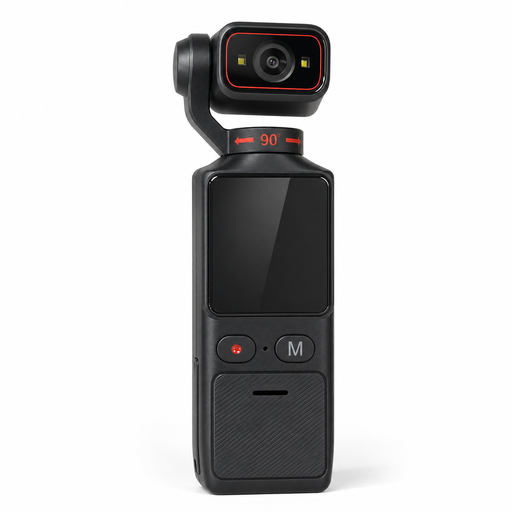
A compact camera for general photography. Before buying, check that it can capture the fine details of traditional outfits the way you want.
 No image available
This compact camera could suit general photography. For fine embroidery, check the framing you need using a similar fabric subject.
The product title lists 4K, a 180° swivel lens, Wi-Fi and a 1.69-inch touchscreen. The description mentions adjustable exposure and white balance.
For a full-outfit shot, the included zoom lens can be a starting point. For individual stitches, also check the magnification ratio of the kit lens: the EOS R50 kit we looked at includes an RF-S 18–45mm, not the separately reviewed RF 35mm F1.8 IS Macro STM.
The Canadian Conservation Institute describes even lighting for colours and raking light to highlight texture and surface damage. If both matter, take shots with different lighting rather than assuming one lighting set-up will work for both.
If you’re photographing an item in a collection, check the requirements of the organisation responsible for it and plan your set-up to avoid unnecessary handling. The Canadian Conservation Institute treats light, handling and material condition as factors in textile preservation; this does not establish a general legal exposure limit for private photographs of traditional outfits.
You can’t determine this solely from owning the outfit or the camera. Under Section 2 of the German Copyright Act (UrhG), works of applied art that are personal intellectual creations may be protected. Whether this applies to a particular garment and your planned use depends on the individual case. Collection conditions may also be relevant.