Which camera is right for you?

Watercolour artists who care about colour

If you want to capture the paper’s white and the layers of transparent colour accurately for a portfolio or record, you’ll need to control the lighting and white balance. Canon Europe describes custom white balance as a way to reproduce colours more accurately, while the Metropolitan Museum of Art highlights the challenges of reproducing subtle colour variations.

Artists capturing fine details

If tiny brush marks or the texture of the paper are subjects in their own right, check the framing and magnification offered by the specific lens. Canon gives a maximum magnification of 0.16x for the RF-S 18–45 mm at 45 mm with autofocus.

Artists who often change location

If you photograph your studies in different places and would rather not change lenses, a built-in zoom could suit your workflow. Sony lists the RX100 VII as a compact camera with a built-in zoom.

What should you look for when buying?

Mirrorless camera with standard zoom

A good fit if: You photograph whole sheets in different sizes and want the option to change lenses in future.

The trade-off: A standard zoom isn’t automatically a macro lens; check the framing, working distance and specific lens.

Mirrorless camera with an additional close-up lens

A good fit if: You want to capture tiny brush marks or paper textures as subjects in their own right, at a larger scale.

The trade-off: You’ll need another compatible lens and should check its magnification and the working distance required.

Compact camera with fixed zoom

A good fit if: You mainly photograph whole sheets in different locations and want to avoid a camera system with interchangeable lenses.

The trade-off: The lens can’t be changed; check whether the minimum focus distance and level of detail are suitable for your own artwork.

What matters What to look for when buying Who should pay particular attention?
Colour and paper white White balance for the artificial light you use; option to take a reference shot. If I want to assess the paper white and transparent layers of colour under consistent lighting, adjustable white balance is important. Around 36% of consumers put colour reproduction first.
Framing and fine detail Paper size and the maximum magnification of the specific lens. If you want to capture tiny brush marks or paper textures, choose a lens based on how large those details will appear in the image. Around 29% of consumers prioritise detail.
Lighting and reflections Room for lights on either side; check for reflections on the actual sheet in a test shot. If an even setup under artificial light matters more than being able to change location quickly, check the lighting positions and the paper surface together. Around 21% of consumers pay particular attention to lighting and reflections.
Portability and ease of setup Compare the complete kit you’ll need; check the framing and working distance with your subject beforehand. If you often change location, a setup that doesn’t require you to change lenses could make things easier. What matters most is whether the fixed framing suits your artwork. Around 14% of consumers prioritise portability.

Common buying mistakes

  • Assuming a high megapixel count means colour-accurate watercolour photos

    Lighting and white balance also affect how colours look. The Canadian Conservation Institute describes lighting techniques for works of art, while Canon Europe explains custom white balance. Resolution alone therefore won’t tell you how the paper white and transparent layers of colour will look in your photos.

    Take a test shot of your colours under the lighting you plan to use before deciding based on sensor resolution.

  • Assuming the kit zoom will work as a macro lens without checking

    Canon gives a maximum magnification of 0.16x for the RF-S 18–45 mm at 45 mm with autofocus. That may be enough to photograph a whole sheet, but it doesn’t necessarily tell you how large tiny details will appear.

    Check the magnification of the lens actually included in the offer, and distinguish between photographing the whole artwork and close-up details.

    You may need an additional compatible lens to capture very small details.

  • Comparing just the camera body instead of the complete kit

    What’s included varies from one kit to another. For its Z50II kit with the NIKKOR Z DX 16–50 mm, Nikon specifically notes that a charger is not included.

    Before you buy, check exactly what the kit includes and whether you already own compatible accessories.

Camera brands to consider

Canon

The EOS R50 is an APS-C mirrorless camera with an RF mount; the RF-S 18–45 mm is one possible standard zoom.

  • Canon gives the EOS R50 an effective resolution of 24.2 MP.
  • For the RF-S 18–45 mm at 45 mm with autofocus, Canon gives a maximum magnification of 0.16x. If you need to capture very small details, assess the lens separately.

Nikon

The Z50II is a DX mirrorless camera with a Z mount; one kit pairs it with the NIKKOR Z DX 16–50 mm f/3.5–6.3 VR.

  • Nikon gives the Z50II an effective sensor resolution of 20.9 MP.
  • According to Nikon, the kit mentioned above does not include a charger. Check the contents of the specific offer.

Sony

The RX100 VII is a compact camera with a built-in zoom; the α6400 is a separate APS-C mirrorless camera with an E-mount.

  • Sony gives the RX100 VII an effective resolution of around 20.1 MP and a zoom with a 24–200 mm full-frame equivalent range. For the α6400, Sony gives 24.2 MP and RAW shooting.
  • The models differ, among other things, in whether you can change the lens. Information about the RX100 VII doesn’t automatically apply to the α6400, or vice versa.

Compact cameras at Joybuy

The compact digital and pocket cameras listed here could be worth considering for photography on the go. For watercolours, check the framing, reflections and colour reproduction with your own lighting setup.
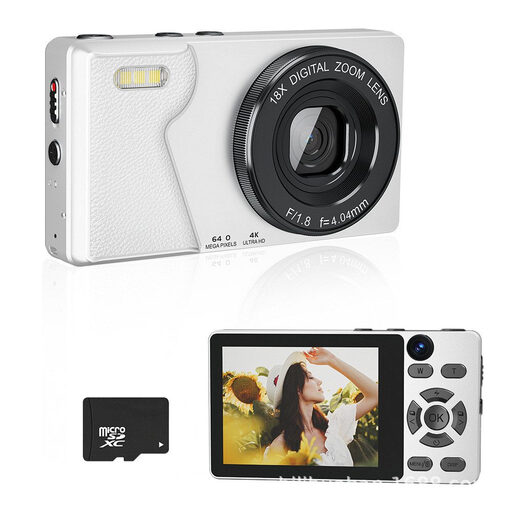
KINSI Retro Digital Camera 4K UHD 64 MP

KINSI Retro Digital Camera 4K UHD 64 MP

This compact digital camera could be an option if you take photos in different locations; its product name doesn’t guarantee accurate colour reproduction for watercolours.

The product name lists 64 MP, autofocus, a 2.8-inch display, 20 filters and image stabilisation. Check the framing and colour reproduction with a test shot.

View at Joybuy
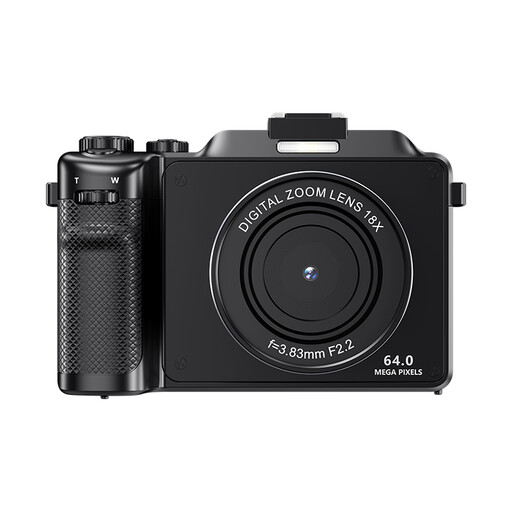
KOMERY X9 4K digital camera, 64 MP, black

KOMERY X9 4K, 64 MP, black

For a fixed-position shot, check whether the stated zoom lets you get the framing you want from your planned camera position.

The product name lists 64 MP photos, autofocus, 18x zoom and a built-in flash. These details alone don’t tell you whether it will meet your lighting and detail requirements.

View at Joybuy
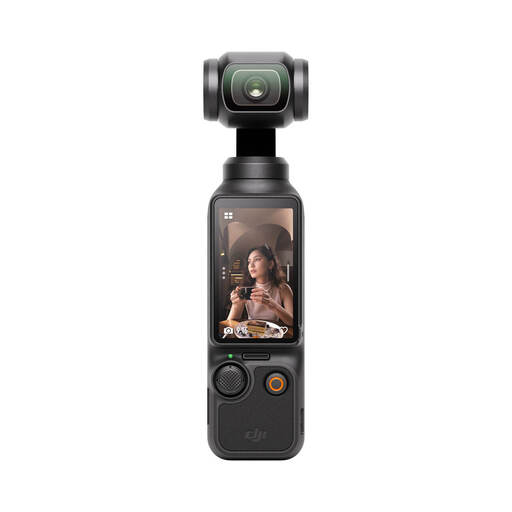
DJI Osmo Pocket 3

DJI Osmo Pocket 3

The product name lists photo and video use; for a watercolour study, check whether the fixed setup and the framing you want will suit your subject.

Features listed include a 1-inch CMOS sensor, 3-axis stabilisation and a rotating 2-inch touchscreen. The 4K/120fps specification relates to video and doesn’t guarantee colour accuracy for reproductions of artwork.

View at Joybuy

Songdian digital camera, 5K, 64 MP, white

Songdian digital camera 5K, 64 MP, white

If you want to photograph both the whole artwork and its details, check whether the available framing covers your shooting distance using your own sheet.

The product name lists 8x optical zoom, two lenses, 64 MP and autofocus. These details are no substitute for testing colour reproduction under your artificial light.

View at Joybuy
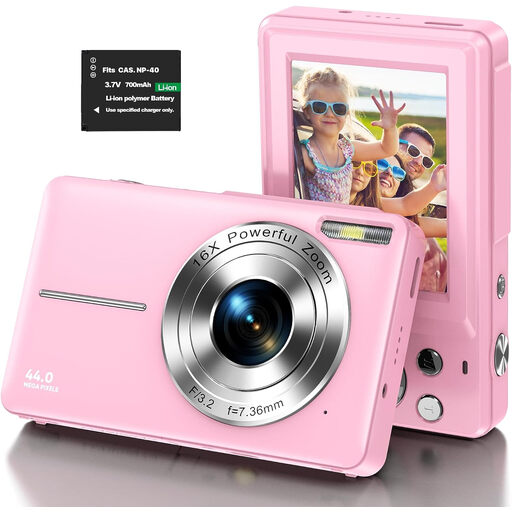
Songdian Pocket Camera 4K, 64 MP, pink

Songdian Pocket Camera 4K, 64 MP, pink

The pocket-sized format could be useful if you often change location; check whether the camera can capture the whole sheet from where you’ll be taking the photo.

The product name lists 64 MP, autofocus and 16x digital zoom. A digital zoom specification alone doesn’t tell you how clearly tiny brush marks will appear in the finished image.

View at Joybuy

Frequently asked questions

How should I set up the lighting for a full-sheet photo?

Start by lighting the sheet as evenly as possible from both sides, then check the brightness and reflections in a test shot. The Canadian Conservation Institute describes using lights positioned on either side at a 45-degree angle for evenly lit object photography; raking light, by contrast, is used to bring out surface texture.

Why does paper look yellowish or greenish under artificial light?

Artificial light sources can add a colour cast. Take a reference shot under the lighting you plan to use and adjust the white balance; then assess the watercolour colours as well as the paper white. Canon Europe describes custom white balance as a way to reproduce colours more accurately.

Do I need a macro lens to photograph a whole watercolour?

Not just because you’re photographing a work of art. First check whether your existing lens can capture the whole sheet from your planned camera position; for small details, the maximum magnification of the specific lens also matters.

What should I check about what’s included and my consumer rights?

For each offer, check whether it includes a lens, charger and any other accessories you need; Nikon specifically notes that its Z50II kit with the NIKKOR Z DX 16–50 mm does not include a charger. When you buy from a trader as a consumer, statutory guarantee rights apply; Your Europe states that goods purchased in the EU have a minimum two-year guarantee. This is separate from any voluntary manufacturer’s warranty.

Can I publish a photo of a watercolour online?

If it’s someone else’s work, check that you have the necessary rights before publishing it online. The German Patent and Trade Mark Office lists reproduction and making a work available to the public among the relevant rights; simply owning the artwork doesn’t settle the copyright question. Whether a particular study is protected depends on the individual case.