Backlit photography
You photograph hanging decorations against a bright window and want to balance the subject against the lighting deliberately.


Choose your camera according to whether you mainly want to photograph entire window decorations or small handmade details. A mirrorless camera kit with a standard zoom lens can be a good starting point for larger pieces. For tiny subjects, look at the magnification offered by the specific lens or whether the camera has a built-in close-up mode. In bright window light, exposure control and a stable set-up are also important – changing the camera body alone won’t solve these challenges.
You photograph hanging decorations against a bright window and want to balance the subject against the lighting deliberately.
You want to show small handmade features clearly, so you need to assess the specific lens or close-up mode.
You photograph several pieces for a catalogue or online shop and need repeatable framing and consistent colours wherever possible.
Best for: You mainly photograph whole decorations and their surroundings, and may want to choose a different lens later.
Consider: The camera body alone says little about close-up performance. Check the lens, focal length range and what the kit includes.
Best for: Seams, paper textures or small fastenings are the main subject.
Consider: An extra lens means more to carry. With Sony’s SEL30M35, the distance between the front of the lens and the subject at maximum magnification is 2,4 cm, according to Sony.
Best for: You don’t want to build a system with interchangeable lenses, but would like to capture small details without a separate macro lens.
Consider: OM SYSTEM says the Tough TG-7 can focus as close as 1 cm; its lens cannot be changed.
| What you need | What to look for | Who should prioritise it |
|---|---|---|
| Expose the subject and window | Check whether exposure compensation or manual exposure is easy to access, and whether you can review the result straight away. | If the decoration looks dark against a bright window, you’ll want to brighten it deliberately while keeping an eye on the highlights. Around 36% of consumers are likely to prioritise backlighting. |
| Show small details | Compare the maximum magnification and focusing specifications of the specific lens or close-up mode. Also check whether there’s room for lighting. | If you want tiny handmade features to fill the frame, the combination of magnification and working distance matters. Around 29% of consumers are likely to prioritise close-up details. |
| Photograph a consistent series | Look for a stable set-up, a controllable frame and adjustable white balance. | If you’re photographing several pieces for a shop or catalogue, you’ll want comparable framing and consistent colours. Around 21% of consumers are likely to prioritise consistent product photos. |
| Easy to get started | Check what the specific kit includes, including the lens and charger, as well as whether you might need another lens later. | If you want to get started without lots of extra equipment, make sure you know exactly what’s included in your chosen set. Around 14% of consumers are likely to prioritise an easy start. |
When shooting against the light, exposure compensation can help you brighten the subject. Check whether the bright areas around the window still retain detail. For multiple product photos, Canon Germany recommends using a fixed set-up with a tripod. Nikon Germany advises adjusting the white balance when lighting conditions change.
With a mirrorless camera, the size of a detail in the image depends largely on the specific lens.
First decide whether you want to show the whole piece or tiny decorations. Then check the magnification and mount of the complete set-up.
If you want small details to fill the frame, you may need an additional close-up lens that’s suited to the task.
For the Sony SEL30M35, Sony distinguishes between a minimum focusing distance of 9,5 cm and a distance of 2,4 cm between the front of the lens and the subject at maximum magnification.
In a tight spot by a window, check the working distance and whether you can position the camera and lighting effectively.
What’s included depends on the specific set. Nikon explicitly states that its Z50II kit with a 16–50-mm VR lens does not include a charger.
Read the list of items included with the offer you’ve chosen, rather than assuming the model name tells you everything that comes in the box.
Stabilisation in a lens and a fixed camera position serve different purposes. For repeatable product framing, Canon Germany also recommends a stable tripod set-up.
Check whether stabilisation is built into the specific lens, then decide separately whether you need to keep the camera in the same position for a series.
EOS R mirrorless cameras such as the EOS R50 can be used with an RF-S standard zoom to photograph larger subjects. You can choose additional lenses to suit what you’re photographing.
The Z50II kit with a Z DX 16–50-mm zoom is a mirrorless camera option for photographing whole decorations.
You can pair an E-mount system with a separately selected SEL30M35 for detail shots.
The X-T30 III is an X-mount mirrorless camera for anyone who wants to choose a lens to suit the subject.
The Tough TG-7 is a compact camera with an integrated zoom and close-up function, rather than an interchangeable-lens system.
The Joybuy offers below include compact cameras for photography and vlogging. Before buying one for window decorations, check the close-up focus, framing and what comes with the specific model.
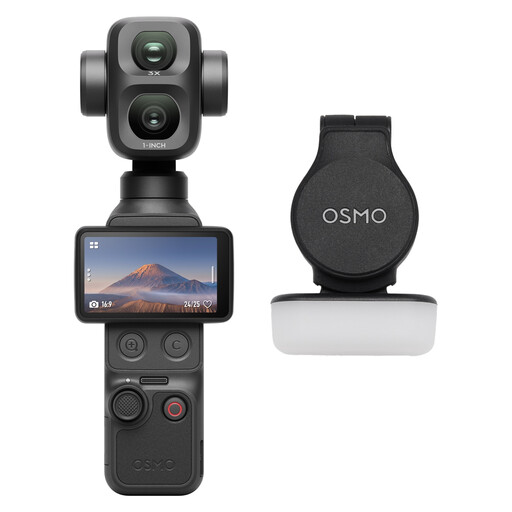 No image available
The rotating screen is a stated feature that can help with framing. Also check whether the close-up focus is suitable for your decorations.
According to the product description: 20-mm-f/2.0 wide-angle lens, 1-inch CMOS sensor, 107 GB of built-in storage, 4K/240-fps video and a rotating 2-inch touchscreen.
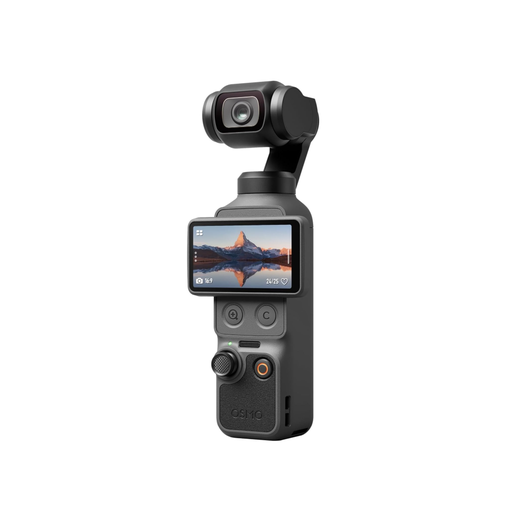 No image available
If you’re considering this camera for close-ups, check the focusing distance for your subjects. The specifications listed alone don’t confirm its suitability for detail shots.
The product description lists a 20-mm-f/2.0 wide-angle lens, a 1-inch CMOS sensor, 107 GB of built-in storage, 4K/240-fps video and a rotating 2-inch screen.
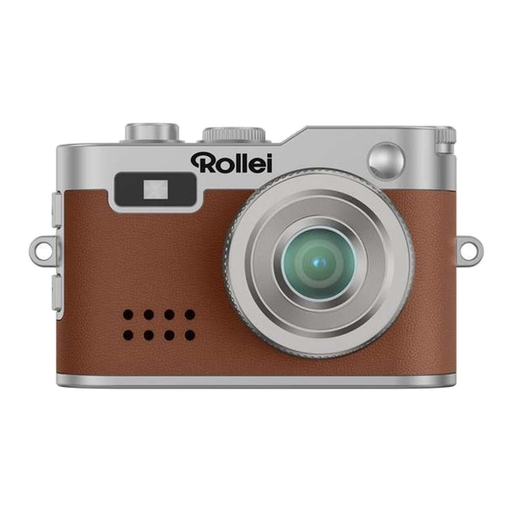 No image available
If a very small camera body is important to you, check beforehand that the framing and close-up focus will work for your window decorations.
The description lists 2-MP photos, an LCD screen and a weight of 18 g. It also mentions a built-in LED with flash and continuous light modes.
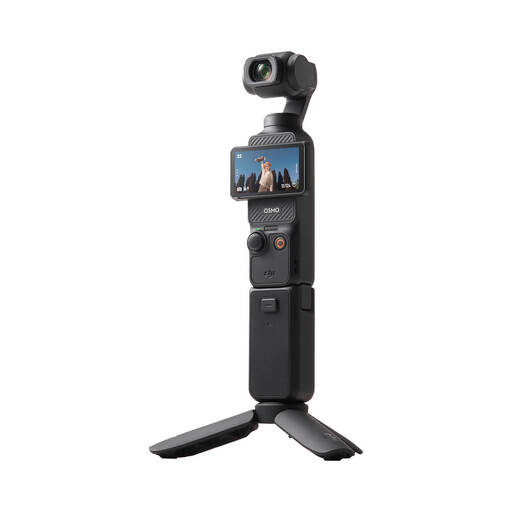 No image available
For photos of decorations, check that the framing and focusing suit your subjects. The product specifications do not confirm its suitability for macro photography.
The description lists a 1-inch CMOS sensor, 4K/120-fps video, 10-bit D-Log M, mechanical 3-axis stabilisation and a rotating 2-inch touchscreen.
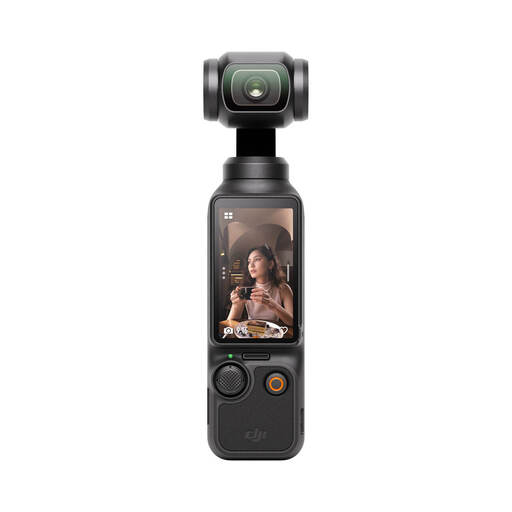 No image available
If you want to use it for handmade details, check the focus at your intended shooting distance first.
The description lists a 1-inch CMOS sensor, 4K/120-fps video, 10-bit D-Log M, mechanical 3-axis stabilisation, fast focusing and a rotating 2-inch touchscreen.
Check the exposure on the subject and, if needed, increase it using exposure compensation. At the same time, check whether detail is being lost in the bright areas of the window. A reflector can direct light towards the darker side. None of these options guarantees that every part of every scene will retain full detail.
Not necessarily: a suitable standard zoom may be enough for the entire piece. For very small details, compare the maximum magnification of the specific lens or look for a built-in close-up mode.
Keep the camera position and arrangement as consistent as possible using a tripod. Set the white balance to suit the available light, and check it again if the daylight changes.
Check what comes with the specific kit: Nikon explicitly states that its Z50II set with a 16–50-mm VR lens does not include a charger. If there’s a fault, statutory consumer rights against the seller are separate from a voluntary guarantee, as the Verbraucherzentrale points out.
For an eligible distance-selling contract, you generally have a statutory 14-day right to cancel, starting from the day the goods are delivered. Your Europe explains that exceptions and the rules on return costs may apply in individual cases.