
Lieferung heute & morgen

Qualitätsgarantie

Willkommens-Angebote freischalten: KOSTENLOSE Lieferung | Bis zu 80 % RABATT | Kostenlose 30-Tage-JoyPlus-Testphase
App herunterladen
The right camera light often determines whether skin tones look natural, details remain visible and videos are free from distracting shadows. For photos and videos, there are different solutions to choose from: an LED video light provides continuous illumination, a camera flash produces short, intense bursts of light, while a phone ring light illuminates the face from a short distance.
The choice may seem simple at first glance. In practice, however, some typical marketing claims can lead to disappointing purchases. The Joybuy Product Recommendation Officer explains the most important criteria and shows which models are suitable for different situations.
Claims such as ‘bright’, ‘powerful’ or ‘professional’ are not very meaningful without details of the measuring conditions. With an LED photography light, you should therefore check whether the light intensity is stated in lux and measured at a specified distance. The further away the subject is, the less light reaches it.
With a flash, the guide number (GN) is the relevant measurement. It describes the range under defined conditions, usually at ISO 100. A mini camera flash with GN8 is designed for nearby subjects and compact setups, but it cannot replace a more powerful flash unit in large rooms.
An RGB video light can add creative splashes of colour. For product photography, skin tones or YouTube video lighting, however, getting the white balance right is the first priority. Pay attention to the adjustable colour temperature range in Kelvin:
RGB expands your creative options, but it is not automatically an advantage for every shot.
A camera light must be mechanically and electrically suitable for its intended use. Before buying, check the following:
A portable video light is easier to assess when filming, streaming and vlogging because you can see its effect directly on the display. For vlog lighting or streaming light, dimming, colour temperature and battery life are particularly important.
A flash is extremely bright at the decisive moment and can freeze movement. However, its effect is less immediately visible before taking the photograph. Models with a tilting head allow indirect flash via a light-coloured wall or ceiling, provided the surroundings are suitable.
A wide Kelvin range is useful when switching between indoor spaces, daylight and mixed lighting. For colour-critical photography, CRI and TLCI are also useful reference values. The higher these values are stated to be, the closer the colour reproduction is to the reference light within the relevant measuring system. These figures should be regarded as technical specifications, not a guarantee for every subject or camera.
An integrated battery reduces the need for cables when filming on the move. Pay attention to the capacity in mAh, the stated runtime and whether this applies at full power or a lower setting. LED lights can become warm during continuous use. Ventilation openings must not be covered.
The safety information provided in the product specifications should be followed: do not point LED light directly into the eyes from a short distance, protect devices from moisture, and do not open lithium-ion batteries or expose them to high heat or naked flames.
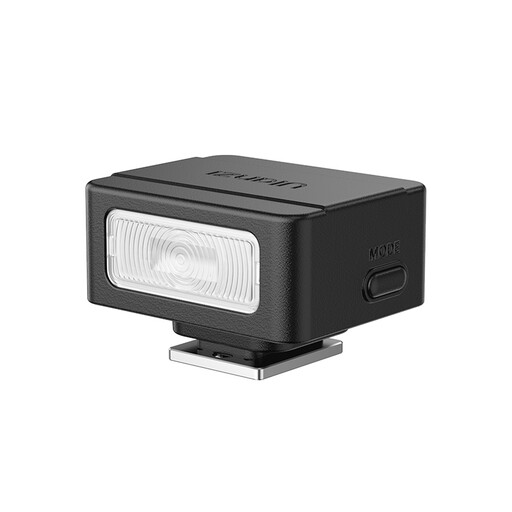
Why this product suits this profile: This compact manual flash is aimed at photographers looking for a straightforward solution for Nikon, Sony, Fujifilm or Panasonic cameras with a compatible hot shoe.
The four manually selectable power levels, from 1/8 to 1/1, make the settings easy to understand. The stated colour temperature of 6500 K clearly defines the intended use.
GN8, four power levels and a single-contact hot shoe. The manufacturer’s specifications describe a compact mini speedlite format.
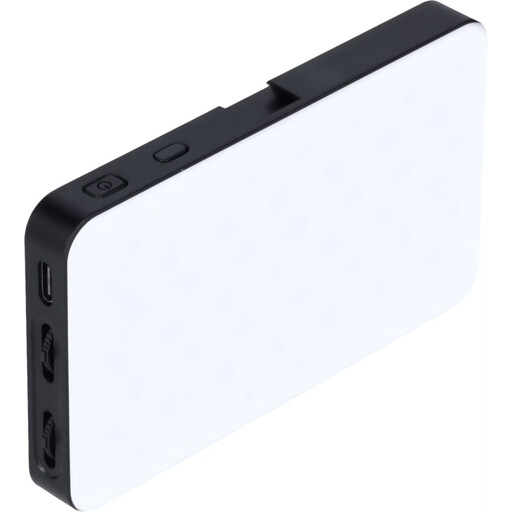
Why this product suits this profile: Content creators and videographers get a compact LED photography light with bi-colour and RGB modes, plus direct or app control.
The range from 2500 to 9000 K is clearly specified. It also offers 1 per cent increments, 360 RGB colours and CRI and TLCI values of 98+.
8 W output, 91 LEDs, USB-C charging port, 1/4-inch thread and cold shoe connection. The stated battery life is around 80 minutes at full power.
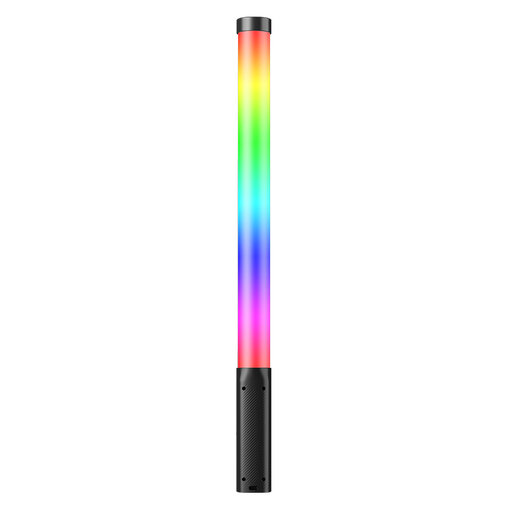
Why this product suits this profile: The light bar design is ideal for mobile portrait and product photography where the light needs to be positioned directly beside or behind the subject.
The technical specifications state 10 W, an adjustable colour temperature from 2500 to 9000 K and a 3300-mAh battery. This makes the key selection criteria clear.
360° RGB colour selection, 2500–9000 K and a stated light intensity of 360 lux at 0.5 m.
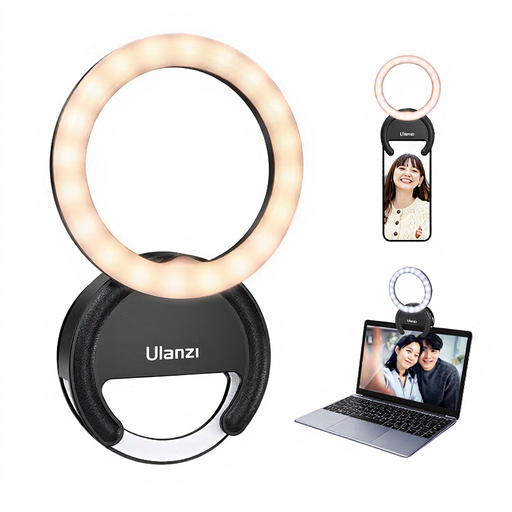
Why this product suits this profile: For selfies, video calls, TikTok, YouTube and short vlogs, this compact ring light provides front-facing illumination directly on your smartphone or laptop.
The choice remains straightforward: three colour temperatures from 3000 to 7000 K and five brightness levels. This lets you set everything without an app.
4-inch format, three colour temperatures and five brightness levels. The safety information highlights water protection and eye protection at maximum brightness.
We have put together a complete, regularly updated list of products that fully meet these strict selection criteria and the safety regulations applicable in the EU.
For an evenly lit face during streaming, position the light slightly above eye level and as close to the camera as possible. A ring light helps reduce harsh side shadows, while a small LED video light can be mounted flexibly on a tripod or on the camera.
For product photography, positioning the light to the side is recommended. A second, weaker light source or a bright surface can help balance the contrast. When using a flash, adjust the power gradually. A tilting flash head enables indirect light, provided the ceiling or wall is light in colour and not too far away.
For video recording, continuous LED lighting is usually more practical than a flash. Look for dimmability, a suitable colour temperature range and secure mounting. For smartphone recording, a phone ring light can be a compact solution; a portable video light is more flexible when shooting from different angles.
Runtime depends greatly on brightness, colour mode and ambient temperature. Manufacturer specifications often refer to a particular power level. If you are planning longer recording sessions, you should have a USB-C cable, power bank or second camera light available. Batteries should be kept dry, protected from heat and charged with a suitable power adapter.
An LED video light provides continuous illumination, making it suitable for video lighting, streaming and monitoring the image directly. A camera flash produces a short burst of light and is primarily designed for photography. Hybrid models combine both functions, but range, battery capacity and manual power levels should be compared before purchase.