
Lieferung heute & morgen

Qualitätsgarantie

Willkommens-Angebote freischalten: KOSTENLOSE Lieferung | Bis zu 80 % RABATT | Kostenlose 30-Tage-JoyPlus-Testphase
App herunterladen
A good camping bed is the foundation for restful sleep outdoors or a practical solution for overnight guests. But the market is full of models whose marketing claims often don't hold up in practice. Many buyers only realise after the first use that their new bed is uncomfortable, unstable, or impractical. Before you make a decision, it's crucial to understand the typical pitfalls that can lead to a poor purchase.
This guide focuses on the objective criteria that truly matter. We'll highlight three common problems with camping beds and explain which technical features you should look for to find a durable and functional sleeping solution.
The 3 most common pitfalls when buying a camping bed:
To avoid these problems, you should base your choice on verifiable facts. The following three parameters are crucial for the functionality and durability of your camping bed.
The most fundamental decision is between a camp cot (also called a folding cot) and an inflatable camping air mattress. Both have specific pros and cons.
A bed's dimensions determine not only its comfort but also its practicality.
Ease of use in everyday situations is an often-underestimated criterion.
Based on these objective criteria, we have identified several models that represent a suitable solution for specific user groups.

Why it's a good fit: Perfect for those who prioritise maximum stability and load-bearing capacity. With its high weight limit and elevated sleeping position, it's suitable for extended camping trips, fishing excursions, or as a sturdy bed for taller and heavier individuals.
The construction with 22 mm steel tubes and an X-shaped frame directly addresses the problems of overstated weight capacity and instability. The stated 200 kg load capacity is backed by a solid build.
High weight capacity up to 200 kg. Large sleeping surface (213x79 cm) and 50 cm height for comfort and insulation. No assembly required.
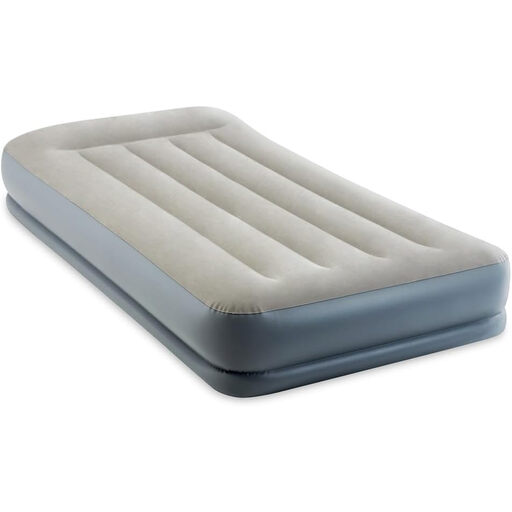
Why it's a good fit: An excellent alternative to a classic folding guest bed. Perfect for anyone who needs a comfortable sleeping spot for guests quickly and effortlessly, or for those who camp occasionally and don't want to sacrifice comfort.
The integrated electric pump solves the problem of cumbersome setup. The bed is ready in about 2 minutes. The mid-rise height of 30 cm offers a great compromise between comfort and pack size.
Built-in 220-240V pump. Flocked surface for added comfort. Compact storage after deflation.
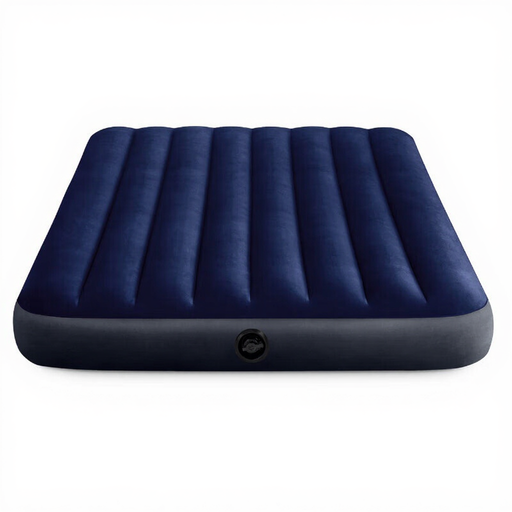
Why it's a good fit: Designed for two people looking for a shared sleeping solution. The 137 cm width provides ample space for couples when camping or as a guest bed for two.
The Wave-Beam construction developed by Intex ensures an even surface and prevents the bed from sagging in the middle when used by two people. This counteracts the instability problem common in double air beds.
Internal support structure for stability. Water-resistant, flocked top. 2-in-1 valve for fast inflation and deflation.
We have compiled a complete, up-to-date list of products that fully meet these strict selection criteria and safety standards.
The choice depends on your priorities. A camp cot offers better air circulation (cooler in summer, but requires a good sleeping pad in winter), is more robust against sharp rocks, and can be set up in seconds. A camping air mattress often provides a more home-like feel and is unbeatable in terms of compact transport. Consider your mode of transport, the typical ground conditions at your campsites, and your personal comfort preferences.
For camp cots: Clean the frame and fabric cover with a damp cloth. Let the bed dry completely before storing it in its carry bag to prevent rust on the frame and mildew on the fabric. For air beds: Clean the surface with a mild soap solution. Ensure the bed, and especially the valve, is completely dry before folding it up. Store it in a dry, temperature-stable place, away from sharp objects.
As a rule of thumb, the maximum weight capacity should be at least 20-30% above your own body weight to provide a safety margin for movements during sleep. For an average adult, a stated capacity of 120 kg is a good starting point. For taller or heavier individuals, or if the bed will be used very intensively, models with a capacity of 150 kg to 200 kg, often featuring a sturdy steel frame, are a recommended choice for long-term stability.