
Lieferung heute & morgen

Qualitätsgarantie

Willkommens-Angebote freischalten: KOSTENLOSE Lieferung | Bis zu 80 % RABATT | Kostenlose 30-Tage-JoyPlus-Testphase
App herunterladen
A good camping chair is more than just a place to sit—it's a mobile throne for relaxing moments in nature, while fishing, or at a festival. But the selection is vast, and not every model lives up to its advertising. Many buyers get frustrated with chairs that break after a short time, are uncomfortable, or prove impractical to transport. As your Joybuy Product Recommendation Officer, I'll help you identify the typical pitfalls and make an informed decision.
Before we dive into the important features, let's highlight the three most common problems that can lead to a bad purchase.
To avoid these pitfalls, you should carefully examine three core aspects before buying. These objective criteria will help you separate the wheat from the chaff.
The frame is your chair's skeleton. There are two common materials here:
For the cover fabric, 600D Oxford fabric is a proven standard. It is tear-resistant, durable, and relatively easy to clean. Models with mesh panels offer better ventilation on warm days.
Ask yourself how you will transport the chair. For backpacking trips, every gram counts, making an ultralight chair with a minimal pack size essential. If you're driving to the campsite, weight and size can be less of a concern, which often allows for more comfort and additional features like an integrated table or an adjustable backrest. Always compare the folded dimensions (pack size) and the total weight to ensure the chair fits your logistical needs.
Comfort is determined by the design. A high-back camping chair supports the entire back and neck, which is crucial for prolonged sitting. Padded seats and armrests further enhance comfort.
There are various designs for different needs:
Here are some models that are well-suited for specific use cases based on their objective features.
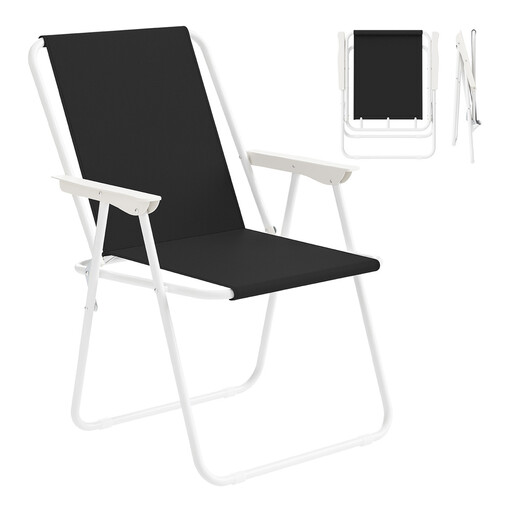
Why This Fits Their Persona: Ideal for festival-goers or for use in the garden, who are looking for an uncomplicated, lightweight, and quick-to-assemble chair for occasional use.
It bypasses the portability trap with its low weight of approx. 2.1 kg and a flat pack size, making transport easy.
Solid basic features with 600D Oxford fabric and an iron tube frame; load capacity up to 100 kg according to the manufacturer.

Why This Fits Their Persona: Perfect for campers, anglers, and garden owners who value high seating comfort and want to sit comfortably for extended periods.
Addresses the ergonomics trap with a 70 cm high backrest for shoulder support and solid armrests that make standing up easier.
High load capacity of up to 180 kg according to the manufacturer, a breathable mesh panel in the back, and a practical side pocket with a cup holder.
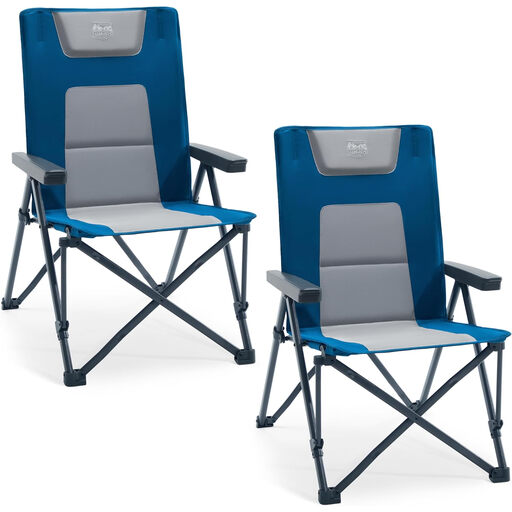
Why This Fits Their Persona: Suitable for demanding users and families who need an extremely robust and high-capacity chair for various uses, from camping to caravan holidays.
Avoids the misleading load capacity trap with a massive steel frame construction designed for up to 260 kg, according to the manufacturer.
Extremely high load capacity, padded back and headrest, and a 4-position adjustable backrest for customized comfort.
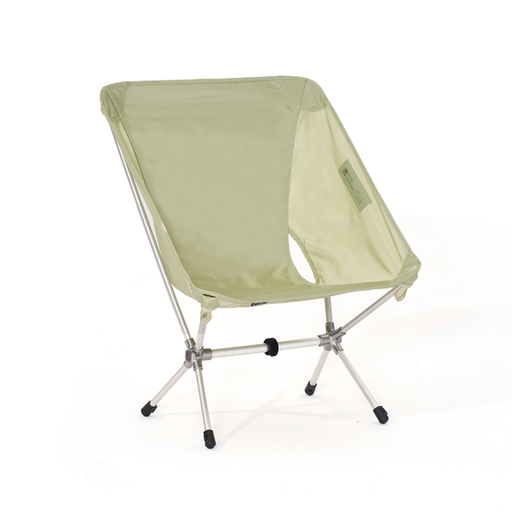
Why This Fits Their Persona: Specifically for trekking and backpacking adventures where every gram counts and the pack size must be as small as possible.
Solves the portability illusion by being genuinely backpack-friendly with a weight of only approx. 765 g and a pack size of 11 x 36 cm.
Extremely lightweight aluminum frame, very small pack size, and yet a solid load capacity of approx. 140 kg according to the manufacturer.
We've compiled a complete, up-to-date list of products that fully meet these strict selection criteria and applicable safety regulations.
1. What load capacity should a camping chair have? A load capacity of 100-120 kg is sufficient for most adults. However, if you want greater stability or if the chair will be used by different people, a model with a capacity of 150 kg or more is a safe choice. Ensure that the value is clearly stated by the manufacturer and that the construction (e.g., reinforced joints, thicker frame) makes this value plausible.
2. What is the difference between a steel and an aluminum frame? Steel is generally more affordable and very stable, making it ideal for heavy-duty chairs that don't need to be carried far. Aluminum is significantly lighter and does not rust, making it the preferred choice for portable chairs used for hiking or at the beach. The price for aluminum models is often slightly higher.
3. How do I properly care for and store my folding chair? Clean the chair with a damp cloth after each use to remove dirt and sand. Do not use aggressive cleaning agents. Allow the chair to air dry completely before storing it in its carrying bag. Dry storage protects the frame from corrosion and the fabric from mold, which significantly extends its lifespan.