
Lieferung heute & morgen

Qualitätsgarantie

Willkommens-Angebote freischalten: KOSTENLOSE Lieferung | Bis zu 80 % RABATT | Kostenlose 30-Tage-JoyPlus-Testphase
App herunterladen
A good camping chair is more than just a place to sit—it's a cornerstone of outdoor relaxation. But the market is saturated, and many products don't live up to their descriptions. A flimsy folding chair that gives way at the first festival, or an uncomfortable model that turns a fishing trip into an endurance test, are frustrating and avoidable bad investments.
As your Joybuy Product Recommendation Officer, I'll help you identify the common pitfalls and make an informed decision. We'll focus on the facts that truly matter, cutting through the exaggerated marketing claims.
The 3 Most Common Traps When Buying a Camping Chair:
To avoid a bad purchase, you should focus on three objective criteria. These will help you realistically assess a model's quality and suitability for your needs.
The frame is the backbone of any camping chair and is the primary determinant of its stability and durability.
The static load capacity, specified in kilograms, is an important guideline. However, you should also inspect the construction: X-shaped cross-bracing under the seat provides better load distribution and stability than simple folding mechanisms.
Portability is a core feature of any folding chair. Define your primary use case before you buy:
A comfortable chair allows for relaxed sitting over extended periods. Pay attention to the following features:
Here are some models that are suitable for specific use cases based on their objective features.
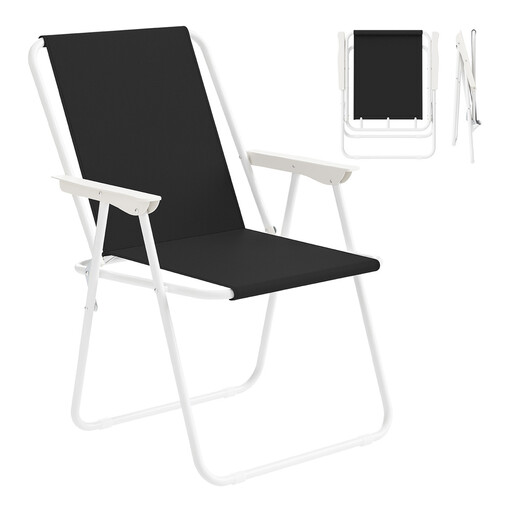
Why This Fits Their Persona: Ideal for individuals who need a straightforward, functional chair for occasional outings like picnics, festivals, or as extra seating in the garden, without a large budget.
It avoids the portability trap with its low net weight of approx. 2.1 kg and a flat-folding design. The construction is engineered for fundamental stability without advertising an exaggerated weight capacity.
18 mm Steel Tube Frame: Provides a solid base for the specified 100 kg load capacity. 600D Oxford Fabric: Durable and easy-to-clean material.
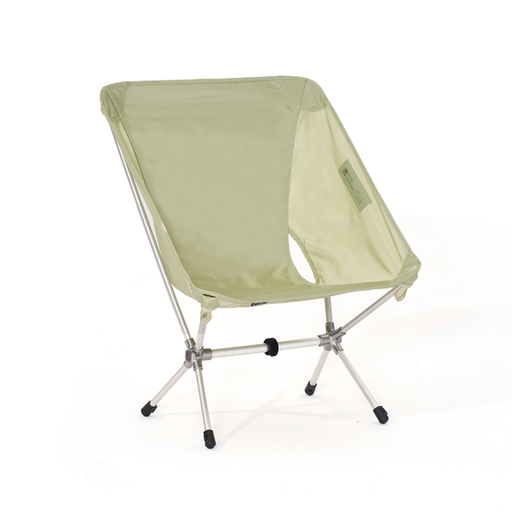
Why This Fits Their Persona: Perfect for trekking and hiking tours where every gram counts. This chair has been rigorously optimised for minimal weight and packed size, making it barely noticeable in a backpack.
It escapes the trap of the bulky "portable" chair with an extremely low weight of approx. 765 g and a packed size of just 36 x 11 cm. Its load capacity of approx. 140 kg is remarkable relative to its weight.
Aviation-Grade Aluminium Alloy: Ensures an optimal weight-to-stability ratio. Quick-Fold Structure: The chair can be assembled and disassembled in just a few simple steps.
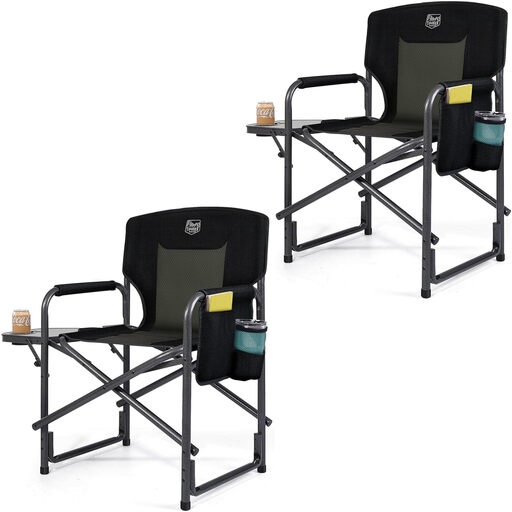
Why This Fits Their Persona: Suitable for demanding users who need an extremely stable and durable chair for regular use—whether for fishing, at the campsite, or at sporting events—and who value additional features.
This chair bypasses the "high weight capacity" trap with a demonstrably robust construction. The aluminium frame is designed for a real-world load capacity of up to 180 kg and offers high stability even on less-than-ideal surfaces.
Very High Load Capacity (180 kg): Offers exceptional stability and security. Integrated Side Table: Provides a convenient surface for drinks, books, or fishing tackle.
We have compiled a complete, up-to-date list of products that meet these strict selection criteria and applicable safety standards.
1. How do I properly care for my camping chair to extend its lifespan? Proper care is simple but crucial. After each use, remove coarse dirt like mud, sand, or grass. Wipe the fabric and frame with a damp cloth; avoid aggressive chemical cleaners. Allow the chair to air-dry completely before storing it in its carry bag. This prevents mould on the fabric and corrosion on the frame. Store it in a dry, cool place away from direct sunlight.
2. What is the difference between a steel and an aluminium camping chair? The main difference lies in the weight-to-stability ratio. Steel frames are generally heavier but also very robust and more budget-friendly. They are well-suited for situations where weight is not a major concern (e.g., car camping). Aluminium frames are significantly lighter and are therefore the top choice for trekking or when the chair needs to be carried often. High-quality aluminium alloys can achieve stability similar to steel but are usually more expensive to purchase.
3. Can I use a fishing chair for camping or at the beach? Yes, the lines are often blurred. A fishing chair is often characterised by particularly high stability, wider feet to prevent sinking into soft ground, and practical holders for accessories. These features also make it an excellent outdoor chair for camping. For use as a beach chair, models with wide feet or a crossbar at the base are advantageous as they prevent sinking into the sand. Ultimately, your personal needs for comfort, stability, and portability will determine the best choice.