
Lieferung heute & morgen

Qualitätsgarantie

Willkommens-Angebote freischalten: KOSTENLOSE Lieferung | Bis zu 80 % RABATT | Kostenlose 30-Tage-JoyPlus-Testphase
App herunterladen
A good camping chair is more than just a place to sit—it's a mobile throne for relaxing moments in nature, while fishing, or at a festival. But the market is flooded with models whose promises often don't hold up in practice. Before you make a decision, it's crucial to understand the common pitfalls that lead to disappointment and unnecessary expense.
This guide will help you identify the key features and find a model that truly fits your needs.
Many buyers focus on superficial features and overlook critical design details. Pay close attention to these three points to avoid making a bad purchase:
To find the right outdoor chair, you should focus on objective and measurable criteria. These three aspects are crucial for durability and comfort.
The backbone of any camping chair is its frame. There are two primary materials here:
Also, pay attention to the construction. A frame with X-cross bracing under the seat distributes weight more evenly and significantly increases stability. The feet should be wide enough to prevent sinking into soft ground (like sand or grass).
The maximum weight capacity should always be chosen with a buffer. If you weigh 90 kg, select a model rated for at least 120 kg to have a safety margin for dynamic loads.
Comfort is determined by several factors:
Additional features can significantly increase a chair's utility. An integrated cup holder is standard on many models. However, more practical features include solid armrests that provide support when standing up, or side pockets for storing a smartphone, book, or fishing gear. A fishing chair is often distinguished by such thoughtful details.
We have selected a few models based on the criteria above for different types of users.
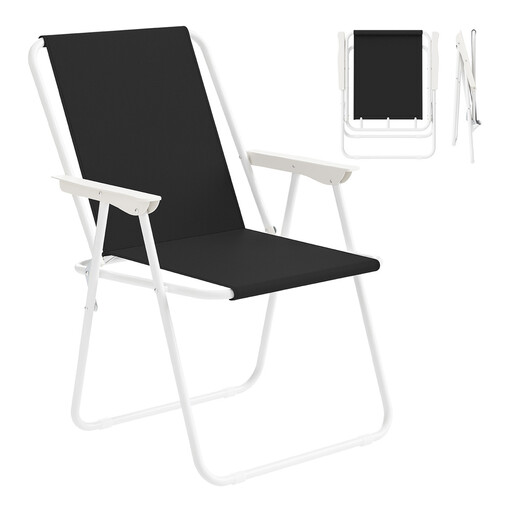
Why this model is a good fit: Ideal for occasional use at festivals, picnics, or as a simple side chair. It focuses on the basics: being lightweight and easy to transport.
The flat, rectangular pack size (66.5 x 52.5 x 5.5 cm) is more practical to store than the typical long bag. The net weight of 2.1 kg is transparently stated.
The construction of 18 mm iron tubes and 600D Oxford fabric provides a solid foundation for the stated 100 kg weight capacity in this price range.

Why this model is a good fit: Designed for people who want to sit comfortably for extended periods, e.g., while camping, in the garden, or on the balcony. The focus is clearly on padding and back support.
This chair directly addresses the ergonomics trap with an extra-high backrest (approx. 70 cm) and 6 cm thick padding that prevents the seat from sagging.
The combination of a high backrest, thick padding, and a 120 kg weight capacity offers a high degree of comfort and stability for extended periods of sitting.
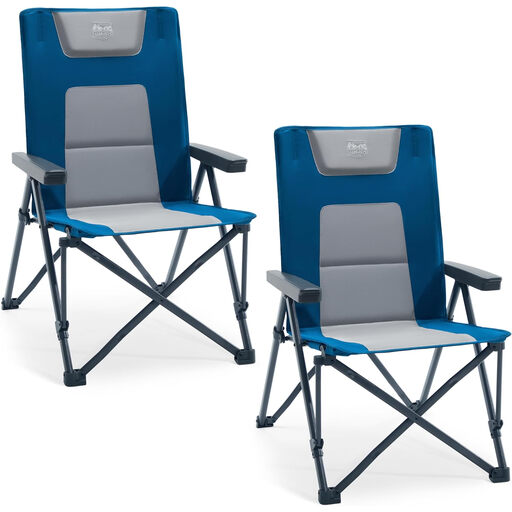
Why this model is a good fit: For anyone unwilling to compromise on stability. Ideal for heavier individuals, frequent use, or when an extremely robust seating option is required.
The stability trap is avoided with a massive steel frame construction featuring a triangular leg structure and X-bracing. The stated 260 kg weight capacity is plausible due to this design.
The 4-position adjustable backrest and padded headrest provide customisable comfort that goes beyond standard camping chairs.
We have compiled a complete, up-to-date list of products that fully meet these strict selection criteria and all relevant safety standards.
How do I properly care for a camping chair to extend its lifespan? Most camping chairs should not be machine washed. Clean the fabric with a damp cloth and mild soap. Let the chair air dry completely before folding it and storing it in its carry bag. This prevents mould, mildew, and unpleasant odours. Regularly check the joints and screws, tightening them as needed.
What is the difference between a camping chair and a fishing chair? While the basic design is often similar, fishing chairs are frequently equipped with special features for anglers. These can include rod holders, adjustable legs for uneven terrain by the water, and extra side pockets for bait and tackle. A general camping chair tends to focus more on a balanced mix of comfort, weight, and pack size for various outdoor activities.
Is a folding chair with a high backrest always the better choice? That depends on the intended use. For longer, relaxed sitting, such as when camping or in the garden, a high backrest is very beneficial for supporting the neck and shoulders. However, if minimal pack size and low weight are top priorities, as for a festival chair or on a hike, a more compact model without a high backrest can be the more practical solution.