
Lieferung heute & morgen

Qualitätsgarantie

Willkommens-Angebote freischalten: KOSTENLOSE Lieferung | Bis zu 80 % RABATT | Kostenlose 30-Tage-JoyPlus-Testphase
App herunterladen
A good camping chair is more than just a place to sit. It's your companion for relaxing hours by the lake, your trusted throne at a festival, and a flexible seating solution for your own balcony. But the market is flooded with models whose promises often don't hold up in practice. Before you make a decision, it's crucial to understand the typical pitfalls that often lead to disappointment and an unnecessary purchase.
As a Joybuy Product Recommendation Officer, I see every day which features truly matter. Here are the three most common problems buyers encounter and how you can avoid them:
To avoid making the wrong choice, you should focus on objective and verifiable criteria. These three technical features are decisive for the quality and functionality of a camping chair.
The foundation of any good chair is its frame. There are two common materials here:
For the seat fabric, the material density is a key indicator. Look for specifications like 600D Oxford fabric or 500D polyester. The unit "Denier" (D) describes the thread thickness. A higher value generally indicates a more tear-resistant and durable material that won't sag as quickly with regular use.
The specified static load capacity is one of the most important safety and quality indicators. It tells you the maximum weight the chair can safely support on a flat surface. Models with a capacity of 100 kg are sufficient for many users, while a heavy-duty camping chair (e.g., 180 kg) offers additional safety and stability for larger individuals or more demanding conditions.
Also, pay attention to the frame's construction. An X-cross structure under the seat distributes weight evenly and contributes significantly to stability.
A chair's comfort depends on its fit. Important dimensions include the seat height, seat depth, and the height of the backrest. A high backrest, for example, provides better support for the shoulders and neck.
For many users, especially older individuals, solid armrests are a crucial feature. They provide stable support when standing up and sitting down, which is not the case with soft fabric armrests. Practical extras like a built-in cup holder, a side pocket for your phone or a book, or an adjustable backrest significantly increase the chair's utility and turn a simple folding chair into a comfortable outdoor chair for various occasions.
Based on these objective criteria, we have identified a few models that are particularly well-suited for specific user profiles.

Why it's a great fit: Ideal for users who prioritise maximum stability and load capacity. The solid armrests provide reliable assistance when standing up, making it a great choice for older users or as a comfortable folding garden chair.
The thickened steel frame and high static load capacity of 180 kg directly counteract the stability trap. The solid armrests offer significantly better support than simple fabric loops.
High backrest (70 cm) for shoulder support and a breathable mesh back to prevent sweating. Includes a cup holder and side pocket.
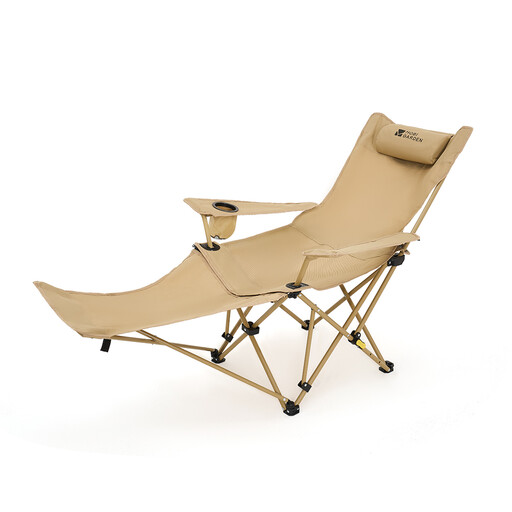
Why it's a great fit: For anyone who wants to do more than just sit—they want to relax. The adjustable backrest allows for a reclining position, perfect for a nap in the park, at the beach, or on the balcony.
This model directly addresses the lack of long-term comfort. Its ergonomic design with head, neck, and leg support, along with the adjustable positions, offers a significantly higher level of comfort than a standard folding chair.
Multiple adjustable settings, including a full recline. Features a detachable, padded headrest and a load capacity of 110 kg thanks to its thickened carbon steel frame.
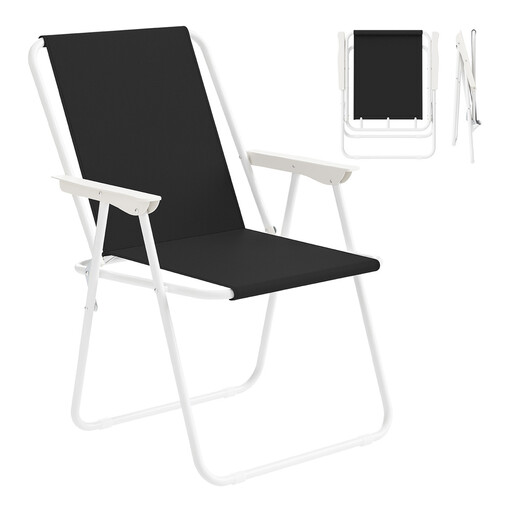
Why it's a great fit: A straightforward and lightweight solution for festivals, fishing trips, or spontaneous park visits. Weighing only 2.1 kg and folding flat, it's easy to transport and store.
This model solves the portability problem. Its low net weight of approx. 2.1 kg and compact folded size make it a truly lightweight camping chair that won't become a burden.
A sturdy frame made of 18mm iron tubes with a load capacity of up to 100 kg. The 600D Oxford fabric cover is durable and easy to clean.
We have compiled a complete, up-to-date list of products that fully meet these strict selection criteria and rigorous safety standards.
Proper care is simple but crucial. After each use, clean the chair of any coarse dirt, sand, or mud. Wipe the fabric and frame with a damp cloth. Do not use harsh cleaning agents. Allow the chair to air dry completely before storing it in its carry bag. Store it in a dry place away from direct sunlight to prevent material fatigue and rust on the frame.
The static load capacity indicates the maximum weight the chair can safely support on a flat, solid surface when the load is applied calmly and evenly. It is a key indicator of the construction's stability and durability. Avoid exceeding this limit or subjecting the chair to dynamic loads, such as jumping into it, as this can damage the structure.
There is no one-size-fits-all answer; it depends on your priorities. A steel frame is typically more robust and allows for a higher weight capacity, making it the choice for a heavy-duty camping chair. However, it is heavier. An aluminium frame is significantly lighter and more corrosion-resistant, making it ideal for a lightweight camping chair or beach chair where transport is a major factor. Weigh whether maximum stability or minimum weight is more important to you.