
Lieferung heute & morgen

Qualitätsgarantie

Willkommens-Angebote freischalten: KOSTENLOSE Lieferung | Bis zu 80 % RABATT | Kostenlose 30-Tage-JoyPlus-Testphase
App herunterladen
A good camping chair is more than just a place to sit—it's a core piece of gear for campers, anglers, festival-goers, and anyone who loves spending time outdoors. But the vast selection of models can be overwhelming. Many products promise comfort and durability but fail to deliver in practice. To help you make an informed decision and avoid a bad buy, we've summarised the most common pitfalls and the most important quality features.
As your Joybuy Product Recommendation Officer, I'll help you see through the marketing noise and evaluate the facts that truly matter for a reliable and practical folding chair.
Many buyers are swayed by attractive photos or low prices, overlooking critical flaws that only become apparent with use. Pay close attention to these three points to avoid disappointment:
To find the right outdoor folding chair, you should focus on objective, technical parameters. These three criteria are crucial for functionality and longevity.
The frame is the skeleton of the chair and largely determines its stability and weight.
For the cover, 600D Oxford fabric has established itself as a durable standard. It is abrasion-resistant and can withstand heavy use.
The maximum load capacity is a key safety indicator. A camping chair with a high load capacity (e.g., 120 kg or more) points to a more solid construction and more durable materials. Also, look for a stable cross-frame design and non-slip feet that provide a secure grip on various surfaces like sand, grass, or gravel. This is particularly relevant for a fishing chair, which is often placed on uneven banks.
The ideal weight and pack size depend entirely on your intended use.
Based on these objective criteria, we have identified a few models that are particularly well-suited for specific user profiles.
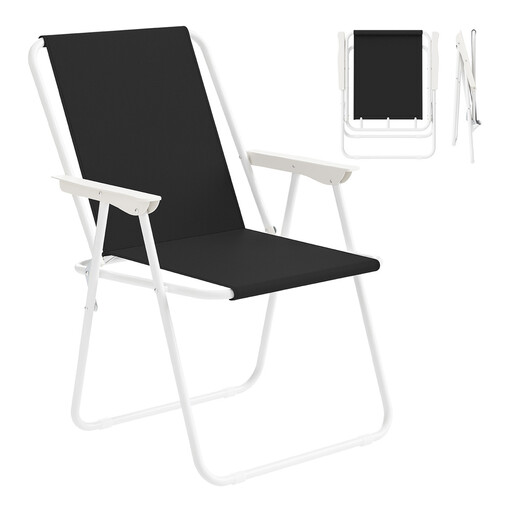
Why This Fits Their Persona: Ideal for occasional use like festivals, picnics, or your first camping trips, without requiring a large investment. A solid all-rounder for getting started.
The frame, made of 18mm iron tubes, and the 600D Oxford fabric cover provide a solid foundation, avoiding the typical weaknesses of the cheapest models.
Good price-performance ratio; at approx. 2.1 kg, it's still easy to carry; simple and fast folding mechanism.
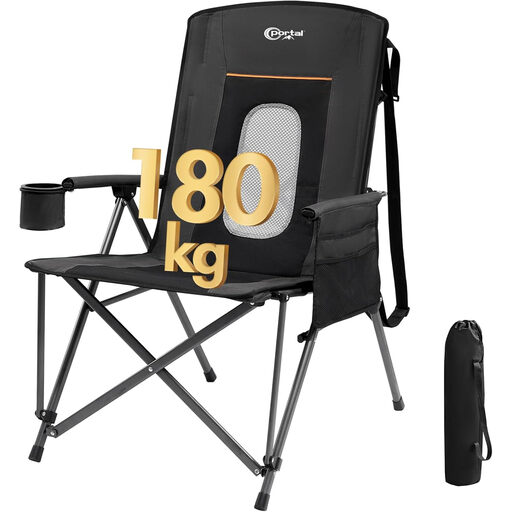
Why This Fits Their Persona: Perfect for users who value maximum comfort and stability, e.g., for longer stays, fishing, or for larger individuals. The high backrest and solid armrests offer superior support.
The thickened steel frame and a tested load capacity of 180 kg directly counteract the problem of instability and low durability. The solid armrests provide stable support when standing up.
Very high load capacity (180 kg); high backrest (70 cm) for shoulder support; solid armrests; practical side pockets and cup holder.
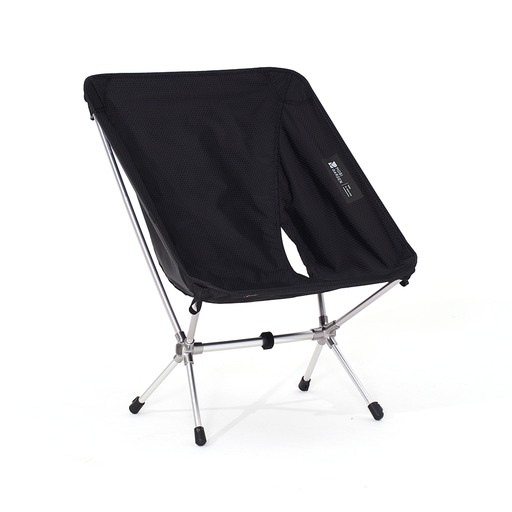
Why This Fits Their Persona: Specifically designed for trekking and backpacking trips where every gram counts. It offers a surprisingly high level of seating comfort for breaks on the trail, despite its minimal weight.
This chair debunks the 'misleading weight' trap by being verifiably ultralight and compact, weighing approximately 765 grams with a pack size of just 36 x 11 cm.
Extremely low weight and pack size; frame made of high-strength aluminium alloy; yet still has a high load capacity of approx. 140 kg; quick setup.
We have compiled a complete, up-to-date list of products that fully meet these strict selection criteria and German safety regulations.
Proper care is simple but crucial. Clean the chair with a damp cloth after each use to remove dirt, sand, or food residue. Let it air dry completely before storing it in its carry bag to prevent mould and rust on the frame. Store the chair in a dry place, protected from direct sunlight.
A dedicated fishing chair often offers additional features like rod holders, wider mud feet for stability on soft banks, and sometimes more robust padding for hours of sitting. However, many high-quality camping chairs, especially those with a high load capacity and sturdy armrests, are equally well-suited for this purpose. The lines are often blurred.
That depends on the use case. For relaxing in camp, in the garden, or at the beach, a high backrest offers significantly more comfort as it supports the head and neck. For activities where minimal weight and pack size are the priority, such as backpacking, a smaller, lighter model without a high backrest is often the more practical choice.