
Lieferung heute & morgen

Qualitätsgarantie

Willkommens-Angebote freischalten: KOSTENLOSE Lieferung | Bis zu 80 % RABATT | Kostenlose 30-Tage-JoyPlus-Testphase
App herunterladen
A good camping chair is more than just a place to sit. It's a front-row seat at the campfire, a comfortable base for fishing, and a well-deserved break after a long hike. But the market is flooded with models whose promises don't hold up in practice. Many buyers quickly discover that their new chair is wobbly, unwieldy, or unable to withstand the elements.
As your Joybuy Product Recommendation Officer, I'm here to help you identify the typical pitfalls. Instead of falling for marketing buzzwords, we'll focus on the facts that truly matter. This way, you'll find a durable and practical outdoor chair that perfectly suits your needs.
Before you decide on a folding camping chair, watch out for these three common problems that often only become apparent after the purchase:
To avoid a bad purchase, you should carefully examine three technical features. These define the durability, comfort, and real-world usability of your folding chair.
The foundation of any good chair is its material. There are clear differences in quality here:
Stability depends on the construction and the specified load capacity.
These two factors determine how mobile you are with your chair. A fishing chair that is only carried from the car to the water's edge can be heavier than an outdoor chair for a multi-day trekking tour.
Here are some models that represent a considered choice for different user profiles, based on objective features.
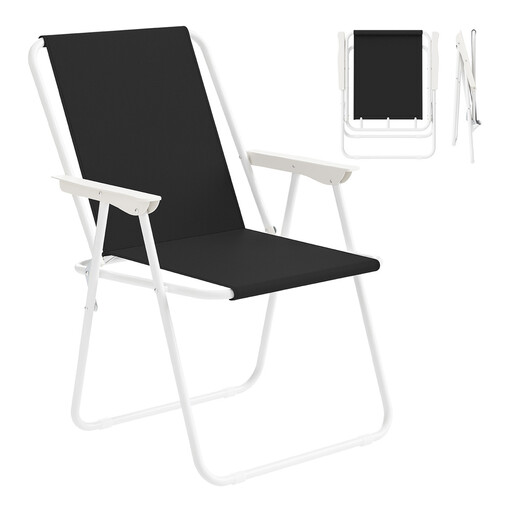
Why this model is a good fit: Ideal for festival-goers or weekend trips where a straightforward, functional, and cost-effective chair is needed. It meets the basic requirements without unnecessary frills.
The frame made of 18 mm steel tubes and the cover of 600D Oxford fabric are clearly specified and provide a solid foundation for the stated 100 kg load capacity. This avoids the instability trap common in models with unclear material specifications.
No assembly required; it unfolds and folds in a single motion. The flat packed size (66.5 x 52.5 x 5.5 cm) makes it easy to store in a car or basement.
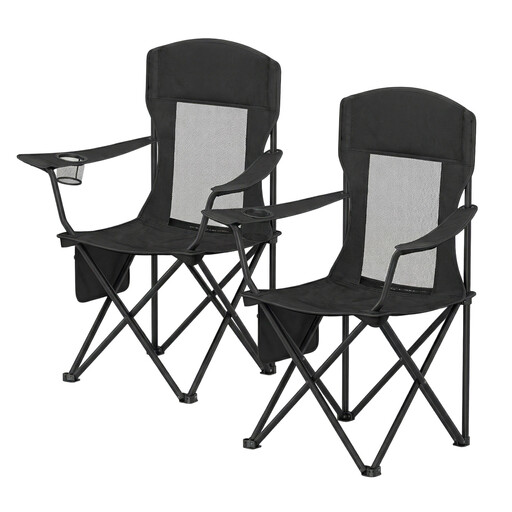
Why this model is a good fit: For campers who prioritize comfort and spend extended periods in their chair. The high backrest and armrests provide a relaxed seating position, ideal for the campsite or garden.
The high maximum load capacity of 150 kg and reinforced joints counteract the instability trap. The breathable mesh panel in the backrest addresses the problem of heat build-up and sweating during prolonged sitting.
The ergonomic design with a high backrest (97 cm) and the integrated cup holder offer a noticeable upgrade in comfort compared to basic folding chairs. Delivered in a practical set of 2.
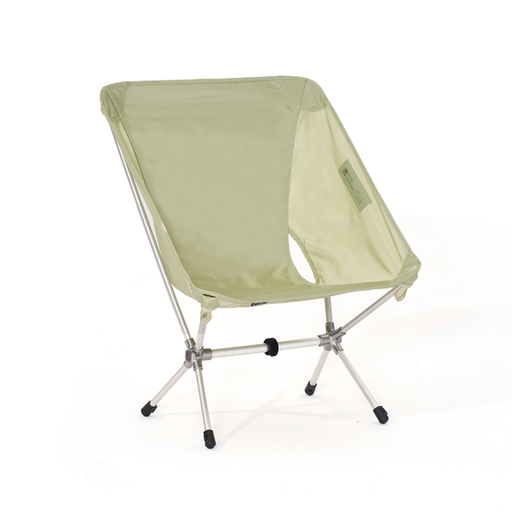
Why this model is a good fit: Designed for hikers, cyclists, and anyone for whom every gram and centimetre in their pack counts. This chair provides a place to sit with a minimal burden.
This model escapes the "lightweight" fallacy with verifiable facts: a net weight of only approx. 765 g and a packed size of 11 x 11 x 36 cm. The aluminium alloy frame is a clear statement against heavy steel constructions.
The extremely low weight and tiny packed size are the standout features. The stable triangular frame structure allows for a high load capacity of approx. 140 kg despite the lightweight material.
We have compiled a complete, up-to-date list of products that fully meet these strict selection criteria and rigorous safety standards.
The lifespan of a camping chair depends heavily on the quality of materials, frequency of use, and care. A model with a solid steel frame and a 600D Oxford fabric cover can last for many years with proper use (not exceeding the load limit, storing it dry). Higher-quality models with aluminium frames are often even more durable because they do not rust.
It is not recommended to leave a camping chair permanently exposed to rain. Most cover fabrics are water-repellent but not completely waterproof. With prolonged contact with moisture, water can penetrate the seams and fabric. Steel frames, in particular, can start to rust at scratches or joints. Always dry the chair thoroughly after a rain shower before storing it in its carry bag to prevent mould and corrosion.
Although the terms often overlap, fishing chairs frequently have specific features tailored to the needs of anglers. These often include adjustable legs to compensate for uneven terrain on the shore, wider mud feet to prevent sinking, rod holders, or special pockets for accessories. A general camping chair usually focuses on a balanced combination of comfort, weight, and packed size for a broader range of outdoor activities.