
Lieferung heute & morgen

Qualitätsgarantie

Willkommens-Angebote freischalten: KOSTENLOSE Lieferung | Bis zu 80 % RABATT | Kostenlose 30-Tage-JoyPlus-Testphase
App herunterladen
The right gear is crucial for a successful outdoor experience. A functional Camping Cookware Set is at the heart of every meal under the open sky. However, the market is flooded with products whose promises often don't hold up in practice. The wrong choice of material, an impractical design, or a lack of durability can quickly spoil the joy of cooking.
This guide will help you identify the typical pitfalls. We focus on the objective criteria that define a durable and practical Outdoor Cookware Set, ensuring your investment pays off for many trips to come.
Before deciding on a set, you should be aware of the three most common problems that occur with low-quality products:
To avoid these problems, you should base your selection on three fundamental product characteristics. These define the functionality, durability, and versatility of your cookware.
The choice of material affects weight, heat conduction, and robustness.
When travelling in a tent, van, or RV, space is critical. A well-designed, space-saving cookware set is therefore not an afterthought, but a necessity.
Not all RV cookware is suitable for every type of stove. Modern campervans are increasingly equipped with induction cooktops.
Instead of making a one-size-fits-all recommendation, we have selected products that meet the specific needs of different user groups.
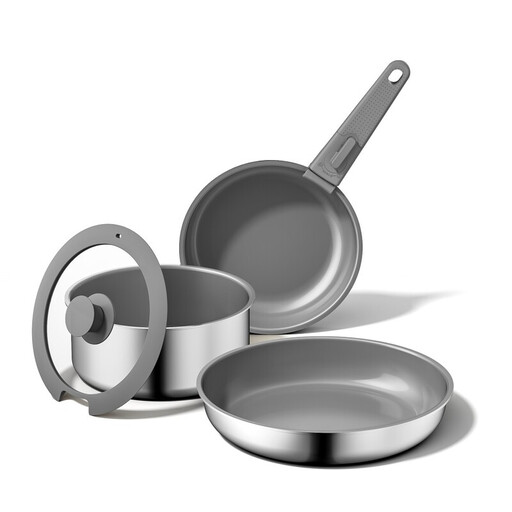
Why This Fits Their Persona: Perfect for the modern, compact kitchen in an RV or van. Its compatibility with all stove types, including induction, offers maximum flexibility, while the stacking system with a detachable handle makes optimal use of limited storage space.
The Secure-Lock handle mechanism prevents dangerous wobbling. The robust ceramic coating is a durable solution against peeling non-stick layers.
Saves up to 75% space, according to the manufacturer. The three-layer stainless steel base ensures even heat distribution and is suitable for all stove types, including induction.
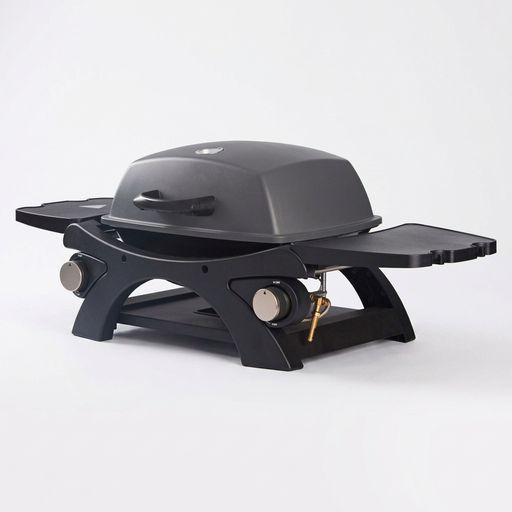
Why This Fits Their Persona: For families or groups who want to cook more than just pasta. This grill offers a large cooking surface to cater to several people at once, ideal for the base camp at a campsite or festival.
It bypasses the problem of inefficient heat distribution found in small pots. The cast-iron grill grate retains and distributes the heat from the two powerful burners evenly for optimal grilling results without hot spots.
Two powerful 4.2 kW burners and a solid cast-iron grate make it possible to cook for larger groups. The integrated thermometer allows for precise temperature control.
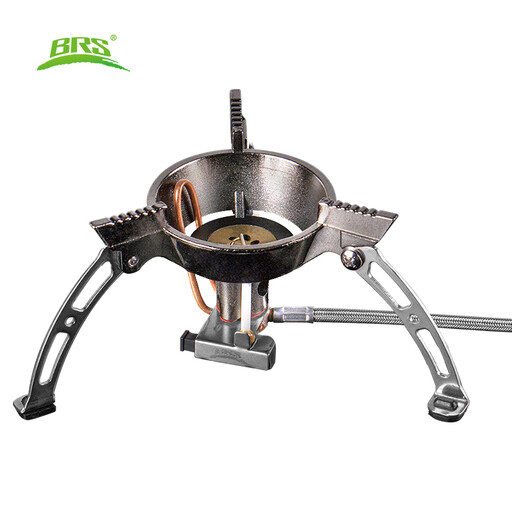
Why This Fits Their Persona: For backpackers, every gram counts. This product isn't a complete cookware set, but the heart of a minimalist cooking system: an extremely lightweight (240g) and powerful gas stove, designed to be paired with a simple titanium pot.
It addresses the problem of using the wrong gear by providing a reliable and strong heat source (3240W) specifically designed for outdoor use. This ensures efficient cooking instead of struggling with unsuitable burners.
Extremely lightweight and compact, with a wind-resistant design for reliable performance. Its broad compatibility with various gas canisters (adapter included) makes it suitable for international use.
We have compiled a complete, up-to-date list of products that fully meet these strict selection criteria and safety regulations.
In principle, most pots and pans are suitable for use on a gas stove. However, the material thickness and heat conductivity are crucial. Very thin bases tend to form hot spots on the concentrated flame of a gas stove, which leads to burning. Materials like hard-anodised aluminium or stainless steel with a multi-layer base distribute heat more effectively and allow for more controlled cooking.
PFOA (Perfluorooctanoic acid) is a chemical that was formerly used in the production of non-stick coatings like Teflon. Due to environmental and health concerns, its use is now largely avoided. Cookware labelled as "PFOA-free," such as one with a modern ceramic coating, has been manufactured without the use of this specific substance.
First, let the pot or pan cool down. Then, add some water and slowly heat it on the stove until it simmers. The heat and steam will help loosen the burnt-on residue. You can then carefully remove it with a wooden or plastic scraper and a sponge. For non-stick coatings, you should never use steel wool or abrasive scouring pads, as they will permanently damage the surface.