
Lieferung heute & morgen

Qualitätsgarantie

Willkommens-Angebote freischalten: KOSTENLOSE Lieferung | Bis zu 80 % RABATT | Kostenlose 30-Tage-JoyPlus-Testphase
App herunterladen
The right equipment is crucial for a successful outdoor experience. A functional Camping Cookware Set is part of your essential gear, but the market can be overwhelming. Many products overpromise and underdeliver, leading to frustration instead of a hot meal under the open sky. Before you make a decision, it's important to understand the common pitfalls that often only become apparent after the purchase.
This guide will help you distinguish quality from the clutter. We focus on the objective features that define good outdoor cookware and show you how to critically evaluate marketing claims to make a durable and practical choice for your adventures.
Many buyers are swayed by appealing product photos or deceptively low prices without examining the technical details. This often leads to three key problems:
To avoid these mistakes, you should focus on three verifiable core aspects. These determine the functionality, durability, and efficiency of your future cookset.
The choice of material significantly impacts weight, heat conduction, and durability.
An often-overlooked but crucial feature is the heat exchanger. A cookset with a heat exchanger has a fin-like structure on the bottom of the pot. This increases the surface area exposed to the stove's flame. According to manufacturer claims, this can improve thermal efficiency by up to 30%. In practice, this means:
A good set is more than the sum of its parts. Ensure that all components—pots, pans, lids—are stackable (nesting) to achieve a minimal pack size. Foldable, silicone-coated handles are a must to prevent burns and simplify handling. For families or groups, a camping cookware for 4 people set that includes at least two pots and a pan is practical for preparing multiple dishes at once.
Based on the objective criteria above, we have identified several products that represent a considered choice for specific user groups.
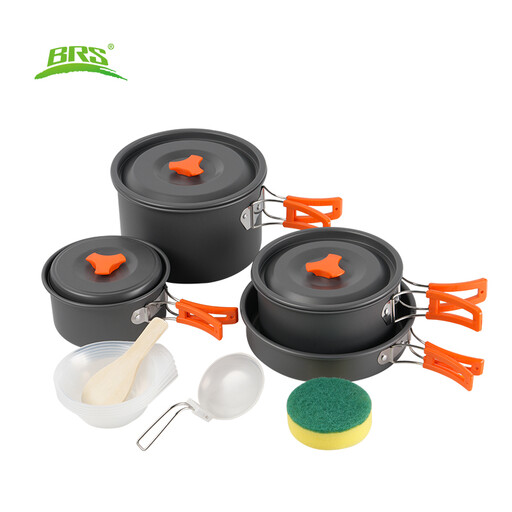
Why This Fits Their Persona: Ideal for couples or small families looking for a versatile and fuel-efficient camping cookset for weekend trips or longer tours. The size is designed for 2-5 people and covers the most common cooking needs.
The set is made of hard-anodized aluminum, not cheap, soft metal. The integrated heat exchanger directly addresses the efficiency problem, while the thoughtful, nesting design avoids the pitfall of a bulky pack size.
The main advantage is the heat exchanger, which reduces boil time and fuel consumption. The non-stick coating makes cleanup significantly easier.
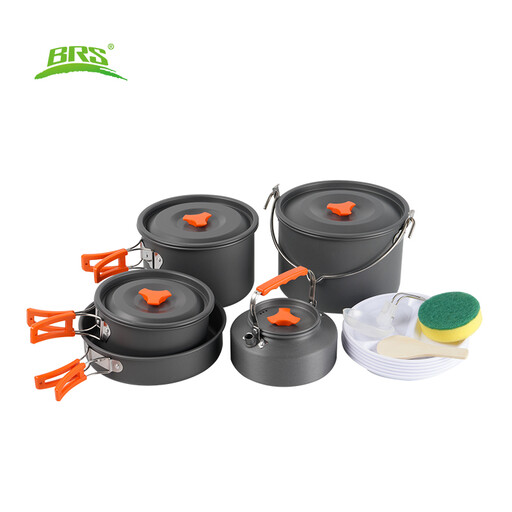
Why This Fits Their Persona: Perfect for families or groups of friends who want to prepare more elaborate meals at a basecamp or during van life. The large capacity and variety of pots, including a hanging pot, offer maximum flexibility.
Despite its large size, the set packs down compactly thanks to its nesting design. The robust aluminum is built for intensive use, and the ergonomic handles prevent the typical design flaws of cheaper models.
The high capacity (e.g., 4.2L hanging pot) and versatile components make it possible to cook for larger groups. The hanging pot is also suitable for use over a campfire.

Why This Fits Their Persona: For campers, van-lifers, or commuters who refuse to give up freshly ground coffee and real espresso on the go. This is a specialized addition to a camp kitchen, not a complete cookset.
This set bypasses the compromise of instant coffee by offering a high-quality, portable solution. It's a specialized tool for one job, not a low-quality all-in-one device.
The combination of a wireless electric coffee grinder and a manual espresso machine allows you to prepare high-quality, fresh coffee anywhere.
We have compiled a complete, up-to-date list of products that meet these strict selection criteria and comply with current safety regulations.
1. What's the best way to clean a camping cookware set on the trail? Cleaning is easier than you might think. For sets with a non-stick coating, simply wiping them with a cloth is often enough. For a more thorough clean, boil a little water in the pot to loosen food residue, then wash with a sponge and a small amount of biodegradable soap. It's important to dispose of the greywater far away from water sources to avoid polluting the environment.
2. Is a cookset with a heat exchanger worth the extra cost? For people who camp frequently or go on longer tours, a cookset with a heat exchanger is a worthwhile investment. The fuel savings can offset the higher purchase price over time. Additionally, the time saved on cooking is a significant convenience factor. For occasional weekend trips, a standard set without a heat exchanger may be sufficient.
3. Which material is suitable for gas stoves versus open fires? Most aluminum and stainless steel sets are optimized for use with gas stoves. For use over an open fire, stainless steel is often the safer choice due to its higher heat resistance and durability. Some specially designed aluminum sets, like the BRS-157 with its hanging pot, can also be used. However, it is crucial to follow the manufacturer's instructions carefully and avoid exposing the pot to direct, roaring flames to prevent material damage.