
Lieferung heute & morgen

Qualitätsgarantie

Willkommens-Angebote freischalten: KOSTENLOSE Lieferung | Bis zu 80 % RABATT | Kostenlose 30-Tage-JoyPlus-Testphase
App herunterladen
A reliable camping cooler is the key to fresh food and chilled drinks on any adventure, whether you're camping, at a festival, or on a long road trip. But the market is flooded with models whose marketing claims often don't hold up in practice. Many buyers invest in units that prove to be inadequate or impractical.
This guide, created by the Joybuy Product Recommendation Officer, will help you identify the crucial features and avoid typical purchase pitfalls. We'll focus on the three most common problems that arise when choosing an electric car cooler and show you what to look out for.
In addition to a good cooler, other well-designed outdoor gear is crucial for comfort. Practical travel accessories like a lightweight camping shower or an ultralight NINETYGO backpack can significantly enhance the outdoor experience.
To avoid the pitfalls mentioned above, you should focus on three core technical parameters. These determine the performance, efficiency, and usability of your future cooler.
Cooling technology is the most important factor. There are two main systems for portable coolers:
A flexible power supply is essential for mobile use. Look for models that can be operated with both 12V/24V DC (via the cigarette lighter socket in a car or truck) and 230V AC (from a standard wall outlet at home or at a campsite).
Two other features are crucial for efficiency:
The size of the cooler is specified in litres. Consider what you need to cool:
Modern units also offer convenience features that make them easier to use. A cooler with app control allows for convenient temperature regulation and monitoring via smartphone. Wheels and a retractable handle make transporting a heavy, full cooler much easier.
Here are some models tailored to different use cases that meet the criteria mentioned above.
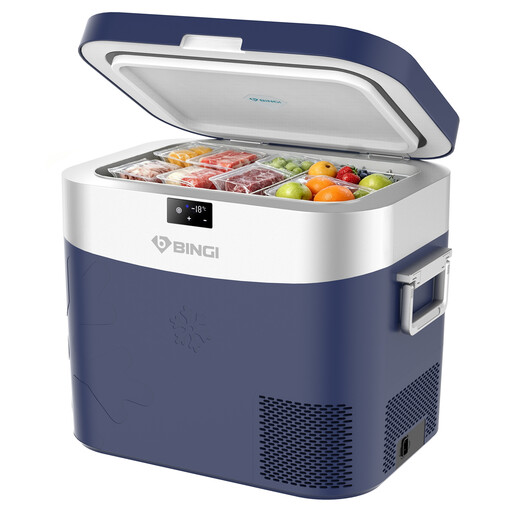
Why This Fits Their Persona: This model combines a compact size with powerful compressor technology. It's ideal for those who don't want to compromise on reliable cooling even on short trips and have limited space in their vehicle.
Thanks to compressor technology, it bypasses the "inadequate cooling performance" trap. The cooling is consistent and reliable even at high ambient temperatures.
Powerful compressor cooling in a compact 22-litre format. Flexible operation with 12V and 24V DC for cars and trucks.

Why This Fits Their Persona: At 45 litres, this cooler offers enough space for a family's weekly groceries. The app control allows parents to easily monitor the temperature without having to open the cooler while the kids are sleeping in the back seat.
The integrated battery protection prevents the "battery killer" trap. The ECO mode ensures economical operation, which is especially important at campsites without a direct power connection.
Generous capacity, remote control via app, and an efficient ECO mode. The wheels make it easy to transport from the car to the campsite.

Why This Fits Their Persona: For truck drivers, van-life enthusiasts, or long-term campers who are on the road for weeks, maximum capacity and reliability are crucial. This 55-litre model offers space for a large supply of food and drinks.
This model avoids the "lack of practicality" trap with its robust construction, flexible power options (including solar), and large volume that makes constant grocery runs unnecessary.
Maximum capacity of 55 litres, compatibility with solar panels and power stations, and very low energy consumption in ECO mode (0.18 kWh/day according to the manufacturer).
We have compiled a complete, up-to-date list of products that fully meet these strict selection criteria and German safety regulations.
The runtime depends on several factors: the car battery's capacity (typically 50-70 Ah), the set temperature, the ambient temperature, and the cooler's insulation. A modern, efficient compressor cooler in ECO mode can easily run for 24 to 48 hours on a healthy car battery without jeopardizing the engine start, as the integrated battery protection will shut the unit off in time.
The main advantage is its cooling performance, which is independent of the ambient temperature. A compressor cooler will reliably cool to the set temperature, even at 40°C inside a car. Thermoelectric models only cool relative to the outside temperature, which is often insufficient to store food safely in the summer.
That depends on the model. Some coolers, mostly thermoelectric ones, offer a switchable heating function. This can keep food warm at a temperature of about 50-60°C. Compressor coolers are generally designed purely for cooling and freezing and do not have a heating function. Check the product description for this specific feature.