
Lieferung heute & morgen

Qualitätsgarantie

Willkommens-Angebote freischalten: KOSTENLOSE Lieferung | Bis zu 80 % RABATT | Kostenlose 30-Tage-JoyPlus-Testphase
App herunterladen
Whether it’s a family holiday by the lake, a festival weekend, a picnic in the park or a glamping getaway: camping equipment needs to suit the journey, the number of people and the intended use. However, unclear product details or exaggerated marketing claims often lead to poor purchases. That’s why it’s worth taking a close look at technical specifications, materials and assembly – especially when it comes to camping wagons, foldable trolleys and tents.
A foldable transport wagon may boast a high maximum load, but that doesn’t automatically make it suitable for every terrain or type of load. What really matters are the size of the loading area, the stability of the frame, the wheels and an even weight distribution.
A wagon with a stated load capacity of 200 kg should not be used continuously at that limit. On sand, gravel or uneven forest floors, its actual handling can change significantly. Wider wheels and a reliable locking mechanism are often more important for beach and camping gear than a simple kilogram figure alone.
With a camping tent, you should look at the hydrostatic head of the outer fabric. This is given in millimetres and describes the water pressure the material can withstand under defined conditions. Equally important are sealed seams, a raised or coated groundsheet, and a correctly tensioned flysheet.
A waterproof tent will only remain reliably protected if the doors, windows and guy lines are used properly. Hydrostatic head ratings are useful, but they don’t replace a full assessment of the tent’s construction and setup.
A pop-up tent or an automatic-opening model can save time when setting up. However, before buying, you should check how the tent folds down and what its packed size is. A small carry bag is only practical if the tent can be folded dry and neatly after use.
For larger models, such as a family tent or tipi tent, the footprint, height and weight are also crucial. A three-metre-high tent needs a sufficiently large, level area and careful pegging with stakes and guy lines.
Pay particular attention to the following with an outdoor hand wagon:
When buying a tent, the key factors are:
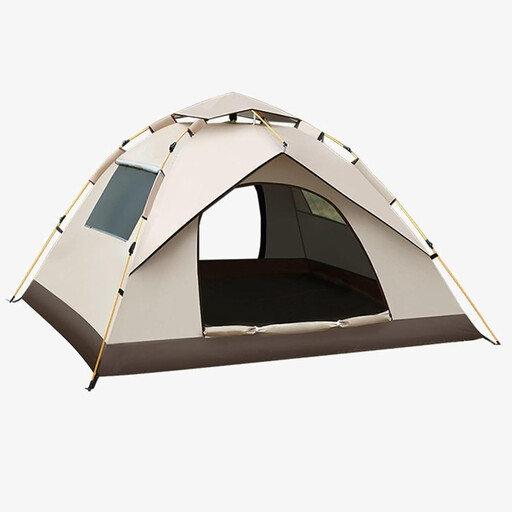
Why this product suits the profile: This automatic pop-up tent is ideal for those looking for a compact model with straightforward setup for short camping trips.
The product description mentions a pre-assembled frame, two doors and two windows. This makes setup, ventilation and access clearer than with a tent that has vague specifications.
Double-layer construction, polyester outer fabric with a stated hydrostatic head of 3,000 mm and a compact packed size.

Why this product suits the profile: This spacious glamping tent is aimed at families and groups who need standing height, freedom of movement and a structured interior layout.
The specifications include external and internal dimensions, material, hydrostatic head, seam sealing, plus details on pegs and ten guy lines.
3 m height, 150D Oxford polyester, stated hydrostatic head of 3,000 mm and integrated ventilation openings with mosquito nets.

Why this product suits the profile: This foldable trolley is ideal for families, festival-goers and heavy users who need to move larger amounts of camping gear.
The construction states 127 l storage space, a load limit of 200 kg and two front brakes. The load limit remains binding and must not be exceeded.
Folding mechanism with a stated fold time of three seconds, 360-degree swivel wheels and dual brakes on the front.
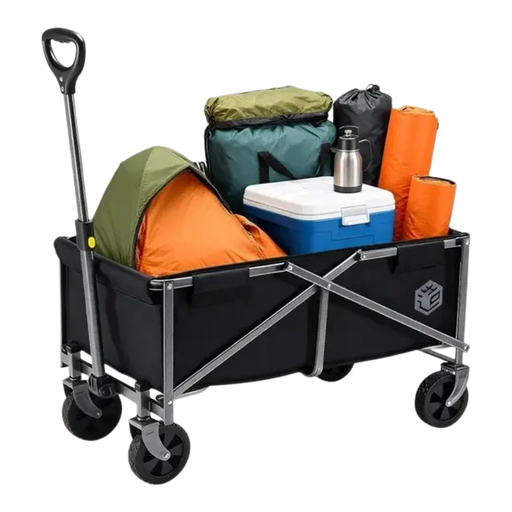
Why this product suits the profile: This compact model is ideal for picnics, shopping, smaller camping trips and those with limited storage space.
The specifications state 75 l basket volume, 100 kg maximum load and an integrated setup with no assembly required. The wagon must be fully opened before use.
600D Oxford fabric, swivel wheels and a one-second folding mechanism according to the product description.
We’ve put together a full, regularly updated list of products that fully meet these strict selection criteria and the safety regulations in force in the EU.
The lifespan of camping equipment depends heavily on storage and maintenance. A tent should be completely dry before being packed away. Moisture in the carry bag can encourage odours and material damage. Pegs, guy lines, zips and seams should be checked for visible damage after every use.
For a foldable transport wagon, we recommend regularly checking the wheel fixings, joints and locks. Sand and dirt can affect the wheels’ mobility. The fabric can usually be cleaned with a damp cloth and mild detergent; the metal frame should then be dried.
That depends on the stated volume and the permitted load. A wagon with 127 l of storage space is designed for larger amounts of gear, while a 75 l model may be easier to stow away. Sleeping bags, the tent and cooking equipment should be evenly distributed so the wagon doesn’t tip over.
According to the product description, automatic-opening models can be set up in a short time. However, pegs, guy lines and, if applicable, the flysheet still need to be properly secured. The full pitching process therefore takes longer than simply opening the frame.
Yes. Even in dry weather, condensation, damp ground or wet grass can remain inside the tent. The tent should be completely dried before storage. This reduces the risk of odour and mould and helps ensure a longer service life.