
Lieferung heute & morgen

Qualitätsgarantie

Willkommens-Angebote freischalten: KOSTENLOSE Lieferung | Bis zu 80 % RABATT | Kostenlose 30-Tage-JoyPlus-Testphase
App herunterladen
Whether it's a weekend trip, a vanlife adventure, a fishing expedition or a family holiday, camping equipment needs to perform reliably in everyday use and fit the available storage space. Many poor purchases happen not because of missing features, but because of unclear specifications, unsuitable dimensions or incorrectly estimated load capacities.
A camping trolley with a high litre capacity might look practical at first glance. What really matters, however, is whether the volume can be loaded evenly, how wide the trolley is when folded, and whether the wheels suit the terrain. A collapsible folding trolley with small plastic wheels may work on tarmac, but can be noticeably harder to manoeuvre on sand or uneven forest floors.
The same applies to figures like "150 PSI" or "500 watts" – it all depends on the specific use case. An air compressor for car, motorbike and bicycle needs different connectors and operating options than a portable air pump for individual tyres or balls.
With a camping power station, the capacity in Wh (watt-hours) describes the stored energy. The actual runtime also depends on the power consumption of the device and conversion losses. An RV fridge, a camera and a laptop therefore don't require the same amount of energy.
With batteries, you need to distinguish between voltage, capacity and maximum discharge current. A 12V battery for a motorhome should be compatible with the charger, inverter and vehicle electronics. A LiFePO4 battery must not automatically be connected to any existing lead-acid charger.
For electrical products, protection functions such as overcurrent, short-circuit, overheating and reverse polarity protection are relevant. However, these specifications don't replace correct installation. Batteries must be securely fastened, cables properly sized and ventilation openings kept clear. Products with damaged cables, housings or plugs should not be used.
Check the following before buying an outdoor camping trolley:
With a portable power station, three values are particularly important:
Also pay attention to the available outputs: 230V sockets, USB-C, USB-A and a 12V connection cover different devices. For example, a Jackery Explorer 500 V2 is specified with 512 Wh capacity, 500 W rated power and 1,000 W peak power. The product data also mentions a LiFePO4 battery, 230V outputs and charging options via mains power, vehicle or solar panel.
With a car battery charger, the voltage and battery technology must match. This is especially important if a device supports both lead-acid, AGM or GEL batteries as well as LiFePO4 batteries. Check that the desired mode is explicitly available.
A compressor should be selected based on supply voltage, air pressure, cable length and connector type. A wired 12V model is suitable for use with a vehicle, while a compact, battery-powered pump can be more flexible for bicycles or small inflatables. The values stated by the supplier should not be equated with a guaranteed inflation time for every tyre type.
The following products cover different requirements for camping accessories and motorhome accessories. Technical data refers to the respective product descriptions.

Why this product fits the profile: The trolley offers 127 litres of storage space, a stated load capacity of 200 kg and, according to the product description, folds down in around three seconds. This makes it suitable for campsites, picnics and shopping trips.
The specifications for volume, load capacity, folding time and double brake make it easier to check before purchase. The load should still be distributed evenly.
127 litres of storage space; collapsible design and 360-degree swivel wheels according to product data.
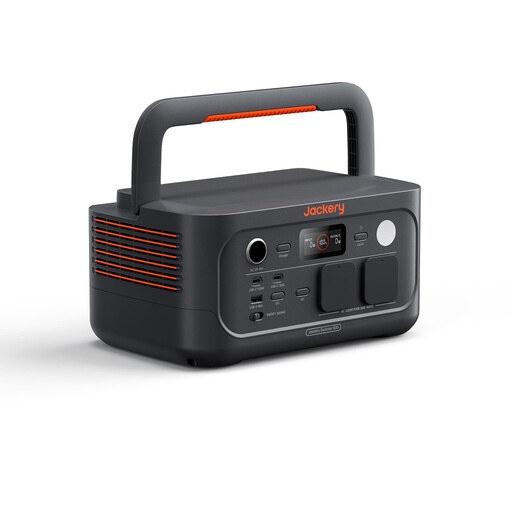
Why this product fits the profile: The power station combines 512 Wh, 230V outputs, USB ports and a 12V car connection. It's of interest to users who want to power several devices while camping or in a motorhome.
The separate specification of capacity, continuous and peak power prevents you from only calculating with a large wattage figure.
LiFePO4 battery; 500 W rated power, 1,000 W peak power and multiple charging methods according to the product description.
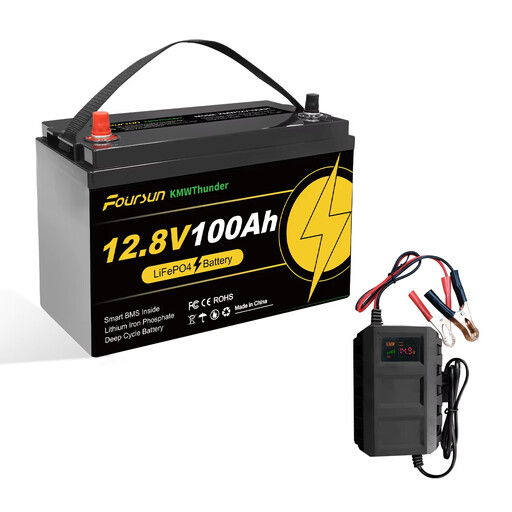
Why this product fits the profile: The battery is intended for motorhomes, boats, solar storage and camping. It is specified at 12.8 V, 100 Ah, IP67 and includes an integrated battery management system.
The data specifies charging voltage, charge and discharge current, and protection functions. Before installation, the charger, cable cross-section and installation space must be checked.
100 Ah capacity; BMS protection and stated possibility for series or parallel connection under the specified conditions.
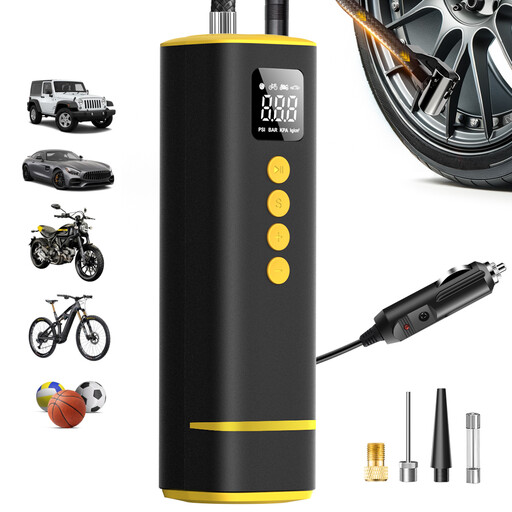
Why this product fits the profile: The wired 12V compressor is designed for car, motorbike and bicycle according to the product description, and features an extended power cable.
The 12V supply and cable length are clearly identifiable before purchase. The stated maximum pressure does not replace the pressure specification for the respective tyre.
12V connection; stated maximum pressure of 150 PSI and suitability for multiple vehicle types.
We've put together a complete, regularly updated list of products that fully meet these strict selection criteria and the safety regulations in force in the EU.
Depending on the type of trip, basic kit includes a suitable transport trolley, weatherproof storage, lighting, first-aid supplies, charging accessories, and appropriate power and cooling options. For motorhome owners, a car battery charger, a 12V battery for a motorhome and an RV fridge may also be relevant.
Divide the capacity in Wh by the power consumption of the device in W. With 512 Wh and a device drawing 50 W, you get a theoretical runtime of around 10.2 hours. In practice, inverter and charging losses reduce the usable time. Several devices connected at the same time increase consumption.
The lifespan depends on charge cycles, temperature, depth of discharge, storage and the charger. Manufacturer claims such as "4500+ cycles" or "6000 cycles" should be understood under the respective test and usage conditions. For a realistic assessment, you should check the technical data, the BMS functions and the permitted charging conditions of the specific model.