
Lieferung heute & morgen

Qualitätsgarantie

Willkommens-Angebote freischalten: KOSTENLOSE Lieferung | Bis zu 80 % RABATT | Kostenlose 30-Tage-JoyPlus-Testphase
App herunterladen
Whether it’s a weekend trip, a festival, a family holiday, a fishing weekend or a picnic in the countryside: the right camping equipment determines how easy it is to set up, transport and use. Many offers look attractive at first glance, but only reveal their weaknesses once you’re on the road.
Typical buying mistakes come down to three things:
A good choice therefore depends not only on price, but on dimensions, load capacity, material, packed size and the specific intended use.
With a camping tent, the interior floor area should match the actual number of people. For two adults with luggage, a nominal two-person tent may be tight. Families and festival-goers often benefit from separate sleeping and storage areas.
Important details include:
The VXOYO tent, for example, features a double-layer construction, a polyester outer tent with a stated water column rating of up to 3,000 mm, two doors and two windows. Its compact packed size of approximately 76 × 17.3 × 14.5 cm makes it easier to transport. These details come from the product description and should be checked against the latest retailer information before purchase.
A camping sleeping mat must suit your sleeping bag, your height and the available tent space. The key factors are:
A single camping sleeping mat measuring 192 × 58 cm is suitable for one person and can be combined with a second mat using side connection buttons. For two people, a double sleeping mat measuring 200 × 140 cm is more practical, but it takes up more space and weighs around 1.6 to 1.7 kg according to the product description.
The sleeping bag should also match the ambient temperature. The comfort range of 8 to 14 °C stated for the Mobi Garden sleeping bag provides a concrete guideline, but it is not a substitute for your own assessment of the weather, clothing and personal warmth. The sleeping bag can also be combined with a matching counterpart to form a double sleeping bag.
With a camping chair or camping table, the maximum load capacity matters just as much as the footprint. The ground should be level and non-slip. A foldable set with two chairs and a table weighs around 2 kg in total according to the product information; the chairs can support up to 110 kg. This limit must not be exceeded.
For equipment, food and cooking accessories, a camping box or a camping box with a table function is a sensible choice. Before buying, check the internal dimensions, lid opening, stackability and carrying handles. A small box, for example, measures 48 × 30 × 24.8 cm and weighs around 0.9 kg. The version with a table function measures 48 × 30 × 42.5 cm and weighs around 2.2 kg.
A foldable wagon makes it easier to transport items from the car park to your pitch. With a model offering 75 litres of volume and a stated maximum load capacity of 100 kg, heavy items should be evenly distributed and the wheels secured when loading.
For a power station for camping, capacity, output power, connections, charging time and weight are crucial. A 99 Wh power station with USB-C and USB-A ports is designed for smaller electronic devices. A power station with 512 Wh and up to 1,000 W output offers significantly more reserve, but is heavier at around 6 kg. Electrical devices must only be operated within the manufacturer’s specifications; moisture, heat and damaged cables should be avoided.
The following selection matches specific camping equipment to different usage scenarios. Technical details refer to the respective product descriptions.
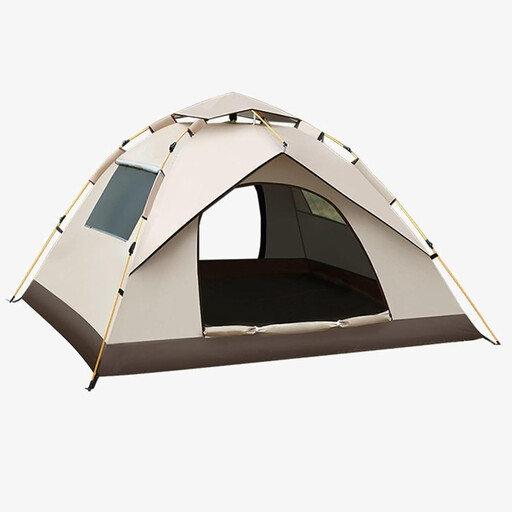
Why this product fits the profile: This pop-up tent is aimed at people looking for a straightforward setup and a relatively compact packed size. Two doors and two windows aid access and ventilation.
The product description states internal and external dimensions, material and a water column rating. This makes it easier to assess the space and weather protection than with purely promotional claims.
Automatic opening system, double-layer construction and a stated packed size of around 76 × 17.3 × 14.5 cm.
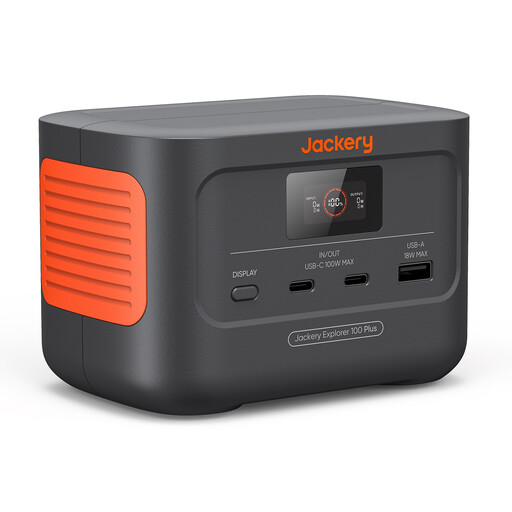
Why this product fits the profile: For travellers and campers who want to carefully compare weight, connections and charging information. The device weighs around 0.97 kg according to the specifications.
The 99 Wh capacity and the specific USB outputs make it clear which class of device the power station is intended for. It is not designed as a replacement for a large power supply.
99 Wh, up to 128 W combined output power and three USB ports according to the product data.
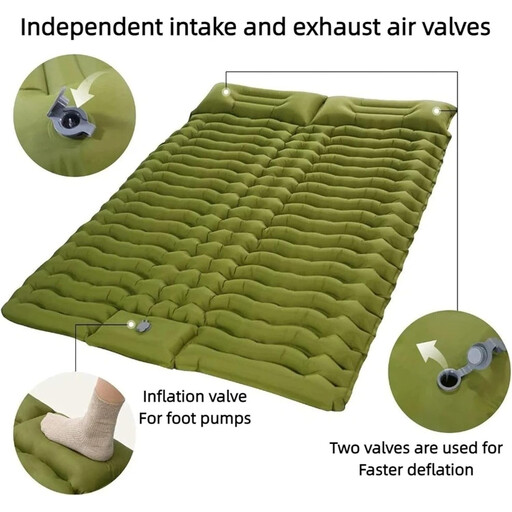
Why this product fits the profile: The double sleeping mat is designed for couples, families and longer stays where a larger sleeping surface matters more than minimal weight.
The dimensions of 200 × 140 cm and the packed size of around 29 × 16 × 16 cm help you realistically plan the space required and transport.
Integrated foot pump, two valves and a stated thickness of around 8 cm when inflated.
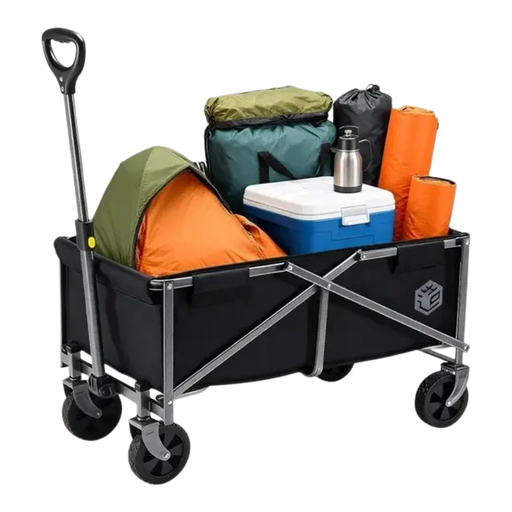
Why this product fits the profile: The foldable wagon is ideal for families, picnic groups and anglers who want to move a tent, picnic blanket, camping box and supplies all together.
The product data states the volume, load capacity and wheel construction. This allows you to check whether the wagon suits the weight and distance involved.
75 litre basket volume, stated load capacity up to 100 kg and integrated folding construction with no assembly required.
We have put together a full, regularly updated list of products that fully meet these strict selection criteria and the safety regulations in force in the EU.
Small accessories have a bigger impact on daily life than their size suggests. An inflatable camping pillow measuring 43 × 28 × 9 cm can be stored away compactly and cleaned with a damp cloth. A picnic blanket or a 2-in-1 bag with a diameter of around 100 cm combines a seating area and a carrying bag.
Before you set off, check all valves, zips, wheels and folding mechanisms. Textiles must be stored completely dry. Power stations should be kept in a dry, well-ventilated place and must not be used near open flames.
For a simple overnight stay, the basic essentials include a suitable camping tent, sleeping bag, camping sleeping mat, lighting, weather-appropriate clothing and a storage solution. For longer stays, add a camping chair, camping table, camping box and, if necessary, a power station.
The lifespan depends on the material, usage, cleaning and storage. Tents and mats should be stored dry and protected from sharp objects. Folding furniture lasts longer if the joints are not overloaded and the specified weight limits are observed.
The cost depends on the number of people, comfort level, season and method of transport. A minimalist setup for one person costs less than a family set-up with a large tent, double sleeping mat, wagon and power station. It makes sense to buy the essential items first and then add accessories based on your actual usage scenario.