Evening readers
If you want to read by your tent or caravan after dark, look for adjustable brightness and colour temperature. The best way to judge which settings feel right is to try them in a dark environment.


First, check that your specific edition of the mythology book will open on the e-reader. With Onleihe, the device, software and copy protection all matter. For text-heavy books, a compact black-and-white reader could be a good choice. If maps or illustrations are important, test the actual page on a colour display: PocketBook specifies 300 dpi for greyscale and 150 dpi for colour on the Verse Pro Color. Water resistance can be useful in wet weather, but it doesn’t automatically protect against sand; Kobo explicitly states that its readers are not dust- or sand-proof.
If you want to read by your tent or caravan after dark, look for adjustable brightness and colour temperature. The best way to judge which settings feel right is to try them in a dark environment.
If you want to borrow mythology titles through the German Onleihe service, check the specific device, software version and the title’s copy protection. The Onleihe help pages state that direct access requires software version 5.15.253009 or later on the tolino shine 5, and version 6.3 or later on PocketBook devices.
If maps or illustrations matter to you, try a typical page from your edition on the actual display. A colour display alone doesn’t guarantee that small labels will be easy to read.
| What matters | What to check when buying | Who is it important to? |
|---|---|---|
| Access to the book you want | Check the source, format and copy protection for your specific edition. For Onleihe 3, the help pages specify minimum software versions for certain tolino and PocketBook configurations. | If I want to borrow specific mythology books or read them from a particular shop, the reader needs to work with the edition and access method. Around 25% of consumers put access to the book they want first. |
| Reading light for evenings | Check whether you can adjust the brightness and, where available, the colour temperature on the specific model. Assess the light in low ambient light. | If I want to read at the campsite after sunset, I want to be able to adjust the lighting to suit my surroundings. Around 25% of consumers say reading light is their top priority. |
| Wet weather and device care | Compare the protection rating for the exact model. Follow the manufacturer’s guidance on the USB port, and only charge the device once the port is dry. | If I might encounter rain or splashes by my tent, I want to know the protection rating of the specific reader. Around 19% of consumers prioritise weather protection. |
| Size and battery life | Compare the display size and weight with your luggage, charge the device before setting off, and plan your use based on your own lighting and wireless settings. | If I’m short on luggage space or don’t want to charge while travelling, size and charging plans matter to me. Around 19% of consumers focus mainly on portability and power. |
| Maps and illustrations | If possible, open a typical page from your edition on the device you’re considering and check whether labels are readable at your preferred size. | If maps or illustrations are important in my edition, I want to be able to make them out clearly on the reader too. Around 12% of consumers put image quality first. |
A stated water-resistance rating doesn’t automatically mean a device is protected from dust or sand. Kobo explicitly states that its readers are not dust- or sand-proof.
Check the protection rating for the exact model, and keep the charging port clean and dry. Only charge the device once the port is dry.
With Onleihe 3, the device model, software version and copy protection can all matter. Support for a file format alone doesn’t tell you whether your specific title will open.
Check the latest requirements for your device and the title you want before settling on a particular way to read it.
For the PocketBook Verse Pro Color, PocketBook specifies 300 dpi for greyscale and 150 dpi for colour. A colour display alone doesn’t prove that small map labels in your edition will be easy to read.
Try a representative page from your mythology edition on the model you’re considering, at your preferred display size.
Manufacturers’ battery-life claims depend on lighting, wireless connections and how long you actually read. Battery life with your camping settings may differ.
Charge your reader before setting off and plan around your expected use, rather than relying solely on a maximum figure in an advert.
The shine 5 is a compact black-and-white model with adjustable lighting and a stated water-resistance rating.
The Verse Pro Azure and Verse Pro Color offer different display options; access to Onleihe depends on having the right configuration.
A Kindle reader could suit mythology books from the Kindle ecosystem, provided the editions you want are available there.
The Clara BW is a compact black-and-white model with adjustable lighting and a stated water-resistance rating.
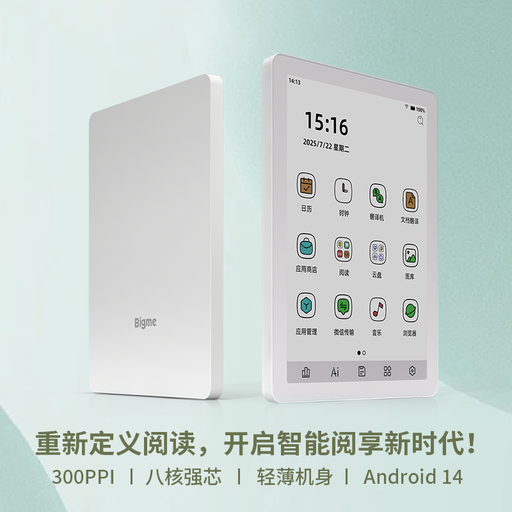
The Joybuy model featured here is suited to mythology editions with colour maps or illustrations. Check how readable your specific pages are on the display.
 No image available
The E Ink display offers colour for maps and illustrations; check fine details in your specific edition.
The description specifies 300 PPI for greyscale and 150 PPI for colour content. It also lists a front light with 36 adjustable levels, Android 14 with Google Play built in, and 4+64GB.
Yes, as long as the books you want are saved on your device before you travel and will open. Download and test the titles in advance. With Onleihe editions, access and readability also depend on the title, device and copy protection.
Dry the USB port before charging the device. Kobo says its water-resistant readers are not dust- or sand-proof; also follow the care instructions for your specific model.
According to the Onleihe help pages, you need a valid library card and the associated password to use Onleihe on an e-reader. Whether you have to pay for your card depends on your library’s terms; check with the library directly.
No. According to the Verbraucherzentrale, your statutory rights against the seller are separate from a voluntary guarantee with its own terms. If a product is faulty, repair or replacement may be the first step.
Take your old e-reader to a separate collection point rather than putting it in household waste. The Umweltbundesamt lists local collection points as an option for returning old electrical equipment.