
Lieferung heute & morgen

Qualitätsgarantie

Willkommens-Angebote freischalten: KOSTENLOSE Lieferung | Bis zu 80 % RABATT | Kostenlose 30-Tage-JoyPlus-Testphase
App herunterladen
A reliable camping gas stove is the heart of any outdoor kitchen. But the market is flooded with models whose marketing promises often generate more heat than the burners themselves. Many buyers invest in devices that prove to be impractical, inefficient, or simply unsuitable for their needs in the field. As your Joybuy Product Recommendation Officer, I'll help you identify the crucial features and sidestep common purchasing traps.
Before we turn to recommended models, it's important to understand the most common mistakes that lead to frustration and unnecessary expense.
To avoid a bad purchase, focus on these three objective criteria. They determine whether a gas stove for canisters is right for your adventures.
Instead of just looking at the wattage, examine the burner's design. A model with a wide, stable base and an integrated wind shield that encloses the flame will bring water to a boil faster in a light wind than an exposed burner with a higher power rating. For a hiking stove, this efficiency is crucial as it directly impacts gas consumption and, therefore, the weight you have to carry.
A gas stove that is small and compact is one that can be stowed away to save space—ideally inside your cooking pot along with a small gas canister. Pay attention to the stove's folded dimensions and the total weight of the system. A stove that weighs only 250 grams but requires a bulky, external stand can take up more space and weight in your backpack than an integrated cooking system weighing 400 grams.
The de facto standard for trekking and camping stoves in Europe is the EN 417 screw-on connection. These canisters typically contain a mix of butane and propane, which performs reliably even in cooler temperatures. Before buying, check that the stove has this connection. Some models also offer adapters to be compatible with other canister types or even larger propane tanks, which increases flexibility.
Based on these objective criteria, we have put together a selection of gas stoves that are particularly well-suited for specific use cases.
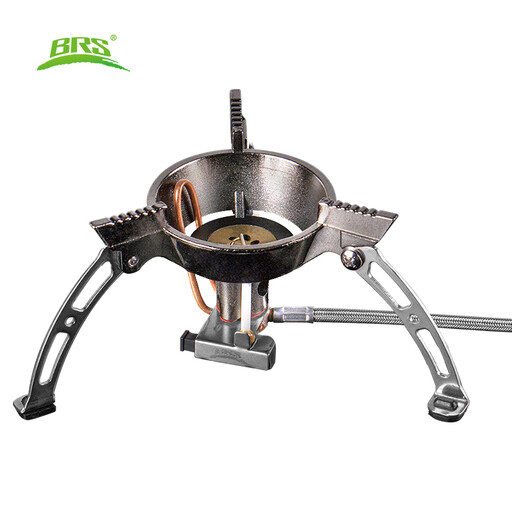
Why it's a great fit: For hikers where every gram counts, this model is an excellent choice. It combines very high power with an extremely low weight and a compact folded size.
It bypasses the "false lightweight" trap. At just 240 g and with a small pack size, the system weight remains low even with a canister and pot. The included adapter for different canisters also overcomes the compatibility dead-end.
The combination of 3240 W of power and an integrated windshield ensures fast boil times. Its broad compatibility (EN 417, 1-lb propane tanks via adapter) makes it extremely versatile.
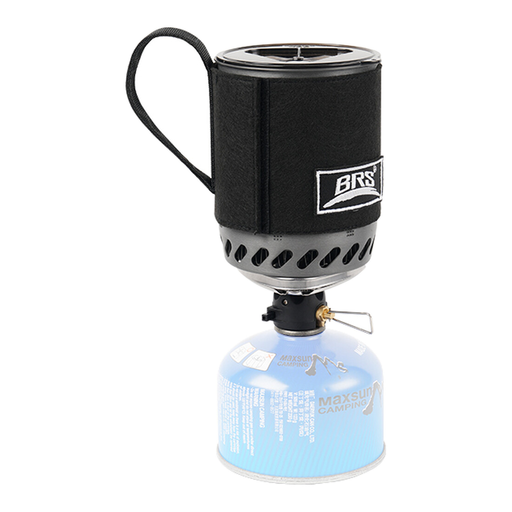
Why it's a great fit: Perfect for solo trips where efficiency and a minimal pack size are top priorities. This all-in-one system integrates the burner, pot, and lid into a single, compact unit.
This system solves the problem of system weight and pack size. With a total weight of just 360 g and the ability to store all parts inside the pot, it makes optimal use of backpack space. The integrated design maximises efficiency and bypasses the wattage trap.
The integrated design with a pot and heat-insulating sleeve ensures high fuel efficiency. The pressure regulator valve allows for precise flame control, which is not a given in many integrated systems.
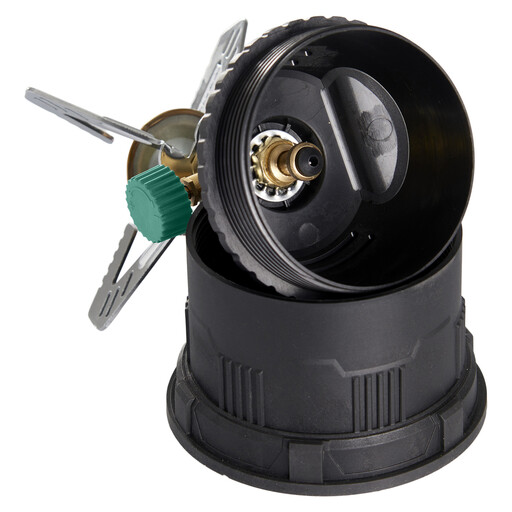
Why it's a great fit: Perfect for base camp, picnics, or car camping, where stability and ease of use are more important than minimal weight. The upright design provides a very secure base for larger pots and pans.
This model doesn't focus on being "ultralight" but on stability and user comfort. It avoids the trap of choosing an unstable lightweight stove for unsuitable purposes (e.g., cooking with heavy pans). The 1220 W output is perfectly adequate for this type of use.
The steel and plastic construction offers excellent stability. The continuously variable flame control allows for precise heat adjustment, a feature lacking in many lightweight *trekking stoves*.
We've compiled a complete, up-to-date list of products that fully meet these strict selection criteria and European safety regulations.
1. Which gas canister connection is most common in Europe? By far the most common connection is the EN 417 screw thread. Canisters with this connection are available in almost all hardware stores, camping shops, and outdoor retailers across Europe. They offer the greatest flexibility for travellers.
2. How long can I cook with a standard gas canister? This depends heavily on the stove's power (wattage), the outside temperature, wind, and how you use it. As a rough guide: a standard 230g canister will last for about 60-90 minutes of burn time at full power on an average trekking stove. This is usually enough to boil water and prepare simple meals for one person for several days.
3. Can I use a camping gas stove inside a tent? No, absolutely not. Burning gas in poorly ventilated spaces like a tent, awning, or vehicle produces highly toxic carbon monoxide. Always operate a gas stove exclusively outdoors and at a safe distance from flammable materials. Always ensure good ventilation.