
Lieferung heute & morgen

Qualitätsgarantie

Willkommens-Angebote freischalten: KOSTENLOSE Lieferung | Bis zu 80 % RABATT | Kostenlose 30-Tage-JoyPlus-Testphase
App herunterladen
The right camping gear is the foundation for any great outdoor experience, whether you're at a festival, on a weekend trip with the family, or enjoying a spontaneous night in nature. But the market is flooded with products whose marketing promises often fall short in practice. Certain flaws in materials or construction only become apparent when it's too late—in the middle of a downpour or after a frustrating attempt to get an item back into its packaging. This guide will help you identify the crucial features and make an informed choice.
Before diving into the details, it's helpful to know the most common problems that arise with budget-friendly or over-hyped equipment.
To avoid these problems, you should check three key parameters before buying. These will give you an objective basis for your decision, far removed from marketing claims.
The hydrostatic head, measured in millimetres (mm), indicates how much water pressure a fabric can withstand before moisture penetrates it. For camping in regions with moderate climates during the warmer months, a rating of PU2000mm (polyurethane coating) for the outer tent is a good benchmark. It offers reliable protection during normal to heavy rain. Lower ratings are better suited for dry conditions or purely as sun protection. Also, ensure the tent's seams are sealed, as this is often a weak point.
The durability and stability of your camping furniture and tent depend directly on their materials.
A quick setup is only half the battle. The crucial factor is how easily the gear can be packed away again.
Here are some product recommendations that are well-suited for specific use cases based on their objective features.
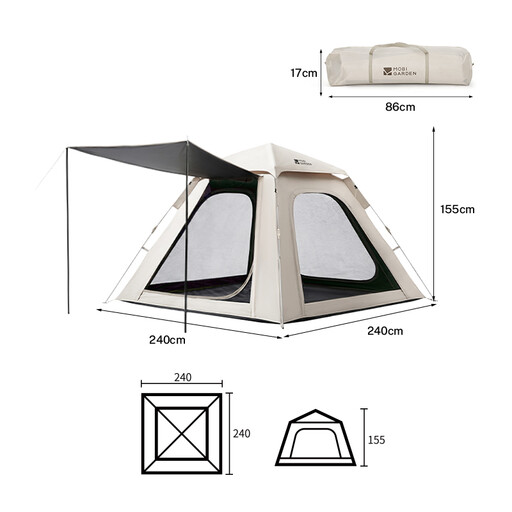
Why it's a good fit: Ideal for users who prioritise an extremely fast setup. The blackout fabric is a significant advantage at festivals or for summer camping, allowing you to sleep in after sunrise. It's a practical piece of festival gear.
Unlike many pop-up tents, the automatic mechanism is also intuitive for takedown, resulting in a manageable, oblong packed size (avoids Pitfall 2). The specified PU2000mm hydrostatic head is transparent and realistic for its intended use (avoids Pitfall 1).
Set up in seconds by one person; blackout fabric for better sleep comfort.
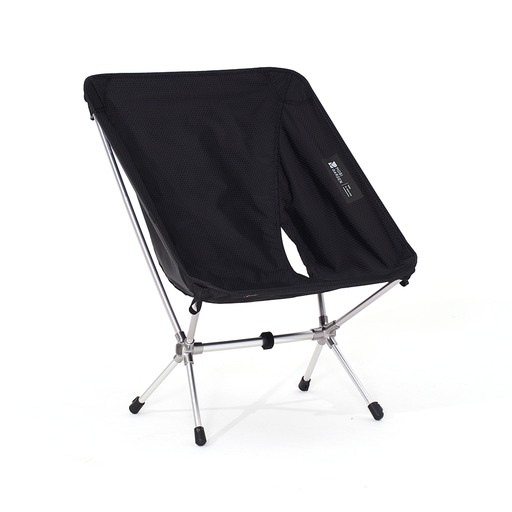
Why it's a good fit: Weighing only approx. 765 g and packing down incredibly small, this chair is designed for trips where every gram counts. It still provides a comfortable place to sit, wherever you need it.
Despite its extremely low weight, the frame made of aerospace-grade aluminium and its triangulated structure provide high stability for up to approx. 140 kg. This refutes the assumption that ultralight gear must always be unstable (avoids Pitfall 3).
Extremely low weight (approx. 765 g) and packed size; stable aluminium frame; quick setup.
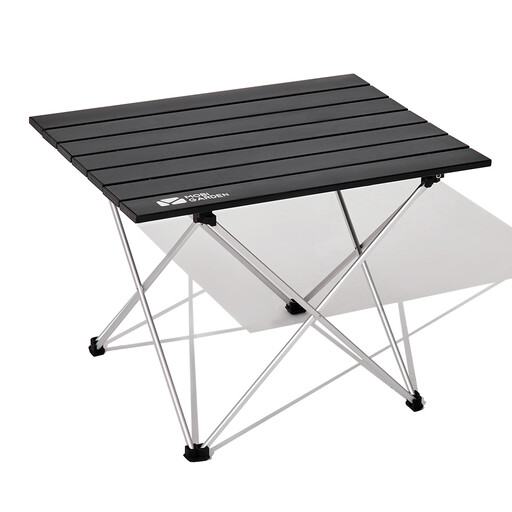
Why it's a good fit: This table provides a stable and level surface for meals or games. It's part of a practical camping set and is ideal for families travelling by car who value a certain level of comfort.
The X-cross structure of the aluminium frame ensures even load distribution and high stability, solving the problem of wobbly camping tables (avoids Pitfall 3). The tabletop and frame are packed separately, which simplifies the repacking process (avoids Pitfall 2).
Stable construction; corrosion-resistant aluminium frame; non-slip foot caps for a secure footing.
Our selection includes other products curated based on objective criteria like material, packed size, and functionality.
For casual summer camping in temperate climates, a hydrostatic head of 1500 mm to 3000 mm is generally sufficient to keep out normal rain. Higher ratings offer more security during persistent, heavy downpours or in alpine regions. It's a trade-off: very high waterproof ratings can reduce a tent's breathability, leading to more condensation inside.
No, that's not always advisable. To save weight, ultralight chairs often have narrow feet. These can sink into soft ground like sand, mud, or damp forest floors. For such conditions, chairs with wider foot caps or crossbars that distribute the weight are a better choice. Check the chair's leg design before buying and always use it on the most level ground possible.
A classic pop-up tent springs into shape on its own after being unpacked. However, taking it down often requires practice and a specific folding technique. The packed size is typically a large, flat disc. An instant setup tent, like the Mobi Garden model featured here, is pitched using a central hub mechanism. Takedown is usually more logical and results in a long, rod-shaped packed size that is easier to store in a backpack or car.