
Lieferung heute & morgen

Qualitätsgarantie

Willkommens-Angebote freischalten: KOSTENLOSE Lieferung | Bis zu 80 % RABATT | Kostenlose 30-Tage-JoyPlus-Testphase
App herunterladen
The excitement for a trip into nature can quickly fade when your newly purchased camping gear fails to live up to its promises. The market is flooded with products whose marketing often overpromises and underdelivers on functionality. To help you make the right choice, we'll highlight the most common pitfalls and show you which technical specifications truly matter.
An informed decision protects you from disappointment and unnecessary expenses. Pay close attention to these three areas where manufacturer claims are often imprecise:
To avoid these pitfalls, you should focus on objective, measurable criteria. These three parameters are central to ensuring your camping gear is durable and functional.
A tent's weather resistance is indicated by its water column rating, measured in millimetres (mm). This value describes how much water pressure the material can withstand before moisture penetrates.
For off-grid power while camping, a power station or a portable solar generator is indispensable. Two key metrics are crucial here:
A folding wagon is an essential piece of outdoor equipment for families and festival-goers. The specified maximum load capacity (in kg) should not be seen as just a theoretical value. A stable steel frame is often the foundation for durability. Equally important is the quality of the wheels: wide plastic wheels are well-suited for sandy terrain, while solid rubber wheels are more puncture-proof on forest paths and gravel tracks.
Based on these objective criteria, we have identified several products that offer a suitable solution for specific user groups.
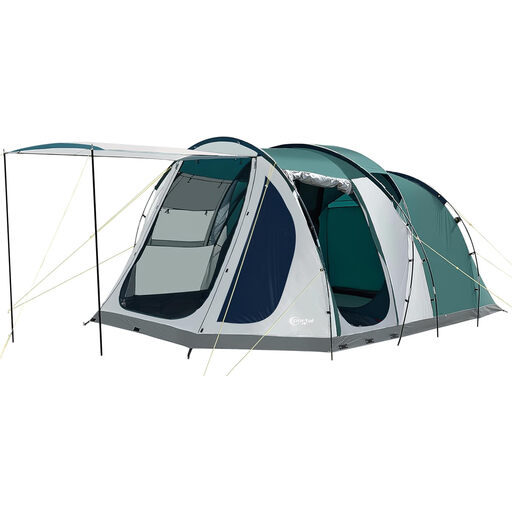
Why It's a Great Fit: This family camping tent offers the comfort needed for longer stays with a separate living area (5.8 m?) and sleeping area (7.05 m?), plus a standing height of 200 cm. It's perfect for holidays where space and weather protection are top priorities.
It bypasses the trap of misleading size claims with clearly defined living and sleeping areas that genuinely accommodate a family and their gear.
A water column rating of 3,000 mm and a fully sewn-in groundsheet provide reliable protection against rain and ground moisture.
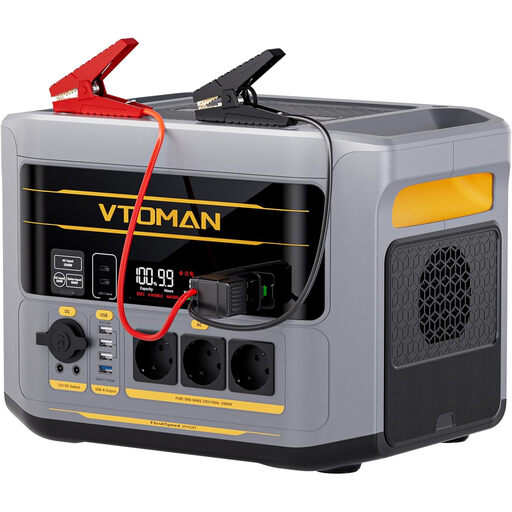
Why It's a Great Fit: For anyone who needs power on the go for laptops, coolers, or tools. Its high capacity and output make this solar generator a dependable energy source for camping, RV trips, or as an emergency home backup power.
Addresses the impractical design trap with 12 versatile outputs. The use of a durable LiFePO4 battery counteracts the problem of inferior components.
Delivers a high capacity of 1408 Wh and a continuous output of 2400 W. According to the manufacturer, it can be fully recharged from a wall outlet in about 1 hour.

Why It's a Great Fit: This transport wagon is a versatile assistant for anyone needing to move heavy or bulky equipment—whether for family camping, at a festival, or during a big grocery run. Its large volume and high load capacity make it extremely flexible.
Sidesteps the inferior materials trap with a robust tubular steel frame and a high, clearly specified load capacity of 200 kg, far exceeding the standard for many models.
A large loading volume of 127 litres combined with brakes on the front wheels ensures high capacity and safety, even on gentle slopes.
We have compiled a complete, up-to-date list of products that fully meet these strict selection criteria and all relevant safety regulations.
1. What is considered essential camping gear? The basic kit typically includes a weatherproof tent, a sleeping bag appropriate for the climate, a sleeping pad or air mattress, a reliable light source (e.g., a headlamp), camping chairs and a table, a gas stove, and a cooler for storing food.
2. What water column rating is sufficient for a tent? For typical summer weather, a tent with a water column rating from 1,500 mm is often sufficient. However, if you plan to camp in spring, autumn, or in rainy regions, you should opt for a rating of 3,000 mm or more to stay dry even during heavy, persistent rain.
3. How do I choose the right power station for camping? First, determine your energy needs. Add up the wattage of the devices you want to run simultaneously (e.g., cooler 40 W + laptop charging 65 W = 105 W). Your power station should be able to supply this continuous output (W). Then, estimate how many hours per day you will use the devices to determine the required capacity in watt-hours (Wh). For a weekend trip, models starting from 500 Wh are often a good starting point.