
Lieferung heute & morgen

Qualitätsgarantie

Willkommens-Angebote freischalten: KOSTENLOSE Lieferung | Bis zu 80 % RABATT | Kostenlose 30-Tage-JoyPlus-Testphase
App herunterladen
A good night's sleep is crucial, whether you're at a festival, camping in the great outdoors, or hosting a guest at home. However, choosing the right camping mattress can be complicated. The market is filled with promises of "ultra-light comfort" and "set up in seconds." But often, these very marketing claims lead to disappointment and a product that becomes useless after a short time.
As your Joybuy Product Recommendation Officer, I'm here to help you separate fact from fiction. We'll shine a light on the most common pitfalls and the critical features you should look for before buying to make an informed decision.
Many buyers regret their decision because they fell for exaggerated marketing promises. Pay special attention to these three points:
To find the right balance between comfort, durability, and portability, you should carefully examine three technical features. These determine whether a mattress is suitable for your needs as a camping sleeping pad or as a guest bed.
The material is the foundation for durability and comfort.
The internal construction of an air mattress is just as important. Internal structures (coil or beam construction) connect the top and bottom surfaces, creating a level, stable sleeping surface that resembles a conventional mattress. Simple chamber constructions are less stable.
The R-Value measures a material's thermal resistance. Simply put: the higher the R-Value, the better the mattress insulates you from the cold ground.
A basic air mattress without any special filling or reflective layers has a very low R-Value (often below 1) and is unsuitable for cool nights outdoors. A foam sleeping pad often offers more reliable performance in this regard.
Here, you need to find the right compromise for your needs. A backpacker needs an ultra-light mattress with a minimal pack size. For a family car-camping trip or as a guest bed at home, comfort and size are more important than weight. Compare the dimensions when inflated and packed, as well as the total weight, to ensure the mattress fits your transport capabilities.
Based on these objective criteria, we have identified a few products that represent a suitable solution for specific user profiles.
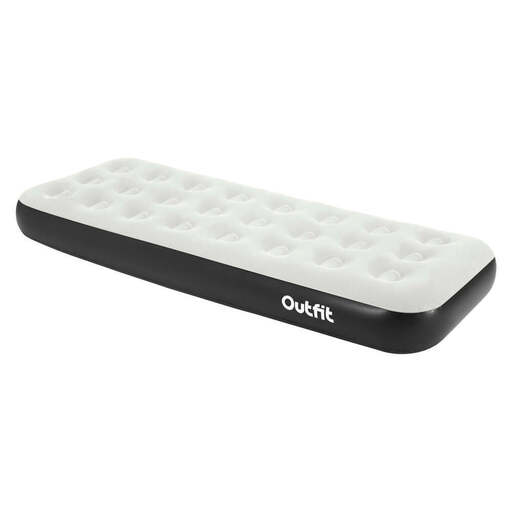
Why this product is a good fit: Ideal for those who need a straightforward and cost-effective sleeping solution for occasional overnight stays, festivals, or as a spontaneous guest bed. The focus is on functionality, not high-tech features.
This air bed doesn't promise ultra-light properties or advanced insulation. It's an honest, basic PVC air mattress that avoids the pitfall of overpaying for unnecessary features.
The 22 cm height provides sufficient distance from the ground. The robust PVC material is designed for occasional indoor and outdoor use. A repair patch is included.
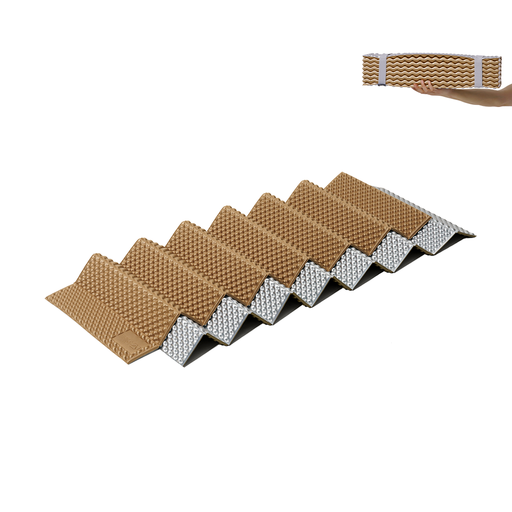
Why this product is a good fit: For trekking and backpacking trips where every gram counts. This folding foam pad offers a reliable solution where you don't have to worry about punctures or air loss.
It completely sidesteps the "ultra-light trap." As a foam pad, it cannot leak and therefore never loses its functionality. The egg-crate structure creates an air layer that reliably insulates against the cold ground.
Extremely lightweight (approx. 0.5 kg) and quick to deploy. The XPE foam material is durable and resistant to moisture. The textured design provides basic cushioning and insulation.

Why this product is a good fit: For anyone who doesn't want to compromise on comfort, whether camping or for guests at home. This large air bed offers plenty of space and a comfortable height that makes getting up easier.
It addresses the durability pitfall with its Tritech material, which the manufacturer claims is more resistant to stretching and minimises air loss. The integrated pump solves the problem of tedious inflation.
The built-in, battery-powered pump inflates the mattress in about 3 minutes. The Queen size (2.03 m x 1.52 m) provides comfortable space for two people. The 30 cm height ensures good insulation and comfort.
We have compiled a complete, up-to-date list of products that fully meet these strict selection criteria and German safety regulations.
Always store your mattress completely dry, clean, and in a cool, dark place. For air mattresses, the air should be fully deflated. Fold or roll it loosely rather than compressing it tightly. Avoid storing it near sharp objects or heat sources.
A basic air mattress without insulation is unsuitable for cold conditions. The air inside cools down quickly and draws heat away from your body. For use in the cold, you need a mattress with a sufficiently high R-Value (at least 2-4) or combine your air mattress with an insulating foam sleeping pad underneath.
A sleeping pad is typically made of foam (e.g., XPE) and its main function is to insulate against the cold ground. It is durable and cannot leak, but offers less sleeping comfort. An air mattress or air bed is filled with air and provides greater comfort due to its adjustable firmness and thickness. Its weaknesses are lower insulation (without special technology) and susceptibility to punctures.