Whether a power station is right for your camping or motorhome trip depends mainly on the devices you’ll use, how long you’ll use them for and which outputs you need. For longer stays, solar or vehicle charging can help, provided the connections and cables are compatible and conditions at your pitch allow it. If you only need to charge USB devices, a smaller option may be enough. Don’t base your plans on the rated capacity alone: the ADAC found differences between stated and delivered energy in the devices it tested.
Who would benefit from a power station?
Campers using a cool box for several nights
If you need to run a cool box for an extended period, consider its actual energy consumption and how long you plan to stay, rather than relying on a general estimate of runtime. The ADAC lists cooling appliances as potential power station loads.
Tent and van campers with several devices
If you want to use personal devices and perhaps a small 230 V appliance at the same time, check that the outputs are suitable and that the continuous output rating can handle them running together. The ADAC describes USB and 230 V uses for portable power stations.
Travellers without reliable mains hook-up
For longer stays without a mains connection, consider the charging options available, compatible connections and the rules at your specific pitch. Solar and vehicle charging depend on the model; the ADAC’s power station test covers charging options and safety.
What should you look for when buying?
Start by working out how much energy your devices need, then check which outputs and charging options suit your trip.
| Buying priority |
What to look for |
Who it matters most to |
| Power for several nights |
Add together your devices’ energy consumption and usage time; check the usable energy available from the output you need. |
If I’m staying for several nights without a mains connection, I want enough power to run my cool box and other devices that are in use continuously. Around 33% of consumers prioritise having enough energy for several nights. |
| The right outputs and power |
Check that the plugs and output types match your devices; the continuous output rating needs to be suitable for running them together. |
If I want to use several devices at once, the connections and output need to suit every device I plan to use. Around 27% of consumers prioritise suitable outputs and the ability to run devices simultaneously. |
| Recharging on the go |
Check the PV and vehicle inputs, compatible cables and which combinations are permitted for the specific model. |
If I need to recharge while travelling or during a longer stay, compatible charging options and the conditions at the pitch matter. Around 27% of consumers prioritise reliable recharging. |
| Low weight for USB devices |
Check whether all your devices can be charged using the available USB outputs and whether you can manage without a 230 V socket. |
If I’m only taking compatible small devices and need to carry the power station often, I want to avoid unnecessary size and extra features. Around 13% of consumers prioritise lightweight USB charging. |
Common buying and usage pitfalls
-
Assuming rated capacity is the same as available energy
The energy available from the output you need may differ from the stated rated capacity. The ADAC found this in the devices it tested; the results do not necessarily apply to every model.
Calculate your needs based on the power consumption and usage time of your devices, then compare this with the usable energy stated for the output you need.
-
Using solar and vehicle inputs at the same time without approval
The ADAC warned that connecting vehicle and solar charging at the same time could potentially damage the vehicle when used with the Jackery Explorer 1000 v2 and Ective BlackBox 10 it tested. This finding relates to these models and the charging setup tested.
Check the instructions for the exact model. Don’t use this combination unless it is specifically permitted.
-
Relying on the rated solar input for guaranteed recharging
Actual solar output depends on factors including the panel’s orientation, sunshine and shade. Pitch rules may also restrict where you can set it up.
Check what you’re allowed to set up before your trip and plan a suitable alternative way to recharge.
-
Assuming a charging option means the cables are included
The vehicle and PV charging cables were not included in the package tested by the ADAC for the Jackery Explorer 1000 v2. This says nothing about other models or versions of the product.
Check that the specific offer includes the cables and plugs you need.
Key brands at a glance
BLUETTI
The AC70 and AC180P belong to different model ranges; specifications and features apply to each specific model.
- BLUETTI lists a rated output of 1,000 W and several charging options for the AC70. The ADAC gave the AC180P a rating of 2.0 in its 2025 test.
- The ADAC found the fan loud on the model it tested, although it had a quiet mode. This test result does not apply to every product from the brand.
EcoFlow
The DELTA 3 range includes models with different solar input ratings, according to the manufacturer.
- EcoFlow lists 1,024 Wh, an output of 1,800 W and a PV input of 1,000 W for the DELTA 3 Plus. The ADAC gave the DELTA 3 Plus it tested a rating of 2.1 in 2025.
- These specifications apply to the DELTA 3 Plus and do not indicate the actual runtime of camping appliances. They cannot automatically be applied to the DELTA 3.
Anker SOLIX
The manufacturer’s range includes the more compact C300 DC, as well as the C800 and C800 Plus.
- Anker lists 288 Wh and 300 W for the C300 DC, and 768 Wh and 1,200 W for both the C800 and C800 Plus.
- These figures do not mean the models have the same connections, package contents or usable capacity. Check the specification for the exact version.
Jackery
The Explorer range includes power stations for camping with 230 V appliances; check charging options and safety for each specific model.
- Jackery lists 1,070 Wh and 1,500 W for the Explorer 1000 v2. In its test, the ADAC highlighted the weight and output of this model.
- The ADAC warned that connecting vehicle and PV charging at the same time could potentially damage this model. Vehicle and PV charging cables were not included in the package tested; this does not tell you anything about other Jackery models or offers.
Power stations at Joybuy
This selection includes portable power stations for camping and mobile power when you’re away from a mains connection.
 No image available
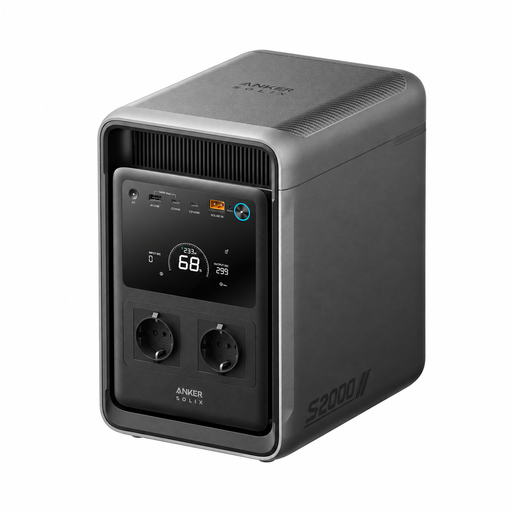
Anker SOLIX S2000
For longer stays and several devices; check whether your devices can run without a 12 V DC connection.
2,000 Wh capacity and 1,500 W continuous output, according to the product name.
The product information states that there is no 12 V DC connection.
View at Joybuy
 No image available
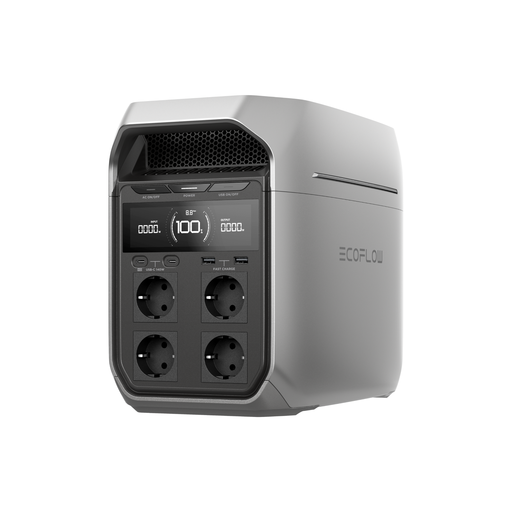
EcoFlow DELTA 3 Plus
For several devices and a suitable 230 V appliance; check the actual power consumption against the stated output.
1,024 Wh and 1,800 W output, according to the product name.
The product name also specifies a LiFePO4 battery.
View at Joybuy
 No image available
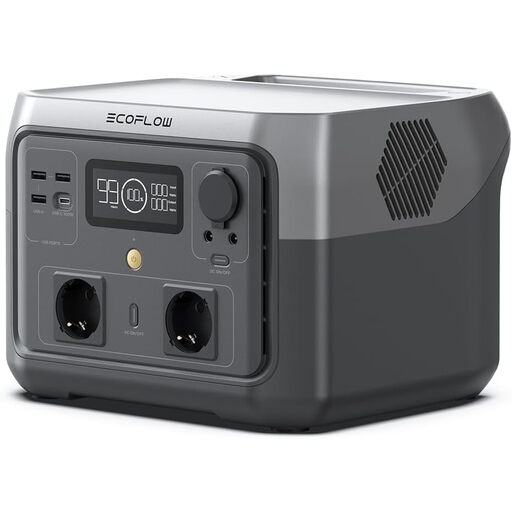
EcoFlow RIVER 2 MAX
For personal devices and smaller appliances, provided the available AC, USB and DC outputs meet your needs.
512 Wh, according to the product name; the description lists AC, USB-C, USB-A and DC outputs, and a weight of around 6 kg.
Do not use in the rain or a damp environment.
View at Joybuy
 No image available
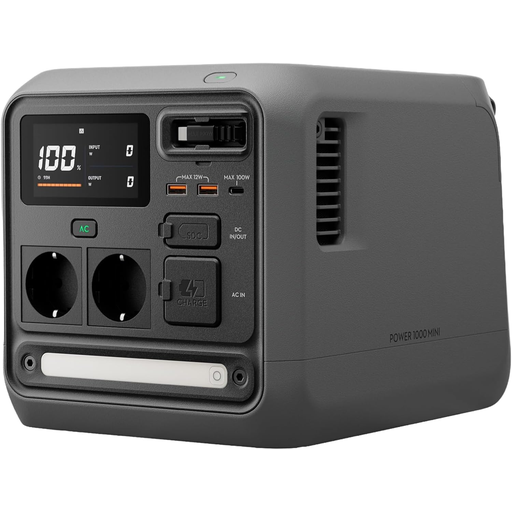
DJI Power 1000 Mini
For trips without a mains connection, provided your connected devices can run at the stated output.
1,008 Wh LFP battery and 1,000 W output, according to the product name.
View at Joybuy
 No image available
VTOMAN FlashSpeed 1000
For several devices on the go; check that the available outputs and continuous output rating suit your devices.
828 Wh and 1,000 W rated output, according to the product name.
The product information states that expanding the capacity to 2,376 Wh requires an additional battery, sold separately.
View at Joybuy
Frequently asked questions
How do I work out the capacity I need for my trip?
For each device, add up its power consumption and expected usage time over the days when you won’t have reliable access to recharging. Compare your needs with the usable energy available from the output you require, not just the rated capacity. The ADAC found differences between stated and delivered energy in the power stations it tested.
Can I connect vehicle and solar charging at the same time?
Only if the instructions for your specific model expressly allow this combination. The ADAC warned that connecting vehicle and solar charging in parallel could potentially damage the vehicle when using the Jackery Explorer 1000 v2 and Ective BlackBox 10 tested in 2025. This finding applies to the models tested and not to all power stations in general.
Can I set up a folding solar panel at any campsite in Germany?
Check the rules with the campsite in advance, as you cannot assume that it will be allowed everywhere. The site rules at Campingplatz Waldesruh prohibit solar and photovoltaic systems on the permanent pitches covered by those rules. This is not a nationwide rule and does not apply to other sites or types of pitch.
What should I look out for when it comes to labelling and disposal in Germany?
For products it oversees, the Federal Network Agency lists CE marking, identifiable product and manufacturer information, and German operating instructions and safety warnings among the things to check. According to the Federal Ministry for the Environment, used batteries must be taken separately to suitable collection points. Check in advance where a large battery from an appliance can be accepted.


