
Lieferung heute & morgen

Qualitätsgarantie

Willkommens-Angebote freischalten: KOSTENLOSE Lieferung | Bis zu 80 % RABATT | Kostenlose 30-Tage-JoyPlus-Testphase
App herunterladen
A camping sleeping mat has to do much more than what product images show. When you're camping, trekking or heading to a festival, it's not just the thickness of the padding that determines your sleep quality. The ground, temperature, packed size, valves and material care all play a part in whether your camping mat stays practical for the long haul.
If you only focus on terms like "ultra-light", "extra thick" or "self-inflating", you can easily miss important details. Three common buying mistakes are particularly worth noting:
First, check the sleeping surface. A standard size of around 180 to 195 cm in length is sufficient for most adults. Side sleepers usually benefit from thicker padding, because the shoulders and hips need more room. A camping mat with a built-in pillow can save you from carrying a separate one, but make sure the pillow height and width suit your sleeping position.
For couples or families, a double camping mat is worth considering. Pay attention to the dimensions both when inflated and when packed. A width of around 140 cm offers space for two people, but it's less suitable for solo backpacking trips.
The R-value describes the thermal resistance of a sleeping mat. The higher the value, the better the construction is generally designed to protect against cold from the ground. However, the R-value is only useful for comparison if the manufacturer provides figures based on a verifiable measurement method.
For mild summer nights, a simple foam outdoor sleeping mat can be enough. In changeable weather or cooler nights, an insulated camping mat with a stated thermal performance makes sense. The Mobi-Garden models, for example, specify R2.6 or an XPE or IXPE foam construction. A thin aluminium foil layer, on the other hand, mainly acts as a moisture barrier and, according to the product description, is not intended as a standalone sleeping surface for longer stays in cold conditions.
For a backpacking sleeping mat, every gram and every centimetre in your rucksack counts. An inflatable sleeping mat can usually be packed down small, but it needs protection from sharp stones. So check the following:
A foldable foam sleeping mat is quick to set up and doesn't need a pump. However, it's often bulkier than an inflatable model. For short walks from the car to the tent, this format can still be practical.
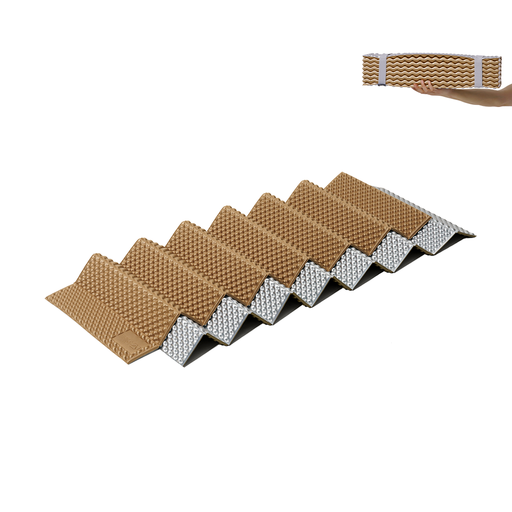
Why this product fits the profile: This foldable sleeping mat is designed for backpacking and trekking and requires neither a valve nor a pump. According to the product information, it weighs around 0.5 kg.
The foam construction avoids the risk of leaky valves. However, at 183 × 55 × 1.7 cm, the sleeping surface is narrower than many air mattresses.
XPE foam, water-repellent surface, R2.6 according to the product information, and the ability to connect with other mats.
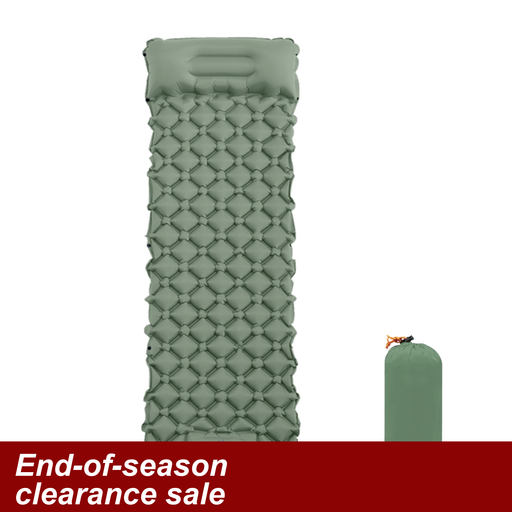
Why this product fits the profile: This inflatable sleeping mat combines a sleeping surface of 192 × 58 cm with a 15 cm height, an integrated pillow and a foot pump.
The product information specifies 50D nylon with TPU coating and double valves. Before each use, you should still make sure the valves are fully closed and check the ground underneath.
According to the product information, approximately 690 g weight, packed size 26 × 10 cm, integrated pillow and side connectors for two mats.
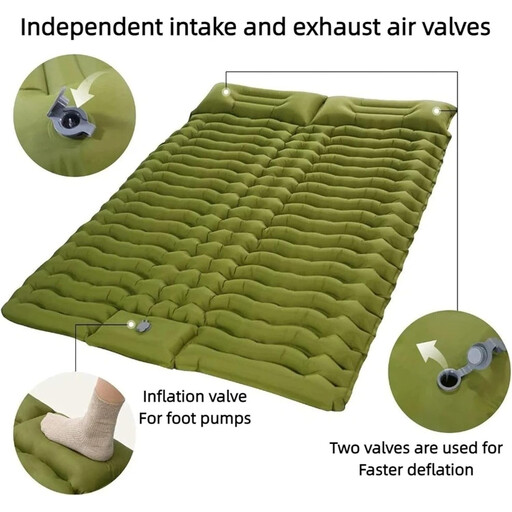
Why this product fits the profile: At 200 × 140 cm, this double camping mat is aimed at couples, families and anyone who prefers a continuous sleeping surface in the tent.
The integrated foot pump means you don't need a separate pump. The packed size of 29 × 16 × 16 cm and weight of around 1.7 kg should be factored in before you buy.
Double-layer TPU construction according to the product description, integrated pillow and a stated inflation time of less than three minutes using the foot pump.
We've put together a complete, regularly updated list of products that fully meet these strict selection criteria and the safety regulations in force in the EU.
Always place your camping sleeping mat on a surface that is as flat and clean as possible. With air mattresses, don't pump them up to maximum hardness unless the manufacturer specifically advises it. A slightly softer setup can better accommodate movement inside the tent.
After use, follow these steps:
A thin groundsheet can protect the tent floor and, with air models, act as an extra barrier. However, it doesn't automatically replace proper thermal insulation.
First, open only the designated valve. On models with a foot pump, press the pump section repeatedly with your foot or hand. Then check that the valve is firmly closed. With PVC air mattresses, only use a suitable standard pump and observe the maximum weight limit.
The lifespan depends on the material, usage and storage. Regular contact with stones, thorns, heat or sharp objects can damage coatings and seams. Proper cleaning, dry storage and a repair kit for small holes can help extend its useful life. Without specific information from the manufacturer, it's not possible to give a reliable general lifespan.
What matters is a verifiable R-value, the air temperature, the tent floor and your sleeping bag. For cool conditions, a combination of a foam mat and an inflatable sleeping mat can be a good idea. A simple aluminium groundsheet protects against ground moisture, but according to the product information mentioned, it is not intended as a standalone sleeping surface for long, cold nights.