
Lieferung heute & morgen

Qualitätsgarantie

Willkommens-Angebote freischalten: KOSTENLOSE Lieferung | Bis zu 80 % RABATT | Kostenlose 30-Tage-JoyPlus-Testphase
App herunterladen
A restful night's sleep is the foundation of any successful outdoor adventure. However, choosing the right sleeping pad for camping can quickly become overwhelming. Those who rely solely on marketing claims often face a nasty surprise: a cold night, back pain, or a pad that starts leaking after just a short time. As your Joybuy Product Recommendation Officer, I'll help you recognise the common pitfalls and make an informed decision.
Before we dive into the important features, let's shed light on the three most common reasons for a poor purchase. Knowing these will protect you from disappointment and unnecessary expenses.
To make the right choice, focus on three objective parameters. These are the key determinants of the comfort, warmth, and practicality of your new camping sleeping pad.
The R-value is the most important metric for a sleeping pad's thermal insulation. It indicates how well the pad prevents heat loss to the cold ground. A higher number means better insulation.
Ensure that the R-value is clearly stated by the manufacturer. If this information is missing, the insulation performance is often questionable.
For backpackers and hikers, every gram counts. A sleeping pad with a small pack size and low weight is essential here. Modern inflatable pads offer a good compromise between comfort and portability. Those travelling by car or who prioritise durability might also consider a slightly heavier foam pad. Always compare the weight in grams and the packed dimensions in centimetres (length x diameter).
The method of inflation significantly affects your comfort before and after a night's rest.
Every camper has different needs. Instead of making a one-size-fits-all recommendation, we have matched products to three typical user profiles.
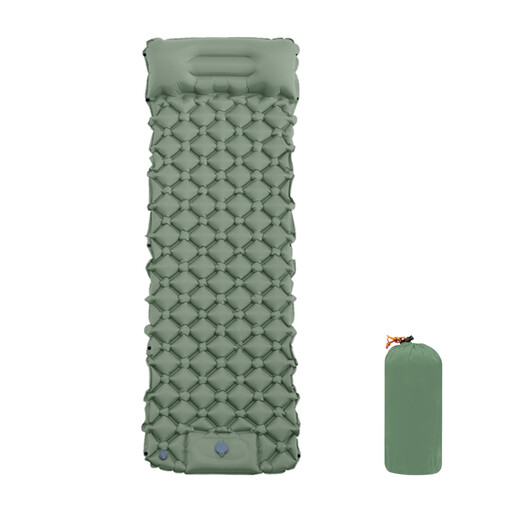
Why This Fits Their Persona: Ideal for backpacking trips where every gram and centimetre in your pack counts. The low weight and tiny pack size take the strain off your back, while the integrated pump saves energy at the end of a long day of hiking.
The integrated foot pump elegantly solves the pump problem. The design with egg-shaped air cells provides targeted support and avoids the unstable feeling of many thick pads.
Extremely lightweight (690 g) and a pack size of just 26x10 cm. Inflates in under 60 seconds via foot pump.
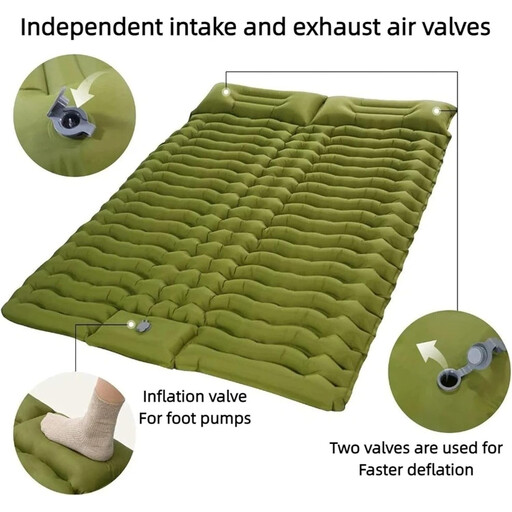
Why This Fits Their Persona: Perfect for couples or small families who want a shared, comfortable sleeping surface without the annoying gap between two single pads. Ideal for car camping trips or festivals.
Designed as a dedicated 2-person sleeping pad, it eliminates the loss of comfort caused by two separate pads sliding apart. The integrated foot pump makes inflating the large surface area effortless.
Generous sleeping area of 200 x 160 cm. Despite its size, the pack size remains manageable at 29 x 16 x 16 cm.
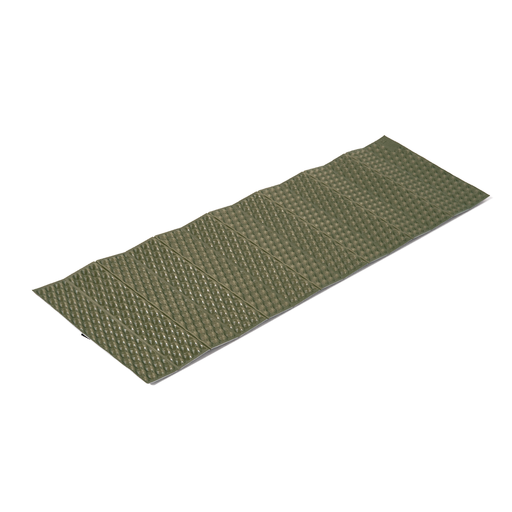
Why This Fits Their Persona: For purists who value maximum durability and simplicity. This foam pad is impervious to punctures, thorns, or stray embers and requires no inflation whatsoever. Just unroll it and you're done.
This pad is immune to the trap of faulty valves or leaks. The stated R-value of 2.6 provides reliable insulation performance for 3-season camping and isn't just an empty marketing claim.
Completely puncture-proof and ready to use instantly. The egg-crate structure made of XPE foam offers a good balance of cushioning and insulation.
We have compiled a complete, up-to-date list of products that fully meet these strict selection criteria and German safety regulations.
The R-value measures the thermal resistance of a camping pad. The higher the value, the better the pad insulates against cold from the ground. For summer camping in temperate climates, an R-value of 1-2 is often sufficient, while values between 2 and 4 are recommended for spring and autumn.
Inflate the pad firmly and close the valve. Submerge the pad section by section in water (e.g., in a bathtub or a lake). The leak is where air bubbles rise. Alternatively, you can spray the pad with soapy water and look for foam bubbles. Mark the spot and, after it dries, repair it with a suitable patch kit.
That depends on your priorities. A self-inflating sleeping pad is often a bit more comfortable due to its foam core, but it's also heavier and bulkier to pack. A modern camping air mattress with an integrated pump is usually lighter, more compact, and can be inflated to the desired firmness without effort. For minimalists who count every gram, a pad without a pump might be the right choice.