
Lieferung heute & morgen

Qualitätsgarantie

Willkommens-Angebote freischalten: KOSTENLOSE Lieferung | Bis zu 80 % RABATT | Kostenlose 30-Tage-JoyPlus-Testphase
App herunterladen
A good night's sleep is the foundation of any successful outdoor adventure. But choosing the right sleeping pad for camping and trekking can quickly become overwhelming. Many products overpromise and underdeliver, leading to cold nights and wasted money. As your Joybuy Product Recommendation Officer, I'll help you identify the crucial features and avoid common purchasing traps.
Before we dive into the key features, let's look at two common problems that often lead to disappointment:
To make an informed decision, focus on three verifiable criteria. These are crucial in determining the performance and longevity of your camping sleeping pad.
The R-value is the most important metric for an insulating sleeping pad. It describes a material's thermal resistance. Simply put: the higher the R-value, the better the pad protects you from the cold ground. For trips in temperate climates, you can use the following values as a guide:
Look for products that clearly state their R-value. This is a sign of transparency and makes comparison easier.
For a foam camping pad, the material is crucial. A proven choice is closed-cell XPE foam (cross-linked polyethylene). Unlike open-cell foams, this material does not absorb moisture and is significantly more resistant to compression.
An "egg-crate" structure is also beneficial. The nodes and dimples create small air pockets that improve insulation performance while increasing comfort. This design also allows the pad to nest compactly into itself when folded.
A lightweight sleeping pad is especially important for a trekking sleeping pad, where every gram counts. Here, the folding sleeping pad has proven to be particularly practical. Unlike rolled pads, it can be quickly and easily folded into a compact, rectangular package that can be conveniently strapped to the outside of a backpack. The weight of a solid 3-season foam pad typically ranges from 400 to 800 grams.
Based on the criteria above, we have identified products that offer a suitable solution for specific user profiles.
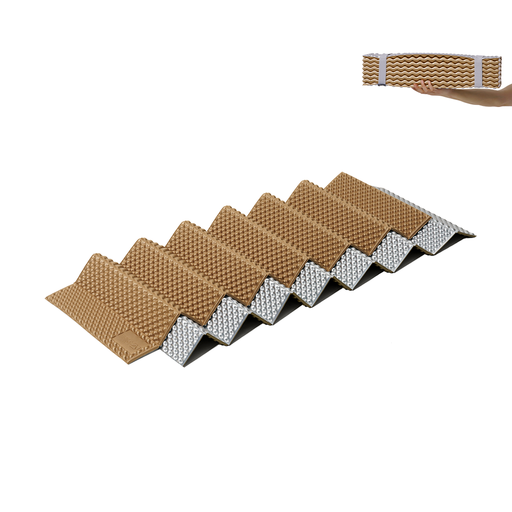
Why This Fits Their Persona: Ideal for long trekking tours and backpacking trips where every gram counts. Its low weight of approx. 0.5 kg and compact folded size ease the load on your back and in your pack.
The XPE foam used retains its shape and is resistant to permanent compression. This ensures the insulation performance is maintained even after many uses, preventing the pad from becoming a single-use investment.
Extremely low weight (approx. 0.5 kg) and a durable, moisture-repellent surface that protects your sleeping bag from dampness.
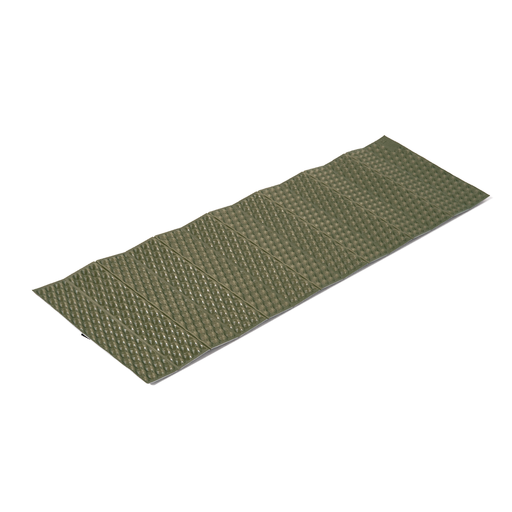
Why This Fits Their Persona: Perfect for campers who are out from spring through autumn and prioritize a warm, comfortable night's sleep. The slightly higher weight is offset by noticeably more cushioning and insulation.
This model avoids the pitfall of unclear insulation ratings with a clearly declared R-value of 2.6. This value provides a reliable basis for planning 3-season trips and protects against cold surprises.
A good balance of insulation performance (R-value 2.6) and comfort, thanks to its greater thickness of 2.6 cm. Its dual-sided usability adds to its flexibility.
We have compiled a complete, up-to-date list of products that fully meet these strict selection and safety criteria.
The R-value measures a material's resistance to heat flow. A sleeping pad with a higher R-value insulates better against ground cold than one with a lower value. It is the most reliable indicator for assessing a pad's suitability for specific temperature ranges.
Caring for an outdoor sleeping pad made of XPE foam is straightforward. Wipe surface stains with a damp cloth. Do not use solvents or harsh brushes. It is important to let the pad air-dry completely after each use, especially if it gets wet, to prevent mold and mildew growth. Ideally, store the pad loosely folded or laid flat to prevent permanent compression of the material.
A folding sleeping pad made of foam offers two key advantages above all: reliability and speed. It cannot be punctured, making it foolproof—a major safety factor on long trips where repairs aren't an option. Furthermore, it's ready in seconds—just unfold it and lie down. Inflatable pads often offer more comfort but are more prone to defects and require more time for setup and takedown.