
Lieferung heute & morgen

Qualitätsgarantie

Willkommens-Angebote freischalten: KOSTENLOSE Lieferung | Bis zu 80 % RABATT | Kostenlose 30-Tage-JoyPlus-Testphase
App herunterladen
A camping stove needs to do more than simply heat water when you’re out and about. It should suit your fuel type, pack weight, group size and intended use. However, many poor purchases are not caused by a lack of power, but by incompatible connections, unstable pot supports or an overly large packed size.
A high wattage rating sounds convincing at first. In practice, however, wind, outside temperature, pot shape and the fuel used also affect cooking time. A powerful gas stove can lose considerable efficiency in windy conditions if the flame is barely protected. Claims such as “1 litre of water in 3 minutes” should therefore always be understood as product specifications measured under particular conditions, rather than a general value for every trip.
Not every camping gas stove uses the same connection. Screw-on canisters with a 7/16-inch thread in accordance with EN 417 are common. Other models can run on butane, propane or blends, and require a suitable adapter. Before buying, you should check:
An adapter expands the stove’s range of uses, but it also increases the number of connection points. Every connection must be fitted correctly and checked before lighting.
An ultralight gas stove weighing just a few grams can be a sensible choice for trekking and backpacking. However, small pot supports are not automatically suitable for large pots or heavy meals. A wide base, fold-out pot supports and a level, non-flammable surface are crucial. On uneven ground, a compact stove can tip over more easily than a model with a larger base.
For long hikes, it is the weight of the complete system that matters: stove, pot, ignition system, canister and carry bag. A complete set can be practical despite having a larger pot, because the components fit inside one another. For example, the Fire Maple Petrel G3 Stove Kit includes a 600 ml pot and has a stated total weight of 265 g. The stove and a 110 g mini canister can be stored inside the pot.
A standalone trekking stove, on the other hand, is often lighter and gives you more flexibility when choosing a pot. The BRS 3000T is listed as weighing 26 g and features foldable pot supports. However, the pot and gas canister are not included.
Power is measured in watts. Between 1,500 and 1,900 W is often sufficient for individual portions and heating water. A rating of 3,240 W can heat larger pots or several portions more quickly, but it will also use more fuel at full power.
Stepless flame control is at least as important as maximum power. It allows you to heat water quickly and then simmer at a lower temperature. Also check whether the stove has a piezo ignition. A camping stove with piezo ignition does not require a separate lighter, while models with external ignition require a lighter or matches.
Gas stoves may only be used outdoors in well-ventilated areas. Tents, vehicles, indoor spaces and other enclosed areas are unsuitable because of the risk of fire and carbon monoxide poisoning. Before each use, the following steps should be routine:
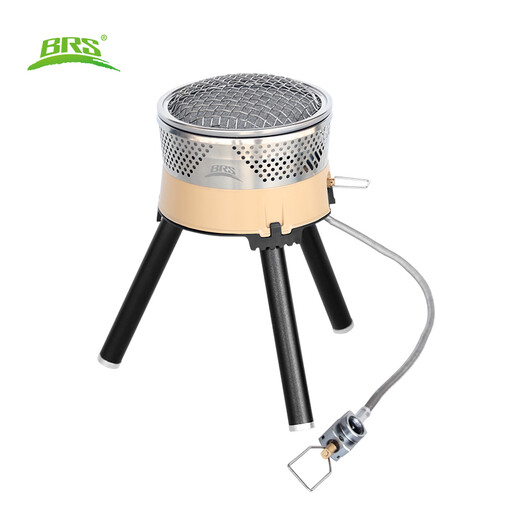
Why this product matches the profile: This portable camping stove combines 1,900 W of power with a stated weight of 425 g and a packed size of 105 × 85 mm.
The product specifications clearly state compatibility with butane and propane, as well as the need for external ignition.
The listed features include 1 litre of water in around 3 minutes, a compact format, and stainless steel and aluminium components.
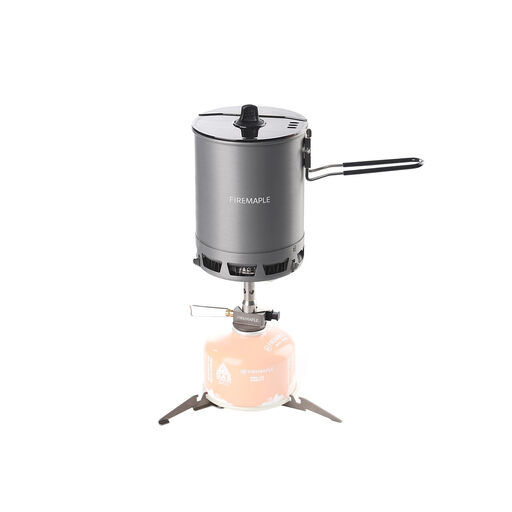
Why this product matches the profile: This complete system is designed for a single portion, with the components stored compactly inside the 600 ml pot.
The nesting design reduces loose individual items in your rucksack. The three-part base is matched to the 120-degree pot supports.
Stated total weight of 265 g, 600 ml pot, transparent Tritan lid and foldable, heat-resistant handle.
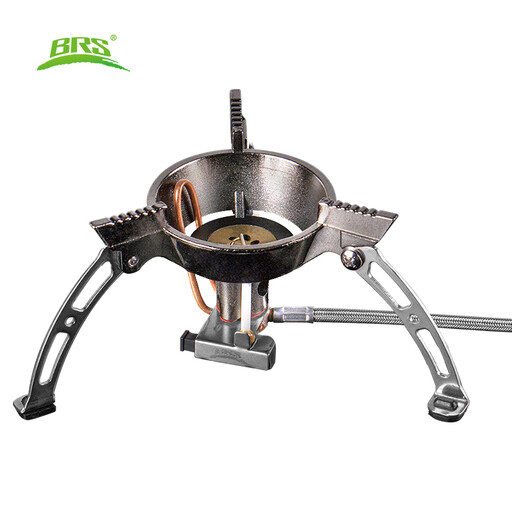
Why this product matches the profile: This outdoor gas stove is aimed at users who work with different canister types and need adjustable power of up to 3,240 W.
The specifications list compatible butane and propane solutions, along with the supplied MAPP gas adapter. This lets you check the connection carefully before buying.
Weight of 240 g, piezo ignition, foldable pot supports and a stated load capacity of up to 5 kg.
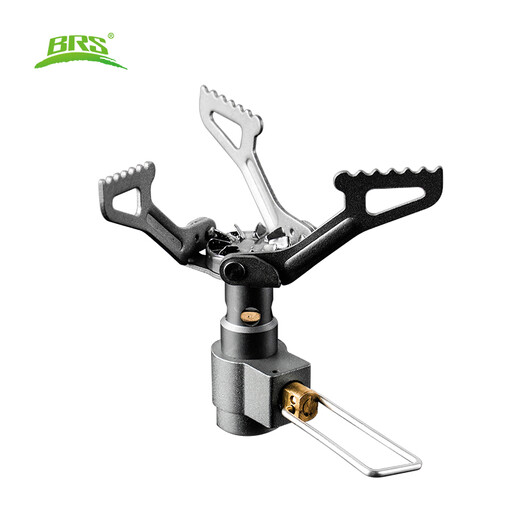
Why this product matches the profile: This ultralight gas stove is suitable for minimalists who prioritise weight and packed size on long stages.
The foldable pot supports reduce the packed size. Nevertheless, you should check before buying whether your own pot is suitable for the small support surface.
Stated weight of 26 g, titanium construction, adjustable flame and a listed power output of 1,940 W.
We have put together a complete, regularly updated list of products that fully meet these strict selection criteria and the safety regulations applicable in the EU.
For longer routes, a low system weight, compact packed size and secure screw connection are particularly important. A trekking stove with foldable pot supports is suitable for individuals who already own a compatible pot. A camping stove with a pot can be more practical if you want all the components to fit neatly inside one another.
Runtime depends on the canister size, power, wind, temperature and cooking time. A stove rated at 3,240 W will probably use more gas at full power than a model rated at 1,220 W. For realistic planning, compare the manufacturer’s stated burn time with your actual cooking habits, and allow for some extra fuel in cold conditions.
Piezo ignition makes lighting the stove easier because no separate lighter is required. However, it can become unreliable in wet conditions or after frequent use. For this reason, you should also carry a suitable backup lighter or igniter in your emergency kit, even when using a camping stove with piezo ignition. A compatible fuel connection, stable positioning and exclusive outdoor use remain essential.