
Lieferung heute & morgen

Qualitätsgarantie

Willkommens-Angebote freischalten: KOSTENLOSE Lieferung | Bis zu 80 % RABATT | Kostenlose 30-Tage-JoyPlus-Testphase
App herunterladen
A camping stove needs to do more than just boil water when you're out and about. Weight, fuel, stability and ease of use all determine whether cooking on a campsite, during a trek or at a festival remains practical. Marketing claims like "ultra-light", "high-performance" or "for every outdoor adventure" are only meaningful if the technical specifications match your intended use.
An ultra-light camping stove can be useful for backpacking. However, very small models often lack a wide pan support, an integrated ignition or a wind guard. Fuel canisters, adapters and carry bags are also frequently sold separately. Always compare the net weight of the stove with the actual packed weight of the entire system.
High power speeds up heating, but it doesn't tell you everything about everyday usability. Wind, pan size, fuel type and flame control all affect cooking time too. A camping stove with 3,240 W can be suitable for larger pots, while a 1,220 W model is sufficient for coffee, soups or simple meals.
Not every gas canister fits every camping gas stove. Pay attention to the thread, the canister type and any adapters needed. For the BRS 11-Series model, the product information mentions butane canisters and canisters with a 7/16-inch thread to EN 417 among others. A canister is not included in the delivery. This information should be checked before purchase and before every trip.
For campsites and picnics, gas camping stoves with a canister are usually easy to transport and offer infinitely variable control. A trekking stove or hiking stove with a small canister is better suited to light luggage. If you want to cook outdoors with wood or multiple fuel types, you need a different system to someone who only works with a standard-compliant gas canister.
When choosing, you should clarify:
An outdoor stove must not be operated in tents, vehicles or enclosed spaces. Carbon monoxide can be produced during combustion. The stove must be placed on a level, stable and non-flammable surface and must be supervised while in use.
For short distances to the campsite, a higher weight can be worthwhile in favour of stability. When trekking, however, every gram and a compact pack size count. A foldable camping stove with collapsible pan supports takes up less space in your rucksack. A carry bag also protects the stove from dirt and makes organisation easier.
Check not just the external dimensions, but also:
Power is given in watts. A model with 1,220 W can be sufficient for smaller meals, while 1,940 W or 3,240 W offer more reserve for larger pots. Infinitely variable control is important if you want to do more than just boil water and also need to cook slowly.
A camping stove with piezo ignition reduces the need for separate matches or lighters. Nevertheless, you should check connections, seals and the ignition before each use. If you smell gas, the stove must not be lit.
The following models cover different requirements. Technical details come from the respective product descriptions and should be checked against the current delivery contents before purchase.
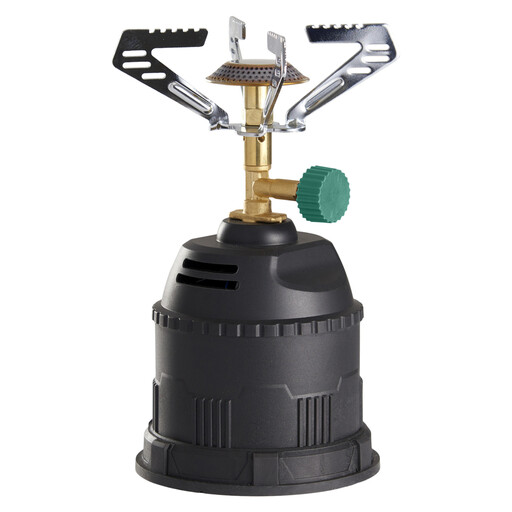
Why this product fits the profile: With a net weight of 0.495 kg, this compact gas stove is designed for short hikes, picnics and simple camping tasks.
The product information states power, weight and a burn time of up to four hours. This makes it easier to assess packing requirements and usage duration.
1,220 W power, infinitely variable control and a compact format; according to the product description, designed for up to four hours of burn time.
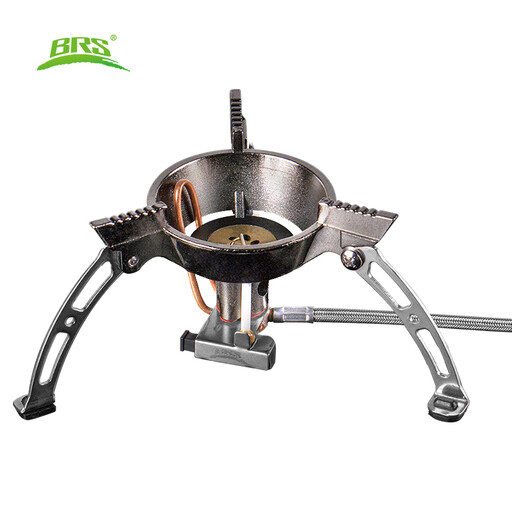
Why this product fits the profile: This model combines a foldable design, piezo ignition, carry bag and several stated canister options for regular outdoor use.
The stated fuel connections and the included adapter make compatibility checks more transparent. The canister itself must be purchased separately.
240 g weight, up to 3,240 W adjustable power, foldable pan support, piezo ignition and carry bag.
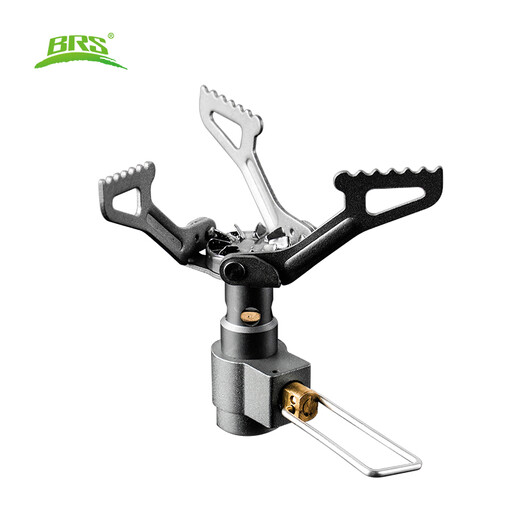
Why this product fits the profile: With a stated weight of 26 g and foldable pan supports, this titanium camping stove is aimed at backpackers looking to reduce their base weight.
The product description states weight, power and packing solution clearly. Before purchase, pan diameter and canister connection should be checked additionally.
26 g weight, 1,940 W stated power, foldable pan supports and included bag.
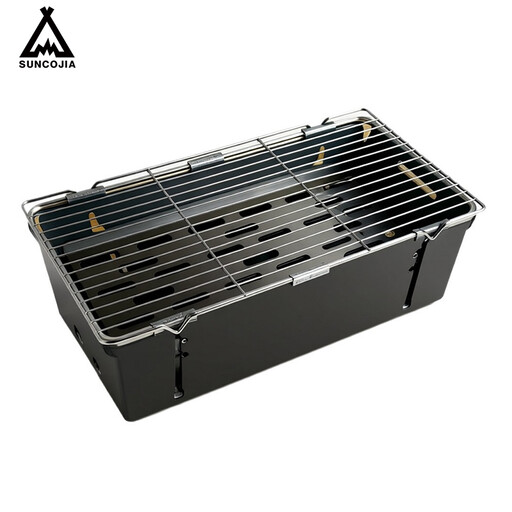
Why this product fits the profile: With a grill grate, carbon steel housing and Oxford fabric bag, this foldable camping stove is designed for more stationary outdoor cooking situations such as campsite, garden or picnic.
At approximately 3.6 kg, this model is clearly heavier than a trekking stove. This classification prevents a grill and fire pit concept from being accidentally chosen for ultra-light hiking.
33 × 17 × 14 cm, stainless steel grill grate, foldable body and Oxford fabric bag; according to the product description, suitable for various outdoor fuels.
We have put together a complete, regularly updated list of products that fully meet these strict selection criteria and the safety regulations in force in the EU.
Before first use, you should read the instruction manual and check all connections. For a gas stove, this includes in particular:
For trekking and backpacking, low weight, a small pack size and a suitable canister are crucial. An ultra-light camping stove like the BRS 3000T can be suitable for people travelling with small pots and simple provisions. For larger cooking vessels, base width and load capacity should take priority.
The run time depends on canister size, power, outside temperature, wind and duration of use. A general statement is therefore not reliable. The product description for the OUTFIT model states a burn time of up to four hours. This value should be regarded as a manufacturer's specification and should not be automatically transferred to every canister or every operating condition.
No. Gas and other combustion stoves are not intended for enclosed spaces, tents, vehicles or poorly ventilated areas. Use the camping stove exclusively outdoors, on a stable surface and under constant supervision.