
Lieferung heute & morgen

Qualitätsgarantie

Willkommens-Angebote freischalten: KOSTENLOSE Lieferung | Bis zu 80 % RABATT | Kostenlose 30-Tage-JoyPlus-Testphase
App herunterladen
A camping stove needs to do more than simply heat water when you’re on the move. Whether you’re hiking, trekking, fishing or camping, a stable base, compact packed dimensions and a clear fuel system all matter. Many poor purchases are not caused by insufficient performance, but by unclear product specifications and an inaccurate assessment of how the stove will actually be used.
A wattage rating indicates the potential heat output, but says little on its own about actual cooking time. Wind, ambient temperature, pot size and fuel all affect consumption and heating speed. An outdoor stove with 1.22 kW can be sufficient for hot drinks and simple meals, while larger pots or cooking for several people may require a different configuration.
Building a camping stove as lightly as possible makes sense for trekking and backpacking. However, a very compact model with narrow feet can tip more easily on uneven ground. Check that the pot supports, feet and pot diameter are properly matched. A stable trekking stove does not have to be heavy, but it should always be placed securely on a level, non-combustible surface.
Not every camping gas stove uses the same type of canister. Some models attach directly to a screw-on canister, while others require a connector or a specific canister size. Also check whether the gas canister, igniter, pot and carry bag are included. A camping cooking set can contain considerably more equipment than a stove sold on its own.
A portable gas stove should only be used with the fuel system specified by the manufacturer. With screw-on canisters, make sure the thread and approved canister size are compatible. In Germany, the manufacturer’s instructions, product labelling and safety information are also authoritative.
Use the stove exclusively outdoors. Tents, vehicles, enclosed awnings and indoor spaces are unsuitable because of fire and carbon monoxide risks. Only replace the canister once the appliance has cooled completely and make sure it is kept away from ignition sources.
For solo travellers and hikers, every few hundred grams count. A hiking stove with an integrated pot can be more practical than a separate system, as the components can be nested together. If you are cooking for two or more people, check whether the pot supports and heating surface are large enough for the job.
Pay attention to the difference between the net weight of the stove and the total weight of the set. Gas, the pot, feet and accessories can all increase the actual weight carried in your backpack.
A stepless or finely adjustable flame control makes it easier to switch between boiling water and gentler heating. A secure base and suitably sized pot supports are equally important. In windy conditions, the stove should be shielded, but never operated in an enclosed area. A windscreen must not obstruct the fuel supply or heat dissipation.
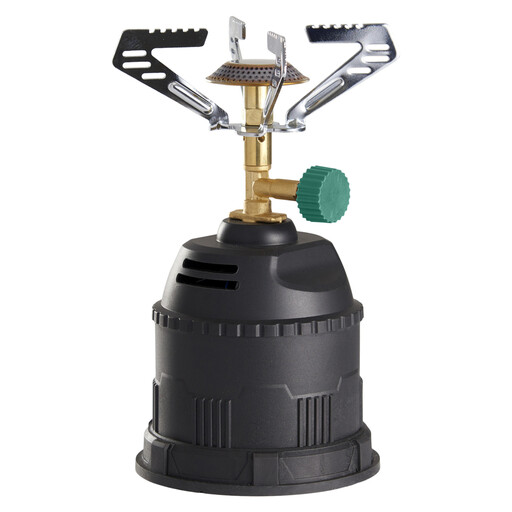
Why this model is a good fit: For picnics, occasional camping trips and simple meals, this compact stove offers a net weight of 0.495 kg and a stated output of 1.22 kW.
The product specifications list the weight, dimensions, output and a burn time of up to four hours. Nevertheless, check the exact canister type and included accessories before buying.
Adjustable flame; steel and plastic construction; external dimensions of approximately 14 × 16 × 21 cm.
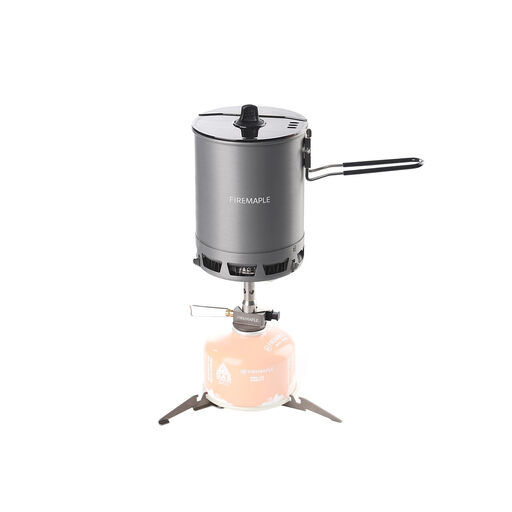
Why this model is a good fit: With a 600 ml capacity, this set is designed for solo travellers who want to cook compactly and prepare hot drinks.
The nesting design reduces the number of loose components in your backpack. Even so, the three-part support structure should be used on level ground.
Stated total weight of 265 g; 600 ml pot with Tritan lid and folding handle.
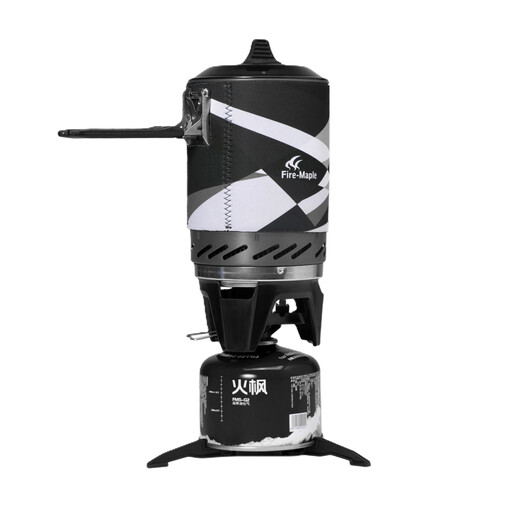
Why this model is a good fit: The integrated system with a 1-litre pot is suitable for trekking, fishing and longer stays where regular cooking is required.
The stove, stand and pot nest together for compact storage. According to the product information, the matching screw-on canister is not included and should be checked separately.
1-litre hard-anodised aluminium pot; according to the description, featuring a heat-exchanger and windscreen design.
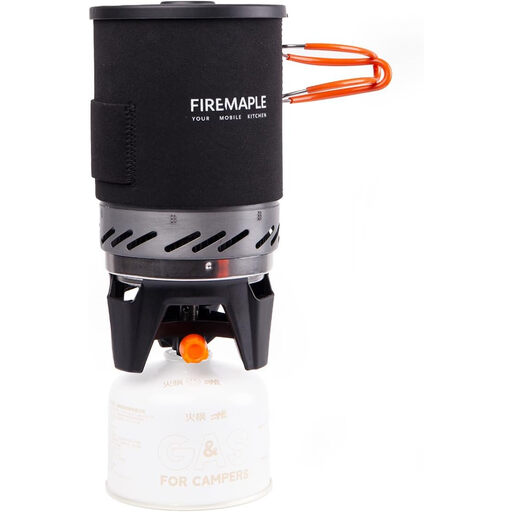
Why this model is a good fit: For hikers looking for a streamlined solo cooking system for trekking, camping or emergency equipment.
The system consolidates the essential components inside the 1-litre pot. As the gas canister is not included, arrange the fuel separately before your first trip.
Nesting 1-litre pot; folding handle; connection for standard screw-on canisters according to the product description.
We have put together a current selection of products that meet these selection criteria and the applicable safety requirements for outdoor use.
This depends on the canister size, output, weather, pot and cooking time. A stated burn time of up to four hours should be understood as a product value under specific conditions, not as a standard runtime for every use. For a trip, plan for additional fuel reserves and confirm that the canister is compatible.
For trekking, low weight, compact packed dimensions and a nesting cooking system are all important. A solo cooking system with a capacity of 600 ml to 1 litre may be sufficient for one person. If you want to prepare larger meals or several drinks at once, choose larger cookware and suitably sized pot supports.
No. A gas camping stove is intended for outdoor use and should not be operated inside tents, vehicles or enclosed spaces. Also observe local fire-safety regulations, maintain sufficient clearance from combustible materials and follow the safety instructions provided by the manufacturer.