
Lieferung heute & morgen

Qualitätsgarantie

Willkommens-Angebote freischalten: KOSTENLOSE Lieferung | Bis zu 80 % RABATT | Kostenlose 30-Tage-JoyPlus-Testphase
App herunterladen
A camping toy for children combines vehicles, travel scenarios and creative role-play. But not every toy camper model suits every age or play style. Some sets look comprehensive with lots of accessories, yet offer little storage space or contain parts that are too fiddly for younger children. Others look appealing as model vehicles, but are better suited to collecting than everyday play.
This buyer’s guide shows you which details matter before you buy, and which models work best for different families, age groups and play situations.
A camping play set can include figures, crockery, tools, animals or miniature accessories. The manufacturer’s age recommendation is therefore an important safety and usability guide. Products with a warning about small parts that could be swallowed should never be given to children under three. Even with a camping toy for ages 4 and up, adult supervision is advisable when there’s lots of accessories.
A pop-up roof, an outdoor shower or a movable trailer can enrich play. What really matters, though, is whether children can operate these features themselves and whether they fit the kind of role-play they enjoy. A small vehicle with a few, easy-to-use functions can be more practical in daily use than a highly detailed model with delicate attachments.
A compact camper made of metal and plastic is great for taking on the go or adding to an existing play world. For longer storylines, children need figures, animals, furniture or camping accessories. So before you buy, be clear whether you’re looking for a toy camper as a single vehicle, a complete motorhome toy, or a creative role-play toy.
First, check the recommended age range and how much assembly is needed. LEGO sets are aimed at children aged 6 or 7 and above, depending on the model, and contain pieces that need to be built first. PLAYMOBIL sets for ages 4 and up are usually quicker to get playing with, but can also include lots of small accessories. For younger children, the vehicle should be easy to grip and not require complicated opening mechanisms.
Look at the material details, the manufacturer’s address and the safety information on the product page and packaging. Among the products featured here, you’ll find ABS plastic, plastic, and for SIKU a metal body with plastic tyres. European toy safety is often documented with references to EN 71 and the corresponding marking. This information doesn’t replace adult supervision, but it does help with your initial selection.
The size of the set determines whether it will fit on a shelf, in a toy box or in a travel bag. A LEGO City Camper Van measures about 18 cm long when built, while the SIKU Campervan is only around 8.2 cm. Also check whether accessories can be stored inside the vehicle. With small parts especially, fixed storage areas help prevent important pieces from getting lost after a short time.
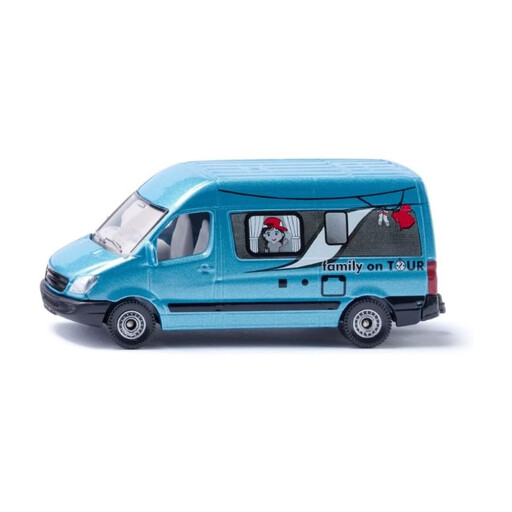
Why this product fits the profile: The compact campervan is recommended for children aged 3 and up and requires neither batteries nor assembly. It works well as a standalone children’s vehicle toy or as an addition to existing play worlds.
The straightforward design means the purchase price isn’t driven up by fiddly accessories that are hard to use. Its size makes it easy to transport and store.
Metal body, plastic tyres, compact dimensions of approximately 8.2 × 3.0 × 3.4 cm and no batteries required.
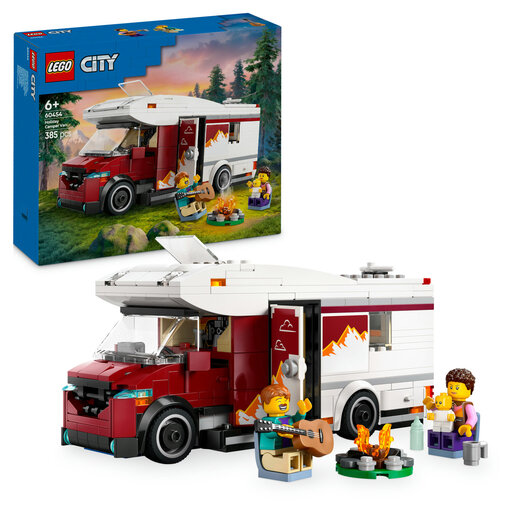
Why this product fits the profile: Children aged 6 and up build a camper with a kitchen, bathroom, bunk beds and a baby cot. The set combines construction with role-play afterwards.
The interior isn’t just decorative: the vehicle can be expanded and offers several clearly defined play areas.
385 pieces, two minifigures and a baby figure; measures approximately 18 cm long, 8 cm high and 7 cm wide when built.
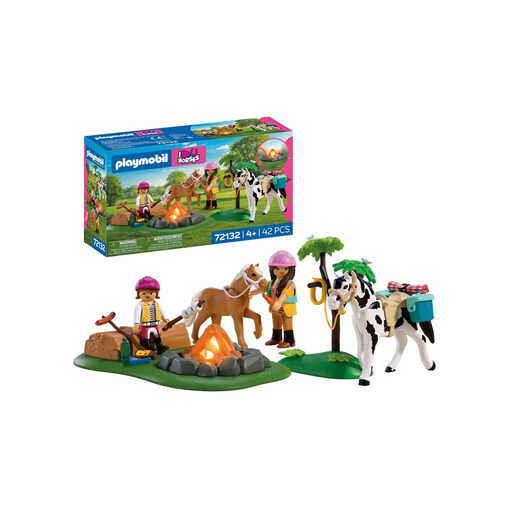
Why this product fits the profile: This set is aimed at children aged 4 and up who enjoy stories with figures, animals and outdoor gear. It complements an existing PLAYMOBIL camping scene.
The 42 pieces are focused on a specific riding and camping theme. The electric campfire function is clearly stated; batteries are not included.
Two figures, two horses, camping accessories and a light-up campfire; clean with a damp cloth and mild soap.
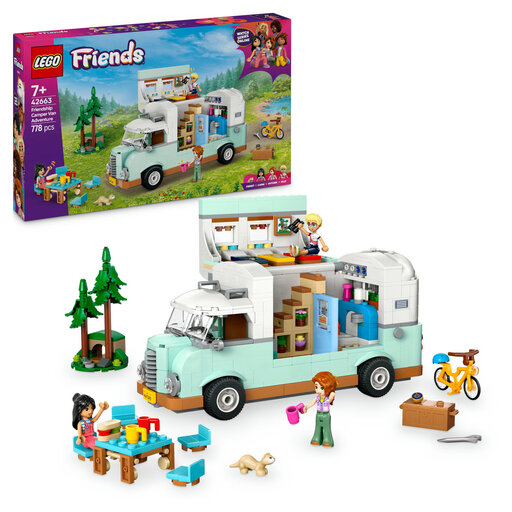
Why this product fits the profile: Children aged 7 and up get a comprehensive building and role-play set with a motorhome, three figures, an animal and several camping features.
The product description gives specific dimensions, piece count and features. This lets you realistically assess the space needed before you buy.
778 LEGO elements, kitchen, sleeping area, living area, bicycle, picnic table and outdoor shower; the motorhome is approximately 23 cm long.
We’ve put together a full, regularly updated list of products that fully meet these strict selection criteria and the safety regulations in force in the EU.
That depends on the specific model. The SIKU Campervan is recommended from age 3. The multi-piece LEGO and PLAYMOBIL sets in this selection are mostly aimed at children aged 4, 6 or 7. Always follow the manufacturer’s age recommendation and warning labels.
For a pure vehicle model, a compact campervan like the SIKU 1559 is a good choice. For longer storylines, a camping adventure toy with figures and accessories or a LEGO Camper Van with a building challenge works well. With PLAYMOBIL, the focus is on direct role-play and themed additions.
After playtime, store accessories in a labelled box or in the designated compartments of the vehicle. Check moving parts regularly to make sure they’re secure. Models with battery functions should be stored in a dry place and cleaned only according to the manufacturer’s instructions. If small parts become damaged, stop using the set.